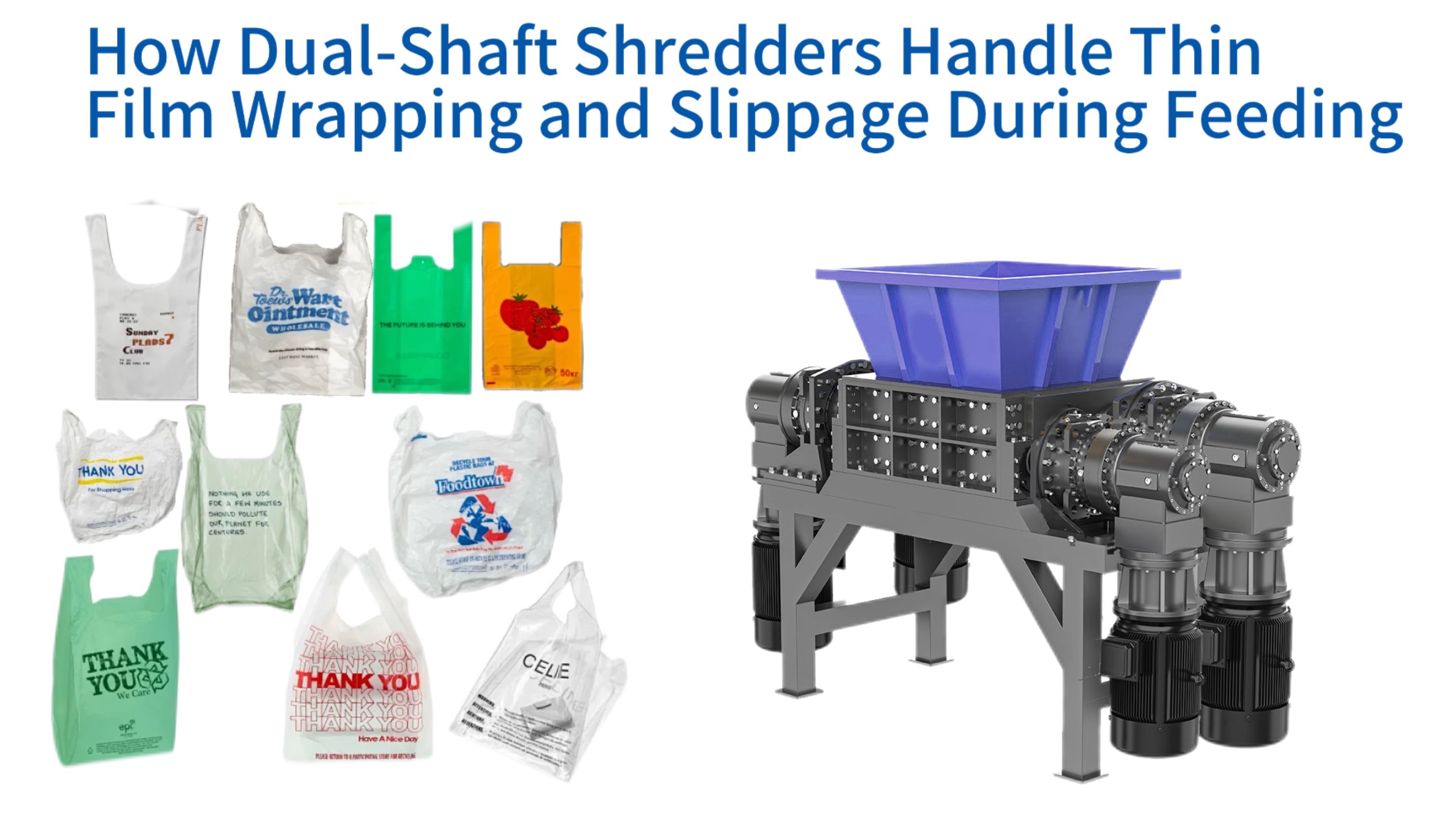
The global community has become increasingly focused on preventing plastic pollution. The principles of the circular economy have gained significant traction in recent years. HDPE, which stands for high-density polyethylene, represents one of the most widely produced plastic materials in the world. Vest bags, commonly known as T-shirt bags, constitute a major portion of this production stream. The efficient recycling of these post-consumer and post-industrial films has emerged as a critical operational priority for waste management facilities and recycling operations globally. However, the physical characteristics of HDPE film present substantial processing difficulties. The material is lightweight, exceptionally flexible, and possesses considerable elasticity. When introduced into conventional high-speed granulators or hammer mills, these films tend to wrap around rotating shafts and rotors. They also slide across the cutting surfaces without being engaged effectively. These phenomena lead to frequent machine jams, drastic reductions in throughput efficiency, and unscheduled downtime for cleaning and maintenance. The double-shaft plastic shredder has been engineered specifically to address these challenges. This equipment operates on the principles of low rotational speed and extremely high torque delivery. Its design incorporates intelligent control logic and mechanical features that forcibly engage thin films. The dual-shaft system systematically overcomes the issues of wrapping and slippage. It transforms low-value waste film into a consistent, free-flowing stream of shredded feedstock. This processed material is ideally suited for subsequent washing, agglomeration, and pelletizing operations. By adopting this technology, recycling entities can significantly enhance their resource recovery rates and improve the overall economic viability of their film recycling programs.
Core Technical Principles and Design Features of Dual-Shaft Shredders for HDPE Film
The superior performance of the dual-shaft shredder when processing difficult HDPE film materials is not accidental. It is the direct result of a deliberate engineering focus on mechanical design and automated system control. This combination of technologies directly confronts the physical behaviors of thin films that cause problems for other types of size reduction machinery. The fundamental architecture of the machine is built around two parallel shafts that rotate in opposite directions. Each shaft is fitted with a array of cutting discs or blades. These blades are designed with specific geometries to interact with the incoming material. The gap between the shafts and the stationary counter knives in the chamber wall creates a powerful shearing zone. When a bundle of HDPE vest bags enters this zone, it is subjected to forces that are quite different from those found in a high-speed impact mill.
The Principle of Low-Speed, High-Torque Drive Systems
Dual-shaft shredders are typically powered by robust drive systems. These systems often utilize hydraulic motors or electrically driven gear reducers. The defining characteristic of this drive is its ability to deliver very high torque at a relatively low shaft rotational speed. A typical dual-shaft shredder for film might operate at 10 to 30 revolutions per minute. In comparison, a conventional granulator might spin at several hundred RPM. This low speed is critical for handling film. A fast-spinning blade tends to push lightweight film away or simply rub against it, generating heat and causing the material to melt or stretch. The low-speed, high-torque approach applies immense force to the film. This force is sufficient to tear and shear the material immediately upon contact. The film does not have time to wrap around the shaft because it is being aggressively torn apart by the powerful rotational force. This fundamental principle prevents the initial wrapping that leads to machine jams. The high torque ensures that even thick, densely packed bales of film can be engaged and processed without the drive stalling. This provides the muscle necessary to handle the tough, pulling forces exerted by elastic polymers.
Specialized Rotor and Cutter Configurations for Material Engagement
The design of the cutting rotors themselves plays a vital role in preventing slippage. The blades on a dual-shaft shredder are not simple flat knives. They are often shaped with hooked tips, serrated edges, or multi-tooth profiles. These features act like mechanical fingers. When the rotors turn, these hooked blades reach into the mass of film and physically grab the material. The design of the blade tip is optimized to penetrate the film surface rather than sliding across it. The two shafts rotate at slightly different speeds in many designs. This differential speed action creates a cutting and tearing effect that is highly effective at pulling film apart. As the hooks of one rotor pull the film down, the opposing blades on the other rotor shear against it. This positive engagement mechanism ensures that once film enters the cutting chamber, it is immediately captured and processed. The shearing action reduces the material into strips and flakes. These smaller pieces are less likely to exhibit the same wrapping behavior in downstream equipment.
Intelligent Control Systems and Automatic Reversal Logic
Modern dual-shaft shredders are equipped with sophisticated programmable logic controllers. These controllers continuously monitor the operational status of the machine. Sensors track the rotational speed of the shafts and, more importantly, the hydraulic pressure or electric motor current, which correlates to the torque load. Processing HDPE film can present variable conditions. A sudden influx of a heavily compacted wad of film can cause an instantaneous spike in load. The control system detects this spike. If the load approaches a pre-set limit, the system does not simply shut the machine down. It initiates an automatic reversal sequence. The direction of the shaft rotation is temporarily reversed. This action serves to back the material away from the cutting zone slightly. It allows the mass of film to reposition itself. After a brief reversal, the shafts automatically resume their forward rotation. This intelligent logic effectively clears minor jams and prevents the buildup that leads to major blockages. This automatic reversal function is a key differentiator. It allows the machine to handle the inconsistent feed rates often associated with manual or conveyor-fed film recycling lines.
The Function and Necessity of Hydraulic Ram Pushers
One of the most effective solutions to the problem of film slippage is the integration of a hydraulic pusher mechanism. HDPE film is extremely lightweight and has a low bulk density. When placed in a standard top-fed hopper, the film tends to bridge and float. It does not reliably fall by gravity into the rotating cutters. The cutters may spin beneath a mass of film without making consistent contact. This is a primary cause of reduced throughput. A hydraulic ram pusher is mounted above the cutting chamber. This ram is a hydraulically powered plate that moves back and forth horizontally or vertically, depending on the machine design. It forcefully pushes the loose film material down into the rotor set. The ram exerts significant pressure, compressing the fluffy film and forcing it into direct contact with the cutting hooks and blades. This mechanical intervention overcomes the natural buoyancy and resistance of the film. It ensures a steady and consistent feed rate. The action of the ram turns an unreliable gravity-fed process into a forced-feed system, dramatically increasing the processing capacity and stability of the shredding operation for materials like HDPE vest bags.
Primary Types of Dual-Shaft Shredders for HDPE Recycling Applications
The market for film recycling is diverse. It ranges from small-scale in-house industrial operations to massive, centralized post-consumer recycling facilities. A single machine design cannot optimally serve all these scenarios. Therefore, dual-shaft shredders are manufactured in various configurations. These configurations are tailored to meet the specific demands of different processing scales and material conditions. Selecting the appropriate machine type is a critical decision. It impacts the efficiency of the entire recycling line and the overall return on investment. The choice depends on factors such as input material form, required output volume, and desired final particle size.
Heavy-Duty Stationary Shredders for Large-Scale Recycling Centers
Large-scale recycling facilities process immense volumes of material. These operations often receive HDPE film in the form of highly compacted mill-sized bales. These bales can weigh several hundred kilograms and are extremely dense. Processing this material requires a machine with exceptional structural integrity. The heavy-duty stationary dual-shaft shredder is built for this task. It features a reinforced, thick-walled steel main frame. It is powered by high-horsepower electric motors or large-displacement hydraulic drive units. The shafts are robust and supported by heavy-duty bearings capable of withstanding massive shock loads. These machines are designed for continuous, 24/7 operation. They are equipped with features like automatic lubrication systems to ensure longevity under sustained stress. Their primary function is to act as the first stage in a multi-step process, breaking down whole bales into a coarse, manageable shred that can be further processed by secondary granulators or washing lines. Their reliability and high throughput capacity make them the backbone of any large-scale film recycling operation.
Medium-Capacity Universal Shredders for Film Agglomeration Lines
Many recycling operations are medium in scale. They may be processing film waste from local sources or operating in conjunction with a film extrusion plant. For these applications, a medium-capacity universal dual-shaft shredder is often the ideal choice. These machines are designed with flexibility in mind. They feature a modular design that allows for relatively easy maintenance and part replacement. Their power and size are sufficient to handle loose film, sheets, and lightly compacted bales. They are commonly positioned at the front end of a film agglomeration or single-shaft plastic shredder line. The machine reduces the film to a consistent chip size. This prepared material is then fed into a densifier or agglomerator. This step is crucial because it converts the low-bulk-density shredded film into a free-flowing granular form suitable for extrusion. The medium-capacity shredder offers a balance between capital cost and processing capability, making it accessible for a wide range of businesses looking to recycle their own production waste or process local film collections.
Two-Stage Shredding Systems for High-Purity Applications
Certain recycling applications demand a higher degree of material refinement. For example, when producing high-quality film for reintroduction into a blown film line, the feedstock must be very clean and uniformly sized. In such cases, a single pass through a dual-shaft shredder may not be sufficient. The output from the primary shredder can be too large or irregular for the washing and extrusion equipment. A two-stage shredding solution is often implemented. In this configuration, a heavy-duty dual-shaft shredder serves as the primary reducer. Its role is to tear apart the raw material, such as whole bales of film, and reduce it to a coarse shred. This coarse material is then transferred via conveyor to a secondary fine shaft shredder or a high-speed granulator. This secondary machine, often a single-shaft shredder with a smaller screen, further reduces the particle size to a precise specification. This two-stage process ensures that the material entering the wash line is consistently sized. This consistency improves washing efficiency, reduces water and chemical usage, and ultimately results in a higher quality recycled pellet.
Core Functional Advantages of Dual-Shaft Shredders for Film Processing
Core Functional Advantages Distribution
The value of a dual-shaft shredder extends beyond its basic ability to reduce the size of HDPE film. The machine provides a suite of functional benefits that enhance the entire recycling workflow. These functions address common operational pain points. They contribute directly to improved safety, lower costs, and higher final product quality. Understanding these core advantages helps recyclers appreciate the full potential of integrating this technology into their facilities.
Reliable Anti-Slippage and Consistent Feeding Function
The most immediate functional benefit of a dual-shaft shredder equipped with a hydraulic ram is the resolution of feeding difficulties. In many recycling operations, inconsistent feeding is a primary source of inefficiency. Operators may need to manually tend to the machine, pushing film into the hopper. This is a hazardous and labor-intensive practice. The combination of aggressive, hooked rotor design and the positive downward force of the hydraulic ram creates a reliable, automated feeding action. The machine pulls the material into the cutting zone with mechanical certainty. This eliminates the need for manual intervention. The feed rate becomes consistent. This consistency stabilizes the load on the drive motor. A stable load allows the machine to operate at its peak efficiency for longer periods. It transforms a formerly problematic, batch-type process into a smooth, continuous flow operation.
Precise Output Particle Size Control Function
Control over the final particle size is a critical function for any size reduction equipment. Dual-shaft shredders achieve this control primarily through the use of interchangeable discharge screens. A screen is a perforated metal grate positioned beneath the rotating shafts. The shredded material must pass through the openings in this screen before it can exit the machine. The size of these openings determines the maximum dimension of the output particles. For HDPE film, operators can select screens with different hole diameters. A larger hole size, such as 80 to 100 millimeters, is suitable for producing a coarse shred intended for further processing. A smaller hole size, such as 40 to 60 millimeters, yields a more refined product. This precision is important. If the output is too large, it may jam downstream equipment. If it is too small, the process generates excessive dust and consumes unnecessary energy. The ability to change screens allows a single machine to adapt to different downstream requirements, offering valuable operational flexibility.
Integrated Overload Protection and Self-Diagnosis Function
Protecting the capital investment in a shredder is a primary concern for any business. Dual-shaft shredders incorporate multiple layers of protection to prevent damage from unforeseen events. The intelligent control system is the first line of defense. It continuously monitors the machine's operating parameters. If a piece of foreign material, such as a metal strap or a large rock, enters the chamber, the system detects a sudden, extreme increase in torque. Before mechanical damage can occur, the system initiates a protective response. This may involve stopping the drive motors or reversing the shafts. This overload protection function safeguards expensive components like the gearbox, shafts, and cutters. Additionally, the control system provides diagnostic information. When a fault occurs, the operator interface displays a specific error code. This code helps maintenance personnel quickly identify the nature and location of the problem, whether it is a sensor failure or an over-temperature condition, greatly reducing troubleshooting time and getting the machine back into production faster.
Energy-Efficient Operation Through Load Sensing Technology
Energy consumption is a significant operating cost in any industrial process. Dual-shaft shredders, particularly those equipped with variable frequency drives, offer substantial energy savings. The power drawn by the shredder is directly related to the load on the rotors. When processing a large volume of film, the load is high, and the motor draws full power. However, when the feed rate slows or the material is less dense, the load decreases. A variable frequency drive senses this decrease in load and automatically reduces the electrical frequency supplied to the motor. This action slows the motor speed slightly and, more importantly, reduces the power consumption. The machine operates only as hard as necessary to process the available material. This intelligent energy management can reduce electricity usage by a significant percentage compared to a machine running constantly at full speed. Over the course of a year, these savings contribute directly to the profitability of the recycling operation. This technology aligns with the growing industry focus on sustainable and cost-effective processing methods.
Diverse HDPE Film Varieties Processed by Dual-Shaft Shredders
HDPE Film Types Processing Flow
Post-Consumer HDPE Bags
Mixed contaminants (food/paper/metal)
Dual-Shaft Shredding
Forceful shearing & size reduction
Industrial Stretch/Shrink Film
High tensile strength, tight rolls
Dual-Shaft Shredding
Peeling & systematic shredding
Agricultural Film
Soil/sand/plant matter contamination
Dual-Shaft Shredding
Abrasion-resistant cutting components
Production Waste/Converter Scrap
Clean, dense bales, high-value scrap
Dual-Shaft Shredding
Closed-loop recycling ready output
The versatility of the dual-shaft shredder is demonstrated by its ability to handle a wide spectrum of HDPE film waste. The material can vary greatly in its physical form, its degree of contamination, and its source. A robust dual-shaft system can accept these different feedstocks with minimal adjustment, making it a highly valuable asset for custom recyclers and specialized processors alike. From the dirty streams of municipal recycling to the clean scrap of industrial production, the core shredding technology remains effective.
Processing Post-Consumer HDPE Bags with Mixed Contaminants
Post-consumer HDPE film is among the most challenging materials to recycle. It comes from curbside collection programs and contains a wide array of contaminants. These include organic residues like food waste and liquids. It also includes non-film materials such as paper labels, adhesive tapes, and even small pieces of rigid plastic or metal. When this mixed material enters a dual-shaft shredder, the powerful shearing action tears through the film and the contaminants. The machine does not rely on sharp knives making a clean cut; it relies on brute force to rend the materials apart. The open design of the cutting chamber allows the mixed stream to pass through without clogging. The primary objective at this stage is liberation and size reduction. The shredder tears open the bags, exposing the interior contaminants to later washing. It also reduces the overall mass to a consistent size that can be effectively transported via air or mechanical conveyors to the next stage of the cleaning process, which typically involves friction washers and sink-float tanks.
Processing Industrial Stretch Film and Shrink Wrap
Industrial applications generate large volumes of HDPE and LLDPE film in the form of stretch wrap and shrink wrap. These materials are used to secure pallets and bundles of goods. The waste often consists of entire rolls that have become damaged or are remnants from packaging lines. These rolls are extremely difficult to handle. They are heavy, tightly wound, and the film has high tensile strength. Attempting to feed an entire roll into a granulator is dangerous and ineffective. A dual-shaft shredder excels at this application. The operator can simply place the entire roll into the hopper or onto the feed conveyor. The low-speed, high-torque rotors grab the outer layer of the roll and begin to peel it apart. The machine systematically shreds the entire roll, from the outside in, without the need for pre-cutting or depalletizing. This capability saves significant labor time and eliminates the safety risks associated with manually cutting dense rolls of industrial film.
Processing Agricultural Film with High Soil Content
Agricultural films, including silage wrap and greenhouse covers, present a unique set of challenges. After use, these materials are heavily contaminated with soil, sand, plant matter, and moisture. This abrasive contamination is highly destructive to processing equipment. The components of a dual-shaft shredder are engineered to withstand this harsh environment. The rotors and cutters are made from specialized alloy steels. These materials are selected for their extreme hardness and wear resistance. The robust construction allows the machine to grind through the film and the embedded abrasives. The shearing action also serves a useful purpose beyond size reduction. As the film is torn, much of the attached soil and debris is broken loose from the plastic surface. This preliminary separation is beneficial. It means that the material leaving the shredder is already partially cleaned, reducing the workload on the downstream washing equipment and extending the life of components like screw conveyors and wash tanks.
Processing HDPE Production Waste and Converter Scrap
Film converters and bag manufacturers generate scrap material during normal production. This includes edge trims from slitting operations, startup waste from extrusion lines, and printed bags that fail quality control checks. This material is often clean, consistent in composition, and generated in a steady stream. It may, however, be compacted into dense bales for storage and transport. Dual-shaft shredders are ideal for reclaiming this high-value industrial scrap. The machine can efficiently break down the compacted bales, regardless of their density. The shredded output can often be reintroduced directly into the production process. It can be metered into an extruder along with virgin material at a controlled percentage. This closed-loop recycling capability provides significant cost savings for manufacturers. It reduces their reliance on virgin resin and eliminates the cost of hauling the scrap material away for disposal. The shredder enables immediate, on-site recovery of production waste, contributing directly to a more efficient and sustainable manufacturing operation.
Technical Basis for Efficient HDPE Film Processing
Key Technical Foundations
Finite Element Analysis
Optimized rotor/blade design for maximum gripping force and structural integrity
High-Wear Resistant Materials
Alloy steels with heat treatment for abrasion and impact resistance
Advanced Sealing Technology
Labyrinth/air pressure seals protect precision bearings from contamination
Load-Sensing Feed Control
Real-time feed rate adjustment for optimal throughput and overload prevention
The robust performance of the dual-shaft shredder in film applications is underpinned by several key engineering and material science principles. These principles guide the design and construction of each component to ensure it can withstand the specific demands of processing tough, abrasive, and elastic polymers. The reliability and longevity of the machine are a direct result of this detailed attention to the technical fundamentals of the size reduction process. These design choices are not arbitrary; they are calculated responses to the physical forces at play during shredding.
Finite Element Analysis in Rotor and Blade Design
Modern shredder design relies heavily on computer-aided engineering tools. Finite Element Analysis is one such tool used to simulate the stresses and forces that components will experience during operation. Engineers create a digital model of a rotor or a cutter blade. They then apply virtual loads that mimic the forces of tearing through a bale of HDPE film. This analysis reveals areas of high stress concentration. It shows where the component might flex or be prone to failure. Designers use this information to optimize the shape of the blade. They can add material where it is needed for strength and remove material from areas that are not heavily stressed to reduce weight and cost. For film processing, FEA helps in designing blade profiles that have the optimal angle for engaging and piercing the material. This ensures that the blade geometry provides maximum gripping force without compromising its structural integrity. This computer-guided design process results in components that are both highly effective and exceptionally durable.
Application of High-Wear and Impact-Resistant Materials
The choice of materials for the cutting components is perhaps the most critical factor determining a shredder's lifespan. The blades and cutters must resist two primary forms of degradation: abrasion and impact. Abrasion occurs when hard particles like sand or grit, commonly found in post-consumer and agricultural film, rub against the metal surface. Impact occurs when the blade strikes a harder object, such as a stone or a piece of metal. To resist these forces, shredder blades are manufactured from specialized tool steels or alloy steels. These materials are selected for their high hardness. Furthermore, they undergo complex heat treatment processes. Processes like through-hardening and tempering create a blade that is hard throughout its cross-section, not just on the surface. Some blades may also receive surface treatments like hard-facing with a layer of tungsten carbide. This combination of base material and thermal processing creates a cutter that can withstand the daily punishment of film shredding, maintaining its cutting edge for extended periods.
Advanced Sealing and Bearing Protection Technologies
The bearings that support the heavy rotating shafts are precision components. They are essential for smooth and efficient operation. However, they are also highly vulnerable to contamination. In a film shredding environment, the air is filled with fine dust. Sticky residues from melted or degraded plastic can also be present. If these contaminants enter a bearing, they will quickly destroy it, leading to a costly and time-consuming repair. To prevent this, shredders employ advanced sealing technologies. Labyrinth seals are a common solution. These seals use a series of intricate, interlocking grooves. The path that any contaminant must travel to reach the bearing is long and tortuous. It is designed to trap particles before they can penetrate the seal. Some systems also use a positive air pressure seal. Clean, filtered air is constantly pumped into the seal housing. This creates a slight positive pressure, meaning that air flows out of the seal, preventing any dust-laden air from being drawn in. These robust sealing systems are vital for ensuring long bearing life in the harsh environment of film recycling.
Load-Sensing Automatic Feed Control Logic
Maximizing throughput while preventing overloads is a complex control challenge. Advanced dual-shaft shredders solve this by integrating the shredder's control system with the upstream feed conveyor. The system uses a logic based on the principle of feedback control. The shredder's controller continuously monitors the motor's amperage draw. This amperage is a direct indicator of the load on the machine. The controller communicates this information to the variable frequency drive controlling the feed conveyor. The logic is simple: if the shredder motor amperage is low, the feed conveyor speeds up, delivering more material. If the amperage approaches a high set-point, indicating a near-overload condition, the feed conveyor slows down. If the amperage exceeds the set-point, the conveyor stops entirely until the shredder processes the material in the chamber and the load drops. This automatic, real-time adjustment ensures the shredder always operates at its optimal capacity. It prevents the machine from being starved of material, which wastes capacity, or from being flooded, which causes jams. This intelligent feed logic is a cornerstone of modern, high-efficiency shredding systems.
Core Value and Investment Return for Film Recycling Enterprises
Cost & Efficiency Comparison
Manual Processing
Low throughput (unsafe)
Dual-Shaft Shredder
1,000-2,000 kg/h throughput
Efficiency
Relative throughput
Efficiency
Optimal throughput
* Labor cost reduction + 5x throughput increase = significant ROI
The decision to invest in a dual-shaft shredder is a significant capital expenditure. For a recycling business, this investment must be justified by a clear and compelling return. The value proposition of this equipment extends far beyond its function as a simple size reducer. It acts as a catalyst for improving the entire operational and financial performance of the enterprise. By transforming a problematic waste stream into a consistent and valuable raw material, the shredder directly impacts the bottom line. The benefits can be categorized into several key areas that collectively build a strong business case for acquisition.
Cost Reduction Through Labor Substitution and Increased Throughput
Manual processing of HDPE film is extremely labor-intensive. Handling, sorting, and feeding lightweight, bulky film requires significant manpower. In many facilities without automated shredding, several workers are required just to manage the material flow. They may be tasked with manually cutting bales or pushing film into a machine. This work is physically demanding and carries a risk of injury. A single heavy-duty dual-shaft shredder, equipped with an automated feed system, can replace the work of several individuals. It processes material at a rate that would be impossible for a manual crew. Industry data suggests that a medium-sized shredder can process between 1,000 and 2,000 kilograms of film per hour. Achieving this volume manually would be unsafe and impractical. By eliminating this labor requirement and dramatically increasing processing speed, the machine provides a direct and substantial reduction in operating costs. This increased throughput allows the business to accept more material and generate more revenue without a proportional increase in labor.
Quality Improvement Through Downstream Process Stabilization
The quality of the final recycled product, such as washed flakes or pellets, is heavily dependent on the consistency of the feedstock entering the washing line. If the input material varies wildly in size and shape, it creates problems. Large pieces of film can clog pumps and pipes in the wash system. They may not be adequately cleaned. Fines and dust generated by inconsistent shredding can be lost in the water treatment system, representing a loss of valuable material. A dual-shaft shredder provides a solution by producing a consistently sized output. This consistent shred feeds uniformly into the washing equipment. It ensures that every piece of film is exposed to the same washing and rinsing action for the correct duration. This process stability directly translates into a higher quality final product. Cleaner, more uniform flakes command a higher price in the market. They can be used in more demanding applications, including the production of new film, which offers a much greater return than selling a low-quality, mixed recyclate.
Business Development Through Enhanced Processing Capabilities
Investing in a dual-shaft shredder is not just about improving current operations; it is an investment in future growth. The presence of this equipment expands the range of materials a facility can accept. A company previously limited to handling clean, industrial scrap can now process more difficult post-consumer bales. This opens up new supply streams and new markets. It allows the business to move up the value chain. Instead of simply collecting and baling film for sale to a larger processor, the company can now perform the initial size reduction itself, capturing more of the value. This capability positions the company as a more sophisticated and essential partner in the recycling ecosystem. It prepares the business to meet evolving regulatory requirements that demand higher recycling rates and more rigorous processing standards. The shredder becomes a tool for business transformation, enabling the company to adapt and thrive in a changing industry landscape.
The MSW Technology Advantage in Dual-Shaft Shredding Solutions
MSW Technology Core Advantages
Years of Industry Experience
Practical waste processing expertise
Robust Engineering
Durable film-specific design
Comprehensive Support
Consultation to after-sales service
MSW Technology stands as a dedicated partner for recycling operations seeking reliable and effective size reduction equipment. With a history spanning fifteen years in the industry, the company has accumulated extensive practical knowledge. This experience covers the full spectrum of waste processing challenges, with a particular focus on the difficulties presented by materials like HDPE film. The solutions offered are not generic; they are built upon a foundation of real-world application and continuous engineering refinement. The commitment extends beyond simply delivering a machine to providing ongoing support and expertise throughout the equipment's operational life.
The fifteen-year journey of MSW Technology in this sector has provided invaluable insights. The engineering team has observed countless hours of machine operation across diverse environments. They have learned which design features stand the test of time and which components require frequent attention in demanding film applications. This knowledge is directly incorporated into the design and construction of every shredder. The machines feature robust drive trains and reinforced cutting chambers specifically configured for the consistent processing of difficult materials. The design philosophy emphasizes durability and ease of maintenance, ensuring that the equipment delivers reliable performance shift after shift. The internal components, from the specialized alloy steel cutters to the heavy-duty bearings, are selected for their proven ability to withstand the rigors of continuous film shredding. This focus on robust engineering provides customers with a solution they can depend on for many years.
Beyond the hardware, MSW Technology provides a comprehensive service framework. The process begins before the sale with a thorough consultation. The team works with potential clients to understand their specific material characteristics and throughput goals. This often involves analyzing the type of film to be processed, the desired output size, and the configuration of the existing or planned recycling line. From this assessment, a tailored solution is proposed. After the equipment is installed, the support continues. MSW Technology offers professional installation supervision and comprehensive operator training. This ensures that the customer's team is fully prepared to run the machine safely and efficiently. A responsive after-sales network provides access to spare parts and technical service. The goal is to minimize any potential downtime and to help the customer achieve the maximum possible return on their investment in the shredding system. This combination of fifteen years of industry experience, robustly engineered equipment, and dedicated customer support forms the core of the MSW Technology value proposition.