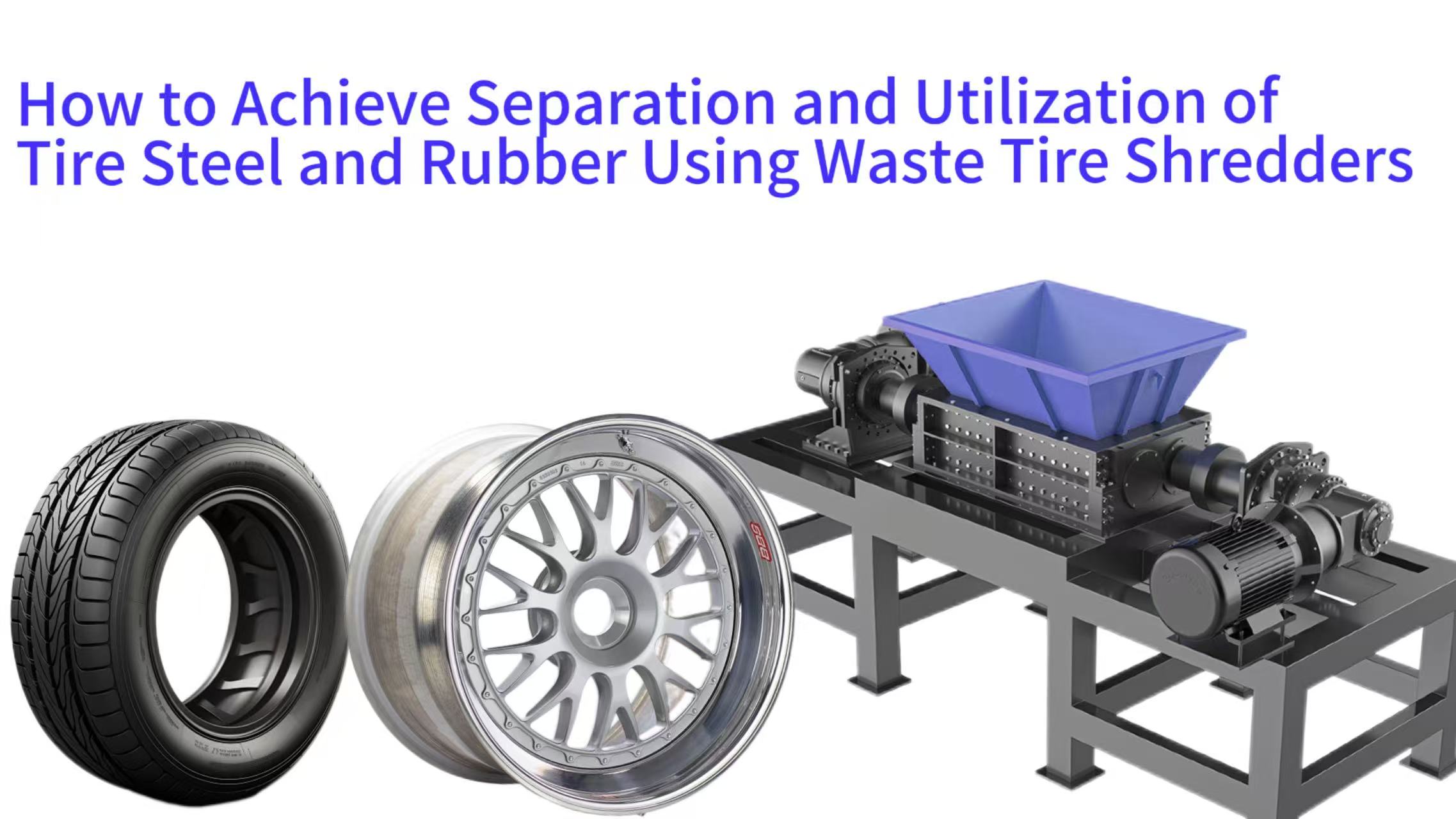
Tire Steel & Rubber Separation Process
Primary Shredding
Whole Tires → 50-300mm Fragments
Secondary Shredding
20-50mm Size + Steel Liberation
Fine Grinding
0.18-2mm Crumb Rubber
Multi-Stage Separation
Clean Rubber + Steel
The disposal of end-of-life vehicles and industrial waste generates an enormous quantity of scrap tires each year. These tires represent a significant waste management challenge because they are engineered for durability. A typical tire consists of high-tensile strength rubber compounds, steel reinforcement beads, and often textile fibers. This composite construction makes natural degradation extremely slow. Traditional disposal methods such as landfilling or stockpiling consume valuable space and create environmental hazards including fire risks and mosquito breeding grounds. Industrial waste tire shredders offer a mechanical solution to this problem. These machines systematically reduce whole tires into smaller fragments. Through a series of shredding, grinding, and separation processes, the valuable components within a tire—primarily rubber and steel—can be liberated from each other and recovered as clean, marketable raw materials. This article provides a comprehensive explanation of how modern shredding technology achieves this separation and transforms waste tires into resources for new industrial applications. MSW Technology, with fifteen years of dedicated experience in the recycling equipment industry, has developed deep expertise in these separation processes and offers proven solutions for tire recyclers worldwide.
The Market Drivers and Core Challenges in End-of-Life Tire Recycling
Key Tire Recycling Metrics
| Metric | Value | Notes |
|---|---|---|
| Global Annual Waste Tires | ~1 Billion Units | Steady growth with vehicle fleet expansion |
| 2025 EOL Tire Recycling Market Value | > USD 1.6 Billion | |
| Passenger Car Tire Steel Content | 10-15% (by weight) | Fine steel cords |
| Truck/Bus Tire Steel Content | 20-25% (by weight) | Thicker, high-strength steel |
| High-Purity Crumb Rubber Standard | < 0.1% Steel Content | For premium applications |
The global generation of waste tires presents both an environmental imperative and an economic opportunity. It is estimated that the world generates approximately one billion end-of-life tires annually, with this number steadily increasing alongside the global vehicle fleet. This massive material flow has attracted the attention of regulators and entrepreneurs alike. Governments worldwide have implemented strict regulations banning whole tires from landfills, driven by concerns over space consumption, fire hazards, and the long-term environmental impact of tire decomposition. These policies have created a stable demand for recycling services. However, the very design that makes tires excellent on the road—the inseparable bonding of rubber to steel—makes them difficult to process at the end of their life. The rubber compounds are vulcanized, creating cross-linked polymer chains that provide elasticity and strength. The steel wires, ranging from thin reinforcing cords to thick bead wires, are embedded under tension and coated with adhesive compounds during manufacturing. This physical and chemical bond must be broken to recover clean materials.
The Scale of Global Tire Waste and Regulatory Pressure
Data indicates that the end-of-life tire recycling market was valued at over USD 1.6 billion in 2025 and is projected to continue growing at a steady rate. This growth is not accidental. It is driven by legislative frameworks in major economies that mandate producer responsibility and ban landfilling. In North America and Europe, extended producer responsibility schemes hold tire manufacturers accountable for the end-of-life management of their products. These regulations create funding mechanisms for collection and processing infrastructure. They also impose penalties for non-compliance, making formal recycling the only economically viable option for handling large tire volumes. The regulatory pressure effectively transforms waste tires from a disposal problem into a managed material stream requiring processing capacity. Without these legal drivers, the economics of tire recycling would be significantly more challenging, as the low intrinsic value of the materials would not justify the cost of collection and processing. Companies like MSW Technology work closely with recyclers to ensure their equipment meets the compliance standards demanded by these regulations.
The Structural Complexity of Tires as a Separation Barrier
The internal structure of a tire is a sophisticated composite engineered for performance. The rubber itself is a complex polymer matrix filled with carbon black and other additives to enhance wear resistance and flexibility. Embedded within this matrix is a network of steel cords, known as the belts and body ply, which provide strength and dimensional stability. These cords are made of high-tensile steel wire, often twisted together and coated with brass or bronze to promote adhesion to the rubber. At the inner edge of the tire sits the bead, a bundle of thick, high-strength steel wires wrapped in rubber, which ensures a tight seal against the wheel rim. This intricate architecture means that simple crushing or coarse shredding cannot effectively separate the materials. The steel remains encapsulated by rubber, and the rubber retains embedded steel fragments. Effective separation requires a multi-step mechanical process that gradually liberates the components without over-processing either material. The primary shredder is the first critical step in this liberation process, handling the initial breakdown of the complex tire structure.
The Economic Penalty of Inefficient Separation
When separation is incomplete, the commercial value of both recovered materials is significantly diminished. Rubber granules contaminated with visible steel fibers are rejected by manufacturers of high-value products such as playground surfaces, sports tracks, and automotive components. These applications require near-zero metal content to ensure safety and product performance. Contaminated rubber sells at a deep discount, often being relegated to low-value uses like tire-derived fuel, where the steel content actually reduces the heating value. Similarly, steel recovered with adherent rubber is classified as low-grade scrap. The rubber burns off during steel melting, causing emissions and reducing yield, so steel mills pay far less for such material. Clean steel, by contrast, can command prices comparable to prime scrap and can be used directly in foundries or for manufacturing products like shot blasting grit. The economic penalty for poor separation can amount to hundreds of dollars per ton of material processed. This financial reality makes investment in proper separation technology, including effective magnetic separators, a critical factor in the profitability of a tire recycling operation.
The Value Proposition of High-Purity Rubber and Steel Recovery
The market clearly signals the premium placed on purity. High-quality crumb rubber, defined as rubber powder or granules with a steel content below 0.1 percent and no particles larger than a specified mesh size, commands prices several times higher than standard material. This high-purity product finds applications in the manufacture of new tires, conveyor belts, automotive seals, and high-performance asphalt modifiers. On the steel side, wire recovered from tires, when cleaned of all rubber residue, can be processed into valuable secondary products. One significant application is the production of steel shot or grit used for abrasive blasting in shipyards and metal fabrication facilities. This application requires steel that is free of organic contaminants, which would otherwise interfere with the blasting process. The steel can also be fed into electric arc furnaces to produce new steel products, provided its purity meets the mill's specifications. Therefore, a tire recycling operation that consistently produces high-purity output gains access to premium markets, insulating itself from the volatility of low-grade commodity prices and building a reputation for quality that drives long-term business success. MSW Technology's integrated systems are specifically designed to achieve these high-purity standards.
The Core Types of Tire Shredders and Their Roles in the Separation Flow
Tire Shredder Output Size Comparison
A single machine cannot accomplish the complete transformation from whole tire to clean rubber and steel. The process requires a system of different machines, each performing a specific size reduction or separation task. These machines work in sequence, gradually liberating the steel from the rubber matrix. The choice of machine types and their configuration determines the final purity of the products, the overall energy efficiency of the line, and the throughput capacity. A typical tire recycling line progresses through stages of primary reduction, secondary size reduction, granulation or fine grinding, and finally, multiple separation steps. Each stage is designed to prepare the material for the next, with the goal of exposing and removing steel as early as possible to minimize wear on downstream equipment. Understanding the role of each machine type is essential for designing an efficient and profitable recycling operation. The range of double-shaft tire shredders and other configurations available today allows for precise tailoring of the process to specific material and output requirements.
Primary Double-Shaft Shredders for Initial Tire Breakdown
The first machine in the line is typically a primary double-shaft shredder. This machine is characterized by its low rotational speed and extremely high torque. Its function is not to produce a small, finished product, but to accept whole tires, including large off-the-road tires with thick bead wires, and reduce them to a manageable size. The two shafts, fitted with interlocking cutter discs, rotate slowly but with tremendous force, tearing the tires into pieces ranging from 50 millimeters to 300 millimeters in size. This stage is sometimes called "pre-shredding" or "primary reduction." At this point, the primary goal is simply to create a consistent stream of material that can be transported by conveyor to the next stage. Some steel is liberated during this process, particularly from the sidewalls and bead area, and this coarse steel is often removed by an initial magnetic separator to protect downstream equipment from excessive wear. The primary shredder must be robustly constructed to withstand the impact of steel and the high forces involved in tearing rubber. The primary shredder components, such as the cutters and shafts, are engineered for durability in this demanding application.
Secondary Shredders for Initial Steel Liberation
Following primary reduction, the tire pieces enter a secondary shredder or a fine shredder. This machine, which may be a single-shaft shredder or a specialized fine double-shaft unit, further reduces the material to a particle size of 20 to 50 millimeters. This size reduction is critical for steel liberation. As the rubber pieces are forced against a screen and subjected to additional shearing and tearing forces, the steel cords and bead wires become exposed and begin to detach from the rubber. At this stage, the product is typically a mixture of rubber particles, some still containing embedded steel, and loose steel wire pieces of varying lengths. A significant portion of the steel, particularly the larger pieces, is now free. This stage is often referred to as the "dirty granulation" phase. It is common practice to install a powerful overband magnetic separator immediately after the secondary shredder to extract this liberated steel. Removing the steel at this point is highly beneficial because it prevents the steel from circulating through the system and causing wear in subsequent fine grinding equipment. The efficiency of the secondary shredder directly impacts the ease of separation in later stages.
Granulators and Fine Grinding Mills for Final Purification
To produce high-value, finely sized rubber products such as crumb rubber for molded goods or asphalt modification, the material must undergo further processing in a granulator or fine grinding mill. These machines, which can include disk mills, classifier mills, or cracker mills, use a combination of shearing, compression, and attrition to reduce the rubber particles to a fine powder. The typical output size ranges from 10 mesh (approximately 2 millimeters) down to 80 mesh (approximately 0.18 millimeters) or finer. During this fine grinding process, any microscopic steel fibers that remain embedded within the rubber granules are fully exposed and freed. The intense mechanical action effectively "polishes" the rubber, separating the last traces of metal. Because these fine steel fibers are difficult to capture with standard magnetic separators, this stage must be followed by highly efficient final cleaning equipment. The goal is to produce rubber powder that is visually free of any metal specks and meets the stringent purity specifications of high-end applications. This fine grinding stage represents the final "liberation" step before the ultimate separation and cleaning of the rubber product.
Specialized Steel Liberation Equipment like Liberators and Raspers
In some advanced tire recycling systems, a specialized machine is employed between the secondary shredder and the granulator. These machines are known by various names, including liberators, raspers, or cracker mills, depending on the manufacturer and specific design. Their operating principle differs from standard shredders. Instead of cutting the material with knives, they utilize a rotating drum or rotor equipped with blunt projections that "rub" and "knead" the rubber pieces against a stationary casing. This action is highly effective at separating the rubber from the steel without excessively shredding the steel wires into tiny fragments. The result is a cleaner liberation: the steel wires are stripped of rubber more completely, and the rubber is broken down along natural stress lines. This can lead to higher purity in both final product streams. The use of such specialized equipment is particularly valuable when processing tires with high steel content, such as truck tires, as it maximizes the recovery value of the steel. The design and operation of these machines represent a sophisticated approach to material liberation, focusing on separation rather than mere size reduction. The secondary shredder in an MSW Technology line is often configured with this liberation principle in mind.
The Operating Principles and Technologies of Multi-Stage Separation Systems
The achievement of high-purity rubber and steel is not solely the result of size reduction. It is equally dependent on the multi-stage separation system that works in concert with the shredders. Because steel is liberated gradually, in pieces of varying sizes from long, coarse wires to short, fine fibers, a single separation step cannot capture all of it. An effective separation system uses a sequence of different technologies, each optimized for a specific particle size range. This tiered approach ensures that the maximum amount of steel is removed while minimizing the loss of rubber product. The system integrates magnetic separation for ferrous metals, and in some cases, air classification or other density-based methods for removing light contaminants like fiber. The engineering of this separation system is as critical to the final product quality as the shredding process itself. MSW Technology's comprehensive solutions integrate these separation principles seamlessly.
Staged Magnetic Separation from Coarse to Fine Recovery
The concept of staged magnetic separation is simple but essential. In the initial stage, after the primary shredder, a large overband magnetic separator is suspended over the conveyor carrying the coarse tire pieces. This powerful magnet lifts the large, heavy steel pieces—such as bead wires and sidewall cords—out of the material stream. This protects downstream equipment and recovers the bulk of the steel early. After the secondary shredder, where the material is smaller, a second magnetic separator, often a magnetic head pulley on a conveyor, is employed. As the mixture of rubber and small steel pieces falls from the belt, the magnetic pulley attracts the steel, diverting it into a collection bin while the rubber continues on its path. Finally, after fine grinding, when the rubber is a fine powder containing only microscopic steel fibers, a high-intensity drum magnet or a magnetic separator with a specialized design for fine particles is necessary. These final separators create a strong magnetic field close to the belt surface, capturing the tiny fibers that previous magnets might miss. This staged approach ensures that steel is removed at every stage of the process, progressively cleaning the rubber stream. The various components of this separation system work together to achieve the final purity.
Air Classification and Density Separation for Fiber Removal
In addition to steel, many tires, particularly passenger car tires, contain textile fibers. These fibers, if not removed, contaminate the rubber product, appearing as unsightly fuzz and reducing the material's value for many applications. The separation of fiber relies on the principle of density difference. Rubber granules are relatively dense, while textile fibers are light and fluffy. Air classification systems exploit this difference. In a typical air classifier, a controlled stream of air is blown upward through a falling curtain of material. The heavy rubber particles fall through the air stream and are collected at the bottom. The light fibers are carried upward by the air and are then separated in a cyclone or settling chamber. This process can be highly effective, producing rubber that is virtually fiber-free. For more demanding applications, air gravity separation tables may be used. These tables use a combination of vibration and an air fluidized bed to stratify materials by density, allowing for a very precise separation of rubber from both fiber and any remaining fine steel. The integration of these technologies ensures that the final rubber product meets the highest purity standards for a wide range of applications.
The Influence of Adjustable Cutter Gaps on Separation Efficiency
The design of the shredder itself plays a significant role in separation efficiency. Modern shredders, such as those in MSW Technology's range, often feature adjustable cutter gaps or the ability to change the distance between the rotating and fixed knives. This adjustability is crucial because the optimal cutting action differs depending on the stage of processing and the goal. For initial size reduction, a larger gap may be used to maximize throughput. However, in the secondary stage, a precisely controlled gap can be set to create a "peeling" action rather than a clean cut. This peeling action is more effective at stripping rubber from the steel wire without cutting the wire itself into very small pieces. Keeping the steel in longer, thicker pieces makes it easier for magnetic separators to capture it. If the gap is too small, the machine acts like a shear, cleanly cutting both rubber and steel, producing fine steel dust that is difficult to separate. If the gap is too large, the rubber is not sufficiently worked to release the steel. The ability to fine-tune this mechanical parameter gives the operator a powerful tool for optimizing the entire separation process, balancing throughput with liberation efficiency. This attention to mechanical detail is a hallmark of well-engineered shredding systems.
Intelligent Control Systems for Automated Process Optimization
Modern tire recycling lines are increasingly integrated with intelligent control systems. These systems, typically based on programmable logic controllers, continuously monitor the operation of each machine. Sensors measure motor amperage, bearing temperatures, vibration levels, and material flow rates. The control system uses this data to automatically adjust operating parameters. For example, if the load on the secondary shredder motor increases, indicating a surge of material, the system can slow or stop the infeed conveyor to prevent overloading and potential jamming. This automatic regulation ensures a smooth, consistent material flow, which is essential for efficient separation. It also protects the equipment from damage caused by jams or foreign objects. Furthermore, the control system can monitor the performance of the magnetic separators and provide alerts if separation efficiency appears to be declining. By optimizing the process in real-time, these intelligent systems maximize throughput, minimize energy consumption, and ensure consistent product quality. They reduce the need for constant operator intervention and provide valuable data for process improvement over time. This level of automation represents a significant advancement over manually controlled lines and contributes directly to the profitability of the recycling operation. The control panel with PLC and HMI is the central nervous system of a modern tire shredding plant.
The Types of Tires Processed by Tire Shredders and the Applications of Their Outputs
Tire Steel Content Distribution
Not all tires are the same. The type of tire being processed—passenger car, truck, or off-the-road—has a profound impact on the design of the recycling line and the potential applications for the recovered materials. The differences lie in the tire's size, the type and quantity of steel reinforcement, and the properties of the rubber compounds. A successful recycling operation must be designed with a clear understanding of its primary feedstock and the target markets for its output. The equipment configuration, from the primary shredder to the final separator, must be tailored to the specific characteristics of the input material. This section explores how different tire types are processed and where the resulting materials find their highest-value applications.
Processing Passenger Car Tires and Their Product Applications
Passenger car tires are the most abundant type of waste tire in most regions. They are characterized by a relatively low steel content, typically 10 to 15 percent by weight, and the steel itself is in the form of fine cords. They also contain significant amounts of textile fiber. The processing of passenger car tires is focused on producing clean rubber granules and powder, with steel and fiber as secondary products. After shredding and multi-stage separation, the resulting crumb rubber can achieve a very high purity, often exceeding 99.9 percent. This high-purity crumb rubber is the raw material for a wide range of manufactured goods. A major market is the production of sports surfaces, including running tracks, playground safety tiles, and artificial turf infill. In these applications, the rubber provides cushioning and impact absorption. Another significant market is the modification of asphalt for road construction. Adding crumb rubber to asphalt improves its resistance to cracking and rutting, reduces road noise, and extends pavement life. It is also used in the manufacture of new automotive parts, such as floor mats and seals, as well as in industrial products like vibration dampers and conveyor belt scrapers. The versatility of passenger car tire rubber makes it a valuable commodity in the circular economy. MSW Technology's single-shaft tire shredders are particularly well-suited for the consistent processing required for these high-value applications.
Processing Truck and Bus Tires and Their Product Applications
Truck and bus tires are substantially larger and heavier than passenger car tires. They have a much higher steel content, often reaching 20 to 25 percent of their total weight. The steel used in these tires is thicker and stronger, designed to carry heavy loads over long distances. This high steel content presents both a challenge and an opportunity. The challenge is that the equipment must be more robust to handle the abrasive and high-strength steel. The opportunity is that the steel, when recovered cleanly, becomes a valuable product in its own right. Processing lines for truck tires often benefit from the inclusion of specialized liberation equipment, as previously discussed, to maximize the recovery of clean steel. The output from such a line includes both high-quality rubber and clean steel wire. The clean steel, often in the form of 5 to 30 centimeter lengths, can be sold to steel mills for recycling into new steel products. It can also be further processed into steel shot or grit, a high-value product used in surface preparation industries. The rubber from truck tires, while also usable in many of the same applications as passenger car tire rubber, is sometimes preferred for heavy-duty applications like industrial flooring, livestock mats, and railroad crossing pads, where its higher initial durability is an asset. The economic model for truck tire recycling is significantly enhanced by the revenue from the clean steel byproduct.
The Processing Challenges of Off-the-Road Tires
Off-the-road tires, used on mining trucks, earthmoving equipment, and agricultural machinery, represent the extreme end of the tire size and strength spectrum. Some of these tires can exceed 4 meters in diameter and weigh several tons. Their construction involves massive, thick rubber sections reinforced with extremely heavy-gauge steel. Processing these tires is a significant engineering challenge. They cannot be fed into standard tire shredders. Instead, they require specialized, extremely powerful primary shredders designed to handle the immense forces and high wear. Often, the tires must first be cut into smaller segments using hydraulic guillotine cutters or water jet cutting before they can be fed into a shredder. Because of the high processing cost and the lower purity of the output (due to the difficulty of separating such thick rubber from heavy steel), the products from OTR tire recycling are typically lower-value applications. A common outlet is as tire-derived fuel in cement kilns or industrial boilers. The material can also be used in civil engineering projects, such as lightweight fill for embankments or for erosion control. The recovered steel, while often too contaminated for high-grade markets, can still be recovered for scrap value. The primary driver for processing OTR tires is often environmental compliance and volume reduction, rather than the production of high-value raw materials.
The Impact of Steel Content Variation on Equipment Selection
The variation in steel content and type between different tire categories directly dictates the required equipment configuration. A line designed solely for passenger car tires, with its lower steel content and finer cords, may be overwhelmed and suffer excessive wear if fed a steady diet of truck tires. The higher steel mass would place greater strain on the motors and gearboxes, and the thicker wires would wear out cutter blades more quickly. Conversely, a line built for truck tires would be over-engineered and less energy-efficient for processing only car tires. Therefore, a recycler must carefully analyze their available feedstock. If the feedstock is a consistent mix, a "compromise" line can be designed, but it will inevitably be less than optimal for each individual tire type. For recyclers who process a true mix, a flexible line with adjustable parameters and robust components capable of handling the toughest expected material is necessary. This might include specifying larger motors, thicker cutter blades, and more powerful magnetic separators than a car-tire-only line would require. The correct matching of equipment to the specific steel content of the input tires is a fundamental principle of efficient and profitable tire recycling. MSW Technology's team of engineers uses its fifteen years of industry experience to help clients make these critical equipment selection decisions based on their specific feedstock and business goals. The company's four-shaft tire shredders offer a robust solution for processing mixed or challenging tire streams.
The Core Value and Return on Investment Created by Tire Recycling for Businesses
Key ROI Drivers for Tire Recycling
Investing in a high-quality tire shredding and separation line is a significant capital decision. The justification for this investment rests on a clear understanding of the value it creates and the return it generates. Beyond the environmental benefits, a modern recycling line transforms a waste stream into a source of revenue. It reduces operational costs through automation and efficiency, and it enables a business to access higher-value markets by producing premium-grade materials. The financial case for tire recycling is built on multiple pillars, from direct product sales to reduced waste disposal fees and enhanced brand reputation. A well-designed and operated plant can achieve a return on investment within a few years, after which it becomes a consistent generator of profit.
Dual Revenue Streams from High-Purity Rubber and Clean Steel Sales
The most direct financial benefit is the creation of two distinct, saleable products from a single waste stream. A tire recycling line that effectively separates steel from rubber is not just a waste processor; it is a manufacturer of raw materials. The clean rubber, whether in the form of chips, granules, or powder, is sold to compounders, manufacturers, and construction material suppliers. The clean steel, representing a significant fraction of the input weight, is sold to scrap metal processors or directly to steel mills. This dual revenue stream provides a buffer against market fluctuations. If the price for rubber drops, the revenue from steel may still support profitability, and vice versa. A traditional disposal model, where one pays to have tires removed, is replaced by a value-generating model. The higher the purity achieved by the separation system, the higher the price both products can command. Clean steel free of rubber commands a premium, and rubber with near-zero metal content opens doors to the most lucrative specialty markets. This direct link between separation efficiency and revenue is a powerful incentive for investing in superior technology. MSW Technology's integrated lines are engineered to maximize this value creation.
Reduced Labor and Operational Costs through Automation
Modern tire recycling lines are highly automated, requiring minimal manual intervention. From the initial infeed conveyor to the final product storage, the process is controlled and monitored by PLC systems. This automation drastically reduces the number of personnel needed to operate the line. Where a manual sorting and processing operation might require a large crew, an automated line can often be overseen by just one or two operators. The savings in direct labor costs, as well as associated costs like payroll taxes, benefits, and safety training, are substantial. Automation also reduces variability. A machine operates consistently, maintaining the same settings and performance day after day. This consistency leads to a more uniform product quality, which is essential for building trust with customers and commanding premium prices. Furthermore, automated monitoring and control systems optimize energy usage. By adjusting motor speeds and material feed rates to match the load, these systems minimize electricity consumption per ton of material processed, contributing to lower operating costs and a smaller environmental footprint. The long-term operational cost savings are a key component of the overall return on investment.
Access to Premium Markets through Certified Product Quality
Producing a consistent, high-quality product is the key to moving beyond commodity markets. Many high-value applications for crumb rubber, such as in sports surfaces, automotive parts, and high-performance asphalt, require materials that meet strict industry standards or customer specifications. These specifications often include limits on metal content, fiber content, particle size distribution, and other physical properties. A recycling line equipped with advanced separation technology, such as fine mesh screens, high-intensity magnetic separators, and air classifiers, is capable of consistently meeting these stringent requirements. Achieving certification to standards like ASTM or obtaining approval from major buyers signals to the market that the product is reliable and of high quality. This opens doors to long-term supply contracts with manufacturers who value consistency and performance. It allows the recycler to differentiate their product from lower-grade material and command a significant price premium. The investment in quality-enhancing technology is repaid many times over through access to these stable, higher-margin markets. This capability to produce certified materials is a direct result of the expertise and precision engineered into the shredding and separation line. MSW Technology's solutions are designed to help clients achieve the product quality required for these premium market segments.
Alignment with ESG Goals and Supportive Circular Economy Policies
Beyond the direct financial returns, tire recycling operations generate significant intangible value by aligning with global sustainability trends. Investors, customers, and regulators increasingly prioritize environmental, social, and governance performance. A tire recycling business is a tangible example of the circular economy in action, turning a problematic waste stream into valuable resources. This positive environmental impact can be a powerful marketing and branding tool. It can also be a prerequisite for doing business with large corporations that have their own sustainability goals. Furthermore, many governments offer financial incentives to support recycling and the circular economy. These can include tax credits, grants for equipment purchases, low-interest loans for green projects, and subsidies for the use of recycled materials. In some regions, policies such as landfill taxes make recycling financially competitive with disposal. Taking advantage of these supportive policies can significantly improve the financial projections of a new recycling venture, shortening the payback period and enhancing the overall return on investment. A tire recycling plant is not just a source of products; it is a strategic asset in a resource-constrained world. MSW Technology actively assists its clients in understanding and leveraging these policy-driven advantages to build a sustainable and profitable business.
The Advantages of MSW Technology's Integrated Tire Shredding and Separation Solutions
MSW Technology Solution Advantages
Customized Cutter Design
High-alloy wear-resistant steel blades tailored to tire type
Modular Line Design
Flexible layout with scalable components for future expansion
Intelligent Control Systems
Real-time monitoring for optimal separation & safety
Comprehensive Support
Pre-sales consultation to after-sales technical assistance
MSW Technology brings fifteen years of accumulated experience to the design and manufacture of tire recycling equipment. Our understanding of material behavior, mechanical engineering, and process optimization is embedded in every machine we build. We do not simply sell shredders; we provide comprehensive, integrated solutions tailored to the specific needs and goals of our clients. Our approach is holistic, considering the entire process from feedstock intake to final product output, ensuring that each component works in perfect harmony to deliver maximum value and reliability. We partner with our clients to help them build successful, sustainable recycling businesses.
Targeted Machine Design and Selection of Core Components
The heart of any tire shredder is its cutting system. At MSW Technology, we engineer our cutter blades from high-alloy, wear-resistant tool steels. The specific grade and heat treatment are selected based on the intended application. For a line processing primarily passenger car tires, a different blade profile and steel may be optimal compared to a line designed for truck tires. We offer customization in blade geometry, shaft configuration, and machine power to perfectly match the customer's feedstock. This targeted design approach ensures that the machine delivers maximum throughput and component life for its specific task. The heavy-duty gearboxes, bearings, and drive systems are all selected with a significant safety factor, ensuring reliable operation under the most demanding conditions. This attention to detail in component selection translates directly into lower maintenance costs and higher uptime for our customers. We understand that reliability is the foundation of profitability in this industry. The hydraulic pusher ram and other key components are engineered for longevity and performance.
Modular Line Design and Flexible Process Layout
Every recycling operation is unique, with different space constraints, throughput targets, and product goals. Our equipment lines are designed with modularity as a core principle. The various shredders, conveyors, separators, and screens are designed as individual modules that can be configured in different ways. This allows us to create a compact, efficient layout for a facility with limited floor space, or a sprawling, high-capacity line for a large-scale industrial operation. The modular design also allows for future expansion. A client can start with a basic line producing coarse chips and later add a granulator and fine separation modules to upgrade their product to higher-value crumb rubber. This flexibility protects the client's initial investment and allows their business to grow over time. Our engineering team works closely with each client to design a process layout that optimizes material flow, minimizes manual handling, and maximizes efficiency. We provide detailed site plans and installation support to ensure a smooth and successful project execution. This commitment to a tailored, modular approach sets MSW Technology apart.
Intelligent Control Systems Ensuring Separation Purity and Operational Safety
The advanced control systems integrated into our lines provide continuous, real-time oversight of the entire recycling process. These systems do more than just start and stop the motors. They actively manage the process to maintain optimal conditions. By monitoring the load on each shredder and the flow of material, the control system can automatically adjust feed rates to prevent overloading and ensure consistent output. This precise control is essential for maintaining the high separation efficiency required for premium products. The system also provides a high level of safety. It continuously monitors critical parameters such as bearing temperatures and vibration levels, shutting down equipment if a fault is detected to prevent catastrophic damage. Emergency stops are strategically placed and integrated into the safety logic. The user interface, typically a touch-screen HMI, provides operators with a clear view of the entire line's status, simplifying monitoring and troubleshooting. This intelligent automation not only improves product quality and safety but also reduces the skill level required for operation, making the line accessible to a broader workforce. The shredding solutions offered by MSW Technology are underpinned by this advanced control philosophy.
Comprehensive Pre-Sales and After-Sales Technical Support
Our relationship with clients begins long before any equipment is shipped. During the pre-sales phase, our technical team engages in a detailed consultation to understand the client's feedstock, target products, budget, and operational goals. We analyze material samples, discuss market opportunities for different product grades, and develop a preliminary process flow and equipment list. We provide detailed proposals and feasibility assessments to help the client make an informed investment decision. After the sale, our commitment continues. We provide comprehensive installation supervision and commissioning services, ensuring the line is set up correctly and running optimally from day one. We offer thorough operator training, empowering the client's team to run the equipment safely and efficiently. Our after-sales support includes a readily available inventory of spare parts, remote technical assistance, and on-site service visits as needed. We believe that our success is tied to the success of our customers, and we are dedicated to providing the support they need to thrive. With fifteen years of industry experience, MSW Technology is a reliable and knowledgeable partner for any tire recycling venture. The range of shredder machines we offer is backed by this comprehensive support network.