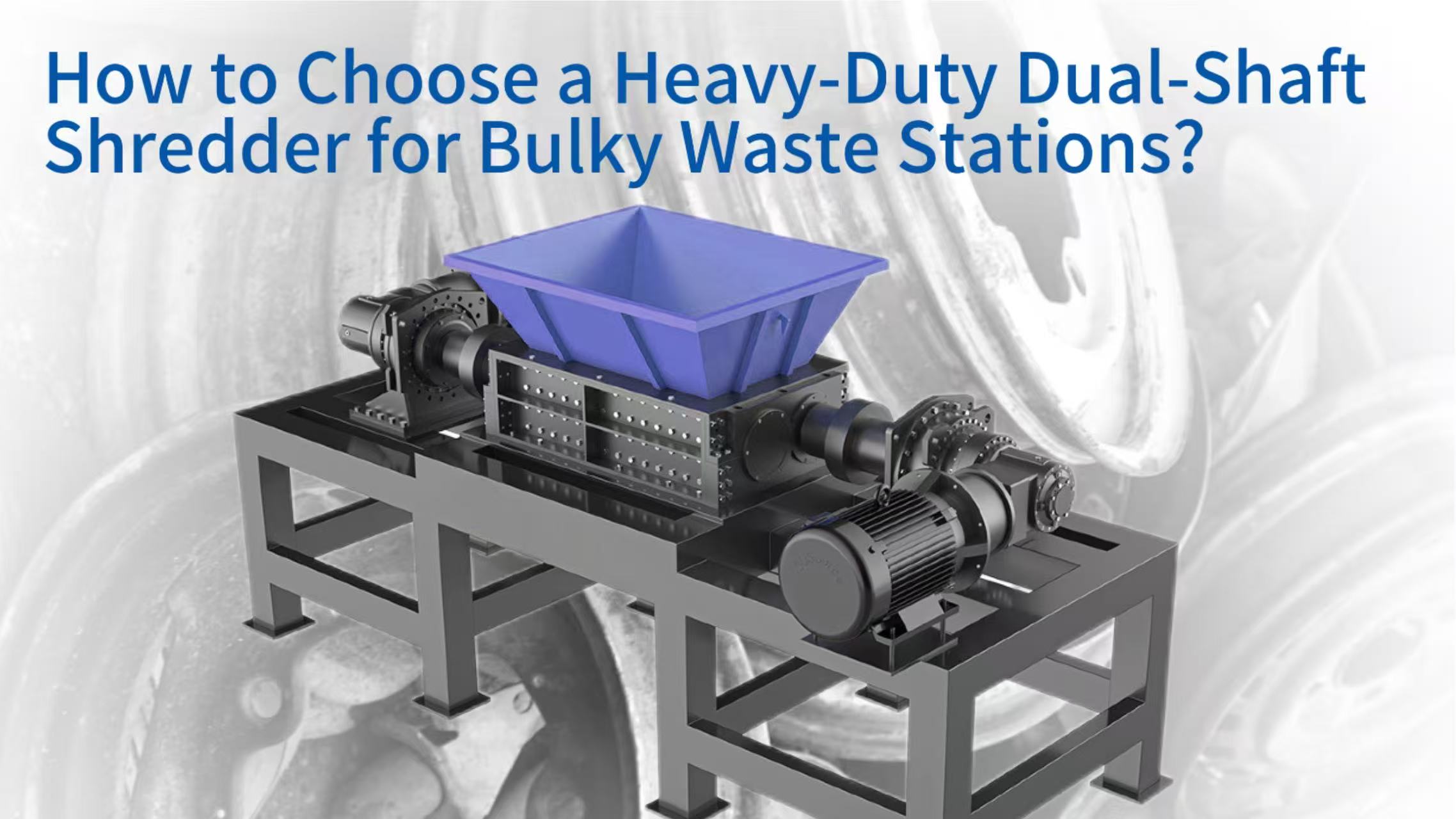
Modern society generates substantial quantities of large-sized waste materials. Discarded furniture, obsolete mattresses, garden trimmings from municipal maintenance, and industrial wooden pallets constitute a significant portion of the waste stream entering transfer stations. These items occupy vast volumes of space, making storage and transportation highly inefficient and costly. The challenges faced by operators of bulky waste stations are multifaceted. Traditional methods of handling such materials often rely on manual dismantling or the use of excavators for crushing, processes that are labor-intensive, slow, and present considerable safety risks to personnel. Furthermore, these conventional approaches fail to meet increasingly stringent environmental regulations and do little to facilitate resource recovery. A strategic solution is required to address these operational bottlenecks. The heavy-duty dual-shaft shredder emerges as the critical technology for this application. This guide provides a detailed examination of the factors involved in selecting the appropriate equipment for a bulky waste station. It will explore the fundamental operating principles of these machines, analyze the different types available, and delineate the key performance features that ensure long-term reliability and profitability. The objective is to equip decision-makers with the knowledge necessary to make an investment that transforms a waste station from a simple throughput point into an efficient, sustainable, and value-generating facility, supported by the expertise of MSW Technology, a company with 15 years of experience in this field.
Fundamental Definition and Core Operating Principles of Heavy-Duty Dual-Shaft Shredders
Core Operating Principles of Heavy-Duty Dual-Shaft Shredders
1. Low-Speed High-Torque
10-20 RPM rotation with up to hundreds of thousands N·m torque
2. Shearing & Tearing
Intermeshing blades create scissor-like action
3. Intelligent Overload Protection
PLC-controlled automatic reversal for jams
4. Hydraulic Pusher Ram
Forced feeding to prevent bridging
A heavy-duty dual-shaft shredder is a robust piece of industrial machinery engineered specifically for the volume reduction of complex, high-strength waste streams. Its primary function is to take large, unwieldy objects and convert them into smaller, uniform fragments. This process is essential for streamlining subsequent operations such as sorting, separation, and final recycling or disposal. Unlike high-speed granulators or chippers that cut, these machines utilize a combination of immense force to tear materials apart. The fundamental design revolves around two parallel shafts equipped with interlocking cutting discs that rotate slowly but with tremendous power. This section details the core technological principles that enable these machines to consistently and reliably process the most challenging materials found in bulky waste stations.
Core Power Transmission and the Low-Speed High-Torque Principle
The operational effectiveness of a heavy-duty dual-shaft shredder is rooted in the principle of low-speed, high-torque power transmission. While a typical granulator might spin at hundreds of revolutions per minute, these shredders operate at speeds as low as ten to twenty revolutions per minute. This deliberate design choice serves a critical purpose. High speed is ineffective against dense, tough materials; it generates impact but lacks the sustained force needed to tear thick materials apart. The low-speed operation is paired with an electric or hydraulic drive system connected to a heavy-duty gearbox. This combination multiplies the engine's power into an enormous rotational force, or torque, which can reach several hundred thousand Newton-meters. This massive torque is transferred directly to the two shafts. When the blades encounter a solid oak tree stump or a steel spring from a mattress, the high torque allows them to bite into the material and pull it apart with irresistible force, rather than simply bouncing off or stalling. This principle ensures the machine can consistently process the hardest components found in a bulky waste stream without suffering mechanical failure.
The Synergistic Mechanism of Shearing and Tearing
The core of the material breakdown process in a dual-shaft shredder is the synergistic action of shearing and tearing. The cutting discs mounted on the two rotating shafts are not aligned; they are staggered and intermesh with each other, much like gears meshing together. As the shafts rotate in opposite directions, the edges of the discs on one shaft pass extremely close to the discs or spacers on the opposite shaft. This creates a continuous scissor-like action across the entire width of the cutting chamber. When a piece of waste is fed into this mechanism, it is caught between the rotating cutters. The material is simultaneously sheared by the passing blade edges and subjected to powerful tensile forces as the counter-rotating shafts pull it in different directions. This combination is exceptionally effective for heterogeneous materials. For a composite item like a sofa, the shearing action cuts through fabric and wood, while the tearing action pulls apart the internal structure, separating foam, springs, and framing members. This aggressive yet controlled mechanism ensures complete material liberation, which is a prerequisite for efficient downstream recycling.
The Intelligent Control and Overload Protection Principle
Modern heavy-duty dual-shaft shredders are not merely mechanical workhorses; they are integrated with sophisticated intelligent control systems. These systems form the machine's digital nervous system, constantly monitoring its operational health. A central Programmable Logic Controller (PLC) receives real-time data from a network of sensors placed on critical components. These sensors track parameters such as electric motor amperage, hydraulic pressure, and shaft rotational speed. The PLC uses this information to optimize performance and, crucially, to protect the machine from damage. If the sensors detect a sudden spike in motor current accompanied by a drop in shaft speed, the PLC interprets this as a potential jam caused by an unshreddable object, such as a large concrete block. In response, the control system instantly initiates a pre-programmed reversal sequence. The shafts stop and then reverse direction for a few seconds, ejecting the offending object. After the reversal, the system automatically resumes forward rotation, allowing normal operation to continue without any manual intervention. This intelligent overload protection is vital for ensuring uninterrupted processing and safeguarding expensive components like the gearbox and shafts from catastrophic failure.
The Principle of the Hydraulic Pusher Ram
Bulky waste is, by definition, voluminous and often lightweight for its size, making it difficult to feed into the cutting rotors consistently. Gravity alone is insufficient to draw large, sprawling items like mattresses or piles of branches into the cutting zone. To overcome this challenge, heavy-duty shredders are equipped with a hydraulic pusher ram. This component acts as a powerful, automated feeder. The ram is a heavy steel plate located within the hopper that moves horizontally, driven by one or more powerful hydraulic cylinders. Once the hopper is loaded with material, the PLC activates the hydraulic system, which pushes the ram forward. The ram continuously compresses the loose waste against the rotating shafts, ensuring that the cutters are constantly engaged with the material. This forced feeding mechanism serves two essential purposes. It prevents material from bridging or "floating" above the rotors, a common problem that leads to empty running and low throughput. It also dramatically increases processing efficiency by ensuring the shredder works at its full capacity, processing each load rapidly and producing a more consistent output size.
Primary Types of Heavy-Duty Dual-Shaft Shredders and Their Applications in Waste Stations
The selection of a heavy-duty dual-shaft shredder is not a one-size-fits-all decision. The specific operational context of a bulky waste station dictates which type of machine will be most effective. Key variables include the station's fixed or temporary nature, the required daily throughput, and the existing material handling infrastructure. Manufacturers have responded to this diversity by developing distinct machine configurations. The two main categories are stationary systems for permanent installations and mobile units for flexible, on-site processing. Understanding the strengths and ideal use cases for each type is the first critical step in the selection process, ensuring the equipment aligns perfectly with the station's logistical and operational goals. MSW Technology offers a full range of both types, backed by 15 years of industry experience.
Stationary Shredders in Large-Scale Transfer Stations
For regional waste processing centers that receive a continuous, high-volume influx of material, the stationary heavy-duty dual-shaft shredder is the standard choice. These machines are designed for permanence and peak performance. They are typically the largest and most powerful models in a manufacturer's lineup, featuring high horsepower motors and massive cutting chambers capable of accepting oversized items without pre-processing. Installation requires a substantial civil engineering foundation, often involving deep concrete piers to anchor the machine and absorb the dynamic forces generated during operation. This robust installation allows for continuous, round-the-clock operation. In this setting, the shredder is integrated as the centerpiece of a complete processing line. It is fed by heavy-duty conveyors, and its output is directed to secondary equipment like magnetic separators to recover ferrous metals. The stationary configuration, with its access to grid power and integration into a fixed material flow, provides the highest possible processing capacity and efficiency for large-scale waste stations.
Mobile Shredders for Temporary or Decentralized Sites
Not all bulky waste processing needs occur at a single, permanent facility. There is a growing requirement for on-site processing at landfills, disaster cleanup zones, or smaller, decentralized collection points. For these scenarios, the mobile heavy-duty dual-shaft shredder offers an unparalleled advantage. These units are mounted on either track or wheeled undercarriages, transforming the shredder into a self-propelled machine. The mobility eliminates the need for costly permits and construction associated with fixed foundations. A mobile shredder can be driven directly to a waste pile, begin processing immediately, and then move to a new location once the job is complete. This on-site processing capability generates substantial savings by reducing the need to transport raw, uncompacted waste over long distances. Only the significantly reduced volume of shredded material needs to be hauled away for final disposal or recycling. This flexibility makes mobile shredders an economically attractive solution for municipalities with multiple collection points or for contractors specializing in disaster recovery and land clearing.
Sizing the Machine Based on Throughput Requirements
Whether choosing a stationary or mobile unit, correctly sizing the shredder to match the station's throughput requirements is paramount. This process involves a careful analysis of the waste stream volume. A station processing fifty tons of material per day has very different needs from one handling two hundred tons. The key machine specifications to consider are the power of the main drive motors and the dimensions of the cutting chamber. Higher power, typically measured in kilowatts or horsepower, provides the torque necessary to maintain processing rates with tough materials. A larger cutting chamber allows the machine to accept wider or longer items, reducing the need for pre-cutting. Selecting an undersized machine will lead to constant jams, slow processing, and eventual mechanical failure. Conversely, purchasing an oversized machine results in unnecessary capital expenditure and higher operating costs for energy and maintenance. A professional assessment of the average and peak waste volumes is essential to match the shredder's capabilities to the station's real-world demands.
Selecting a Support System Based on Feeding Methods
The method used to feed material into the shredder is an integral part of the overall system design and must be compatible with both the machine and the waste characteristics. The choice of feeding equipment significantly impacts overall efficiency and labor costs. For stations handling highly heterogeneous, bulky items like sofas and uprooted trees, the most efficient feeder is often a heavy-duty excavator or a material handler fitted with a grapple. This provides the flexibility to pick and choose items, clearing jams and managing the pile effectively. The material is dumped directly into the large hopper of the shredder. For operations processing more uniform materials, such as industrial wooden pallets or production waste, an automated feeding system is preferable. A steel chain conveyor or a vibratory feeder can provide a steady, controlled flow of material into the machine. This automation reduces the need for heavy equipment operators and allows for a more predictable and consistent processing rate. The selection of the feeding method must consider the station's existing equipment and labor resources to create a seamless and cost-effective workflow.
Key Functional Features to Consider When Selecting a Shredder
Moving beyond basic machine type and size, a discerning buyer must evaluate the specific functional features that govern a shredder's long-term performance, reliability, and cost of ownership. These are the design details and engineering choices that differentiate a high-quality, durable machine from one that will require constant maintenance and cause frequent operational disruptions. For a facility operating under tight budgets and schedules, these features directly impact the bottom line. This section examines the critical functional elements that ensure a heavy-duty dual-shaft shredder can withstand the rigors of daily use in a demanding waste station environment and deliver consistent, profitable results.
Processing Capacity and Output Size Control Functionality
The primary performance metric for any shredder is its processing capacity, typically measured in tons per hour. However, capacity alone is not the sole indicator of value. Equally important is the machine's ability to control the size of the output material with precision. Different downstream processes and end-markets require specific material dimensions. For example, material destined for a waste-to-energy plant must often meet a strict particle size specification to ensure efficient combustion. The shredder achieves this size control through a combination of factors: the configuration of the cutting tools, the rotational speed, and, most importantly, the use of a sizing screen located beneath the rotors. The operator can select a screen with a specific hole diameter to determine the maximum particle size that can exit the cutting chamber. The ability to quickly and easily change this screen, or to adjust the cutting gap between the blades, allows the waste station to produce a range of product sizes. This flexibility is essential for maximizing the value of the processed material and adapting to the demands of different recycling markets.
Blade Material Wear Resistance and Reparability
The cutting blades are the heart of the shredder and bear the full brunt of the abrasive and impactful forces of the waste stream. Consequently, the material from which these blades are manufactured is a critical determinant of machine longevity and operating costs. High-quality blades are typically forged from specialized tool steel alloys, such as D2 or high-chromium steels, which are formulated to possess extreme hardness and wear resistance. These alloys can maintain a sharp cutting edge for extended periods, even when processing materials containing grit, nails, or other abrasives. Beyond the base material, the blade design must also consider the practical realities of maintenance. The most cost-effective blade designs are those that offer multiple usable lives. Features such as a reversible design, where the blade can be turned around to present a fresh cutting edge once the first side is worn, are highly valuable. Furthermore, the ability to rebuild worn cutting surfaces through hard-facing welding, rather than requiring complete blade replacement, can drastically reduce long-term spare parts costs and keep the machine in operation.
Main Shaft Sealing for Dust and Moisture Protection
The operational environment inside a bulky waste station is extremely harsh on machinery. The air is filled with fine dust particles, moisture from organic waste, and potentially corrosive liquids. The points where the main drive shafts exit the cutting chamber to connect to the bearings and gearbox are particularly vulnerable. If dust and moisture penetrate these seals, they will contaminate the lubricants and rapidly destroy the precision bearings, leading to catastrophic failure and expensive repairs. To combat this, reputable manufacturers implement advanced shaft sealing technologies. Multiple-lip labyrinth seals are a common and effective solution. These seals create a complex, tortuous path that particles must navigate, making it nearly impossible for them to reach the bearings. Some designs incorporate an air purge system, where a constant flow of clean, low-pressure air is injected into the seal housing, creating positive pressure that actively pushes contaminants away. This robust sealing is not a visible feature, but it is one of the most important factors in ensuring the long-term reliability and operational uptime of the shredder.
Maintenance Accessibility and Automated Lubrication Function
The design of a shredder significantly influences the ease, speed, and safety with which routine maintenance can be performed. A machine designed for serviceability reduces downtime and labor costs. Key indicators of good maintenance accessibility include a hydraulically powered opening system for the machine housing. This feature allows technicians to safely and quickly lift the upper part of the cutting chamber to expose the shafts and blades for inspection, replacement, or reversal. Another critical feature is the inclusion of a centralized automatic lubrication system. Instead of requiring a maintenance worker to manually locate and grease dozens of individual bearing points around the machine, an automatic system is programmed to deliver precise, metered amounts of lubricant to all critical points at regular intervals while the machine is running. This ensures that bearings are always optimally lubricated, drastically extending their service life. It also eliminates the risk of human error, such as missed lubrication intervals, which is a common cause of premature bearing failure.
Main Material Categories Processed by Shredders in Waste Stations
Volume Reduction Efficiency by Material Type
The waste stream entering a bulky waste station is inherently heterogeneous, a complex mixture of materials discarded from residential, commercial, and industrial sources. A truly effective shredding solution must demonstrate versatility, capable of handling this wide spectrum of materials efficiently. The machine's ability to process different items, from fibrous green waste to dense, metal-reinforced furniture, determines its overall utility and return on investment. This section explores how a heavy-duty dual-shaft shredder applies its core principles to dominate the primary material categories found in these facilities, turning problematic waste streams into manageable resources.
Processing Bulky Furniture Like Sofas and Mattresses
Discarded furniture, particularly sofas and mattresses, presents one of the most difficult challenges for waste processors. These items are large, awkward to handle, and composed of a complex assembly of different materials. A typical sofa contains a wooden frame, polyurethane foam cushions, fabric upholstery, and metal springs or support structures. Conventional size reduction equipment can easily become entangled in the fabric or jammed by the springs. The heavy-duty dual-shaft shredder is uniquely suited to this task. Its low-speed, high-torque operation allows the blades to grab the entire piece and pull it into the cutting chamber. The shearing action slices through the fabric and foam, while the immense tearing force rips the wooden frame apart and disentangles the metal springs from the other materials. The output is a liberated mixture of material streams that can be effectively separated by downstream equipment. The springs can be removed by a magnetic separator, while the foam and wood chips can be processed into refuse-derived fuel.
Processing Yard and Green Waste
Yard waste, including tree trunks, large branches, stumps, and root balls, constitutes a significant volume of material, particularly during seasonal cleanups. This category of waste is characterized by its fibrous, high-strength nature and irregular shapes. Stumps and root balls are especially problematic as they are dense and often contain embedded soil and rocks. The high-torque characteristic of the dual-shaft shredder is essential for this application. The machine does not rely on sharp blades to cut the wood like a knife; instead, it uses its power to tear the wood fibers apart along the grain. The intermeshing rotors grab the branches and stumps, crushing and splitting them into manageable pieces. The resulting wood chips and chunks are significantly reduced in volume, making them cheaper to transport. This processed wood fiber has economic value as a feedstock for biomass boilers, as a base material for composting, or as a landscaping mulch, turning a disposal cost into a potential revenue stream.
Processing Industrial Pallets and Packaging
Industrial wooden pallets and large packaging crates are a common fixture in the waste stream from commercial and industrial zones. These items are designed for strength and durability, often constructed from dense hardwoods and assembled with nails and screws. Their uniform size and shape, however, make them well-suited for automated processing. A shredder equipped with a suitable feeding system, such as a chain conveyor, can process pallets at a very high rate. As the pallet enters the shredder, the powerful rotors immediately begin to break it apart. A key benefit of the shredding process for pallets is the liberation of ferrous contaminants. The immense forces applied by the shredder stress the wood around the nails, causing the nails to loosen and separate. Once the material exits the shredder, it passes under an overband magnet which efficiently pulls the nails and screws out of the wood stream. This produces a clean wood product suitable for applications like particleboard manufacturing or animal bedding, while also recovering scrap metal for recycling.
Processing the Light Fraction of Construction and Demolition Waste
Construction and demolition waste is a major global waste stream, consisting of a mixture of heavy materials like concrete and brick, and light materials like wood, plastics, drywall, and cardboard. The light fraction, after the heavy inerts have been removed, presents a significant disposal challenge. This mixture is bulky, difficult to compact, and has a low density. A heavy-duty dual-shaft shredder is an ideal tool for processing this light fraction. The shredding process homogenizes the mixture, tearing the various materials into a consistent particle size. This homogenization is a critical step in producing a high-quality fuel source known as Refuse-Derived Fuel (RDF) or Solid Recovered Fuel (SRF). Cement kilns and power plants use these processed materials as a substitute for fossil fuels. By shredding the light C&D waste, a transfer station can transform a material that would otherwise be landfilled into a valuable commodity, contributing to a circular economy and reducing the environmental impact of construction activities.
Detailed Analysis of Selection Criteria and Technical Principles
Technical Selection Criteria Workflow
Evaluate Shaft Design & Blade Arrangement
Solid alloy steel shafts with helical blade pattern for even force distribution
Assess Cutting Chamber Geometry
Optimized anvil design with wear-resistant lining and precise blade clearance
Verify Hydraulic & Electronic Control Integration
PLC-based closed-loop control with real-time sensor feedback
Check Vibration Control & Structural Stability
FEA-optimized frame with flywheels for vibration dampening
An informed purchasing decision requires more than a superficial review of product brochures. It demands a deeper investigation into the engineering principles and design philosophies that dictate a shredder's performance and durability. This section delves into the technical details that separate superior machines from their less robust counterparts. Understanding these underlying principles empowers a buyer to ask the right questions and evaluate different manufacturers' offerings based on sound engineering criteria, ensuring that the chosen equipment represents a sound, long-term investment for the waste station.
The Technical Principle of Shaft Design and Blade Arrangement
The main shafts are the most highly stressed components in a shredder, required to transmit immense torque while supporting the cutting blades and resisting bending forces from the material. Their design is a feat of mechanical engineering. High-quality shafts are machined from large-diameter, solid alloy steel forgings, not castings, to ensure a defect-free grain structure. They undergo rigorous heat treatment processes to achieve a tough, ductile core that can absorb shock loads, combined with a hard, wear-resistant surface. The arrangement of the cutting blades on these shafts is equally critical. Blades are typically mounted in a spiral or helical pattern along the shaft's length. This design principle serves a dual purpose. It distributes the impact forces of shredding more evenly across the entire cutting zone, reducing peak stresses on any single blade and shaft section. It also creates a continuous pulling action that actively draws material into the center of the rotors, improving feeding and preventing material from being pushed towards the ends of the shafts.
The Mechanical Principle of Cutting Chamber Geometry
The geometry of the cutting chamber, the cavity that houses the rotating shafts, is carefully designed to optimize the shredding process. It is not merely a simple box. The internal walls are lined with replaceable wear-resistant steel plates to protect the main structure from abrasion. The shape of the chamber, particularly the clearance between the chamber wall and the blade tips, is engineered to prevent material from simply rotating with the shaft. A precisely calculated "anvil" or counter-blade is often integrated into the chamber wall. This stationary blade works in opposition to the rotating cutters, providing a point for the material to be pinched and sheared against, rather than just being swept around. The angles and radii of the chamber are also designed to guide material back towards the cutting zone, ensuring that oversize pieces are repeatedly presented to the blades until they are small enough to pass through the screen. An optimized chamber geometry maximizes the machine's "bite," improving throughput and reducing the number of passes required to achieve the desired output size.
The Collaborative Technology of Hydraulic and Electronic Control Systems
The seamless operation of a modern heavy-duty shredder is a result of the sophisticated collaboration between its hydraulic and electronic control systems. The electronic system, centered on the PLC, acts as the machine's brain. It continuously processes data from sensors monitoring motor load, hydraulic pressure, and shaft speed. When it detects a condition that requires intervention, such as a slowdown due to a heavy load, it sends a command to the hydraulic system. The hydraulic system, acting as the machine's muscles, responds instantly. It might increase the pressure and speed of the hydraulic pusher ram to force more material into the rotors. Conversely, if the PLC detects a potential overload, it signals the hydraulic system to immediately stop and reverse the rotation of the shredder shafts. This closed-loop communication happens in fractions of a second, far faster than any human operator could react. This synergy allows the machine to automatically adapt to changing material conditions, maintain peak efficiency, and protect itself from damage, enabling fully automated, unattended operation.
The Technology of Vibration Control and Structural Stability
The immense forces generated during the shredding process inevitably create vibration. If not properly managed, this vibration can lead to structural fatigue, loosening of fasteners, and premature failure of components. Controlling vibration is therefore a key aspect of sound shredder design. Manufacturers achieve this through several means. First, the machine frame is designed using advanced engineering software like Finite Element Analysis (FEA). This allows engineers to model the stresses the frame will experience and reinforce areas of high strain, ensuring a rigid structure that resists flexing. Second, increasing the machine's mass is an effective way to dampen vibration. This is often achieved through the use of heavy, solid steel "flywheels" mounted on the drive train. These flywheels store rotational energy and smooth out the power delivery, absorbing the shock when the blades engage a tough piece of material. Finally, precision machining of all mating surfaces and the use of high-strength fasteners with proper locking mechanisms ensure that the entire assembly remains tight and stable under the most demanding operating conditions.
Core Value and Return on Investment from the Right Shredder Choice
The decision to invest in a heavy-duty dual-shaft shredder is a significant capital expenditure. Its justification must extend beyond simply meeting a regulatory requirement. A well-chosen, high-quality shredder functions as a value-generating asset that transforms the economics of a bulky waste station. The benefits accrue across multiple facets of the operation, from immediate cost savings to the creation of new revenue opportunities and long-term risk mitigation. This section quantifies the core value propositions that deliver a compelling return on investment, reinforcing the wisdom of selecting the right equipment from a trusted partner like MSW Technology.
Cost Reduction through Lower Transportation and Disposal Fees
Volume reduction is the most immediate and impactful benefit provided by a shredder. Bulky waste, in its raw form, is extremely inefficient to transport. A truck might only be able to carry a few sofas or a small pile of branches before reaching its volume capacity, even though it is far below its weight limit. This results in a high number of costly trips to landfills or processing facilities. A heavy-duty shredder reduces the volume of this material by up to seventy to eighty percent. The same truck that could only carry a few pieces of raw furniture can now carry many tons of shredded material. This dramatic increase in transport density directly translates into a proportional decrease in the number of truck trips required. The savings on fuel, vehicle maintenance, and driver labor are substantial. Furthermore, many landfills charge by the ton, and the reduced weight from removed contaminants like dirt, or the ability to divert materials to cheaper disposal options, adds another layer of significant cost reduction.
Revenue Generation through Enhanced Resource Recovery
By transforming a heterogeneous waste stream into a uniform, processed material, the shredder unlocks its inherent value as a resource. The size-reduced output is ideal for feeding automated separation equipment. Magnetic separators can efficiently extract clean ferrous metals like steel and iron from the shredded mix, creating a valuable scrap commodity that can be sold to metal recyclers. Non-ferrous metals can be recovered using eddy current separators. The remaining combustible fraction, consisting of wood, paper, plastics, and textiles, is homogenized into a high-BTU fuel source. This material can be sold as refuse-derived fuel to industrial users such as cement kilns or power plants, providing them with a cost-effective alternative to coal or natural gas. This capability transforms the waste station's economic model, shifting it from a cost center that pays for disposal to a profit center that generates revenue from the sale of recovered materials and fuels.
Enhanced Safety and Regulatory Compliance
Implementing a mechanical shredding solution fundamentally improves the safety of the waste station's working environment. The alternative to automated shredding often involves manual labor. Workers equipped with hand tools are tasked with cutting up large items, a process fraught with hazards including cuts, strains from heavy lifting, and being struck by falling objects. The operation of heavy machinery like excavators to crush materials also presents significant risks to nearby personnel. An automated shredding system eliminates the need for people to be in close proximity to hazardous materials during the primary size reduction phase. The process is controlled from a safe distance, typically from an control room. Furthermore, by preventing the accumulation of large piles of waste, the shredder helps control other environmental risks. Reduced material buildup leads to fewer pests, less odor, and lower risk of spontaneous combustion in organic waste piles, helping the facility maintain compliance with environmental permits and community standards.
Enhanced Operational Reliability and Uptime
The financial success of a waste processing operation is directly tied to its uptime. Every hour of unplanned downtime represents lost processing capacity, potential revenue, and added costs for waste that must be managed by other means. Investing in a shredder built with the robust features previously discussed ensures a high level of operational reliability. The use of heavy-duty components, intelligent overload protection, and effective sealing systems all contribute to a machine that can operate continuously for many hours without failure. This reliability provides station managers with the confidence to plan their operations effectively. They can guarantee throughput to downstream customers and avoid the logistical nightmares associated with equipment breakdowns. The reduced need for emergency maintenance also lowers maintenance costs and extends the intervals between planned service events, further contributing to a predictable and profitable operation. MSW Technology, with 15 years of experience, builds this reliability into every machine. Explore our heavy-duty solid waste double-shaft shredders designed for continuous operation. The integration of high-quality hydraulic rams and durable rotary cutters ensures long service life. For specific applications like wood, our double-shaft wood shredder offers specialized performance. The robust heavy-duty gearbox is a key component in our drive systems. Many of our models feature advanced control panels with PLC and HMI for easy operation. For aggressive feeding, we utilize a powerful hydraulic pusher ram. The quality of our hardened steel shafts is unmatched. For processing tires, see our specialized double-shaft tire shredder. To ensure material purity, we integrate effective magnetic separators into our systems. Contact MSW Technology today to learn how our solutions, backed by 15 years of industry leadership, can deliver a superior return on your investment.