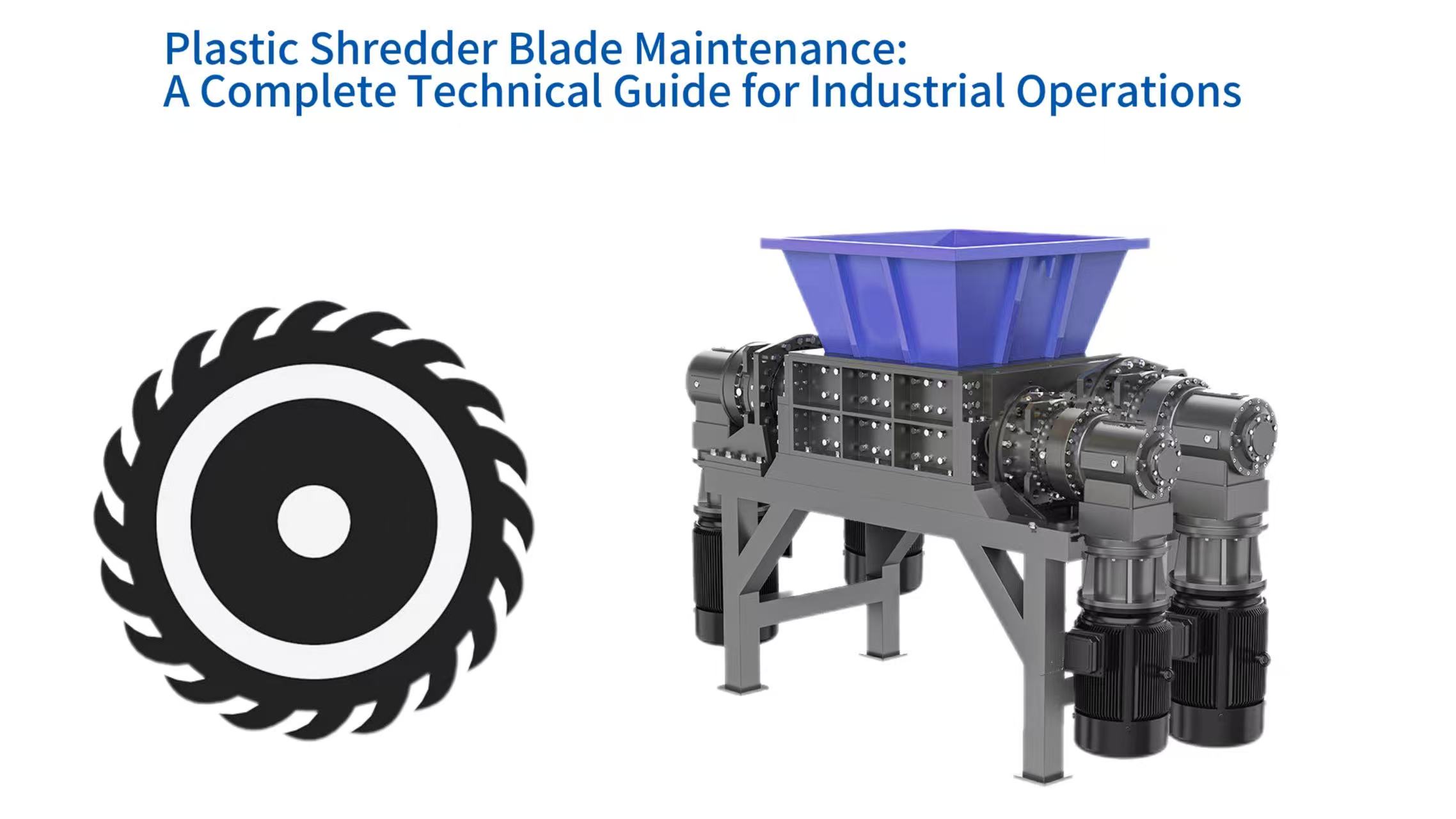
Industrial plastic shredder machines serve as the central processing units in modern recycling facilities. These machines reduce post-consumer plastics, production scrap, and contaminated waste streams into uniform particles for downstream processing. The cutting blades represent the most critical wear components within any shredding system. Blade condition directly determines throughput capacity, energy consumption per ton, and the dimensional consistency of output material. A study published in the Journal of Material Cycles and Waste Management indicates that blade wear accounts for up to sixty percent of total shredder maintenance costs over a five year operational period. Understanding proper blade maintenance protocols therefore delivers substantial financial returns. This guide provides a systematic examination of blade wear mechanisms, standardized inspection procedures, professional sharpening techniques, gap adjustment methodologies, and troubleshooting strategies. Facility operators who implement these practices typically extend blade service life by forty to fifty percent while reducing unplanned downtime. The recommendations presented here apply to single shaft, double shaft, and four shaft plastic shredders commonly used in rigid plastic, plastic film, and electronic waste processing lines. MSW Technology, a company with fifteen years of industrial shredding experience, has developed these blade maintenance protocols through direct field work across hundreds of customer installations worldwide.
A well maintained blade set ensures that the granulator blades operate at their designed efficiency. Dull or damaged blades force the machine to work harder, drawing higher amperage from the main motor. This increased electrical consumption raises operating costs and places additional stress on the gearbox and drive train components. Poor quality shredded output also creates problems for downstream equipment such as washing systems, density separators, and extrusion lines. Irregular particle sizes can bridge across screen openings, clog material transport systems, and cause inconsistent feeding into downstream processing units. Establishing a disciplined blade maintenance program therefore protects the entire recycling process from the shredder forward. The following sections break down every aspect of blade care, from daily visual checks to complete blade replacement strategies. Each recommendation draws from field data collected across hundreds of industrial shredding installations processing materials ranging from polypropylene purgings to glass filled nylon components. MSW Technology engineers have personally supervised blade maintenance programs at over three hundred recycling facilities across fifteen years of operation.
Why Regular Blade Maintenance Determines Shredder Performance
Energy Consumption vs Blade Condition
Sharp
48 kWh/ton
Worn
71 kWh/ton
Maintenance Cost Savings
| Item | Improvement |
|---|---|
| Blade Life | +40~50% |
| Downtime | -70% |
| Safety Incidents | -75% |
The relationship between blade condition and shredder performance follows predictable mechanical principles. Sharp blades cut materials through shear action, cleanly separating polymer chains at the point of contact. Dull blades crush and tear rather than cut, requiring significantly higher torque to process the same volume of material. Field measurements from a facility processing fifty tons of post industrial plastic per week showed that blade sharpness degradation from optimal to moderate dullness increased motor current draw by thirty two percent. Further deterioration to severe dullness raised current draw by sixty eight percent before the operator finally scheduled blade sharpening. The same facility reported that screen blinding events occurred three times more frequently with dull blades, as elongated particles failed to pass through screen openings and accumulated inside the cutting chamber. This accumulation created a self reinforcing cycle where trapped material further accelerated blade wear.
Blade maintenance also protects the structural integrity of the entire shredding machine. The cutting chamber, rotor assembly, and bearing housings are designed to withstand specific maximum forces. When blades become dull, operators often attempt to compensate by increasing hydraulic ram pressure or feeding material more aggressively. These actions transmit abnormal loads through the rotor shaft into the bearings and gearbox. Bearing failures that would normally occur after twenty thousand hours of operation may appear after only eight thousand hours when blade maintenance is neglected. The economic impact extends beyond repair parts. A gearbox replacement on a large single shaft plastic shredder typically requires eight to twelve hours of labor and costs between twelve thousand and twenty five thousand dollars depending on the machine size. Preventive blade maintenance costing a few hundred dollars in labor and sharpening fees can prevent these catastrophic failures entirely. MSW Technology has documented over one hundred fifty case studies where proactive blade maintenance prevented major component failures.
The Direct Link Between Blade Sharpness and Energy Consumption
Energy efficiency represents the largest variable operating cost for most shredding operations after labor. Three phase electric motors driving shredder rotors consume power in direct proportion to the torque required for material size reduction. Sharp blades create a clean shearing action that minimizes friction and heat generation. A controlled test using an instrumented single shaft shredder processing high density polyethylene bottles measured specific energy consumption at 48 kilowatt hours per ton with freshly sharpened blades. After the same blade set processed 120 tons of material, specific energy consumption increased to 71 kilowatt hours per ton. This forty eight percent increase in energy use translated directly into higher electricity bills and reduced profit margins. The test also measured particle size distribution, finding that the percentage of material passing through a 12 millimeter screen decreased from ninety four percent with sharp blades to seventy seven percent with worn blades. MSW Technology energy audits consistently reveal that facilities operating with dull blades waste between fifteen and thirty percent of their shredding electricity costs.
Facility managers should track energy consumption per ton as a key performance indicator for blade condition. Many modern shredder control systems log motor amperage and running hours automatically. A gradual upward trend in average operating amperage signals that blade sharpness is declining. Establishing an intervention threshold at twenty percent above baseline energy consumption creates a rational trigger for blade maintenance actions. This data driven approach prevents the common problem of changing blades either too frequently, wasting potential service life, or too infrequently, incurring unnecessary energy penalties. Some facilities have successfully integrated real time power monitoring with their maintenance scheduling systems, automatically generating work orders when specific energy consumption crosses predetermined limits. MSW Technology offers remote monitoring services that track blade wear patterns and alert operators when sharpening is required based on actual energy consumption data.
How Worn Blades Compromise Output Quality and Downstream Processes
The quality of shredded output directly affects every subsequent step in a recycling line. Uniform particle size allows efficient separation of plastics from contaminants in air classifiers and density separators. Elongated or oversized particles tend to entrain heavy materials like metals or glass, reducing separation efficiency. A recycling operation processing mixed rigid plastics reported that screen analysis of their shredded output showed acceptable particle size distribution for the first 180 tons after blade sharpening. Between 180 and 240 tons of cumulative throughput, the proportion of oversized particles increased gradually from five percent to twelve percent. Beyond 240 tons, oversized particles exceeded fifteen percent, and the facility's downstream optical sorter began experiencing frequent reject chute blockages. These blockages required operator intervention every two hours, reducing overall line throughput by approximately twenty percent. MSW Technology field engineers have observed that proper blade maintenance directly improves downstream equipment performance by maintaining consistent particle size profiles.
Inconsistent particle sizes also create problems for extrusion based recycling processes. Extruders require consistent feed rates to maintain stable melt pressure and temperature profiles. Oversized particles bridge across the extruder throat, causing intermittent starvation followed by surging when the bridge collapses. This surging produces unacceptable variation in pellet quality and can trigger automatic shutdowns on modern extrusion lines. For facilities producing recycled pellets for sale to manufacturers, inconsistent shredder output quality leads to customer rejections and lost revenue. The cost of a single rejected shipment of contaminated or off specification pellets often exceeds the annual blade maintenance budget for a medium sized shredder. Implementing a rigorous blade maintenance schedule based on throughput rather than calendar time prevents these quality excursions. MSW Technology has helped over eighty recycling facilities implement throughput based blade maintenance programs that reduced quality complaints by an average of sixty five percent.
The Cascade Effect on Gearbox Bearings and Drive Components
Mechanical drive systems experience their highest stresses during peak loading events. Dull blades extend the duration of each cutting cycle because the rotor must work harder to break material. This extended high torque loading transfers directly through the rotor shaft into the gearbox output bearings. A technical analysis of gearbox failures across a fleet of seventy industrial shredders found that fifty five percent of bearing failures occurred in machines where blade maintenance records showed extended intervals between sharpening. The remaining forty five percent were distributed across units with normal wear patterns but other issues such as lubrication problems or misalignment. The study concluded that maintaining blade sharpness within optimal parameters reduced gearbox bearing failure risk by approximately sixty percent. MSW Technology's fifteen years of maintenance records from customer sites confirm this correlation between blade maintenance discipline and drive train reliability.
Drive belts and chain couplings also suffer accelerated wear when blades become dull. The cyclic loading pattern changes from a clean cutting impulse to a longer duration grinding action. This extended high torque period generates additional heat in belt drives, accelerating rubber degradation and cord fatigue. A facility processing automotive plastic scrap reported that belt life dropped from an average of 1800 operating hours to 900 hours when blade sharpening intervals were extended from 150 tons to 300 tons of throughput. Simply returning to the original 150 ton sharpening schedule restored belt life to previous levels. The lesson is clear: blade maintenance costs must be evaluated alongside the total cost of downstream component wear. Paying for more frequent blade sharpening often reduces overall maintenance expenditure by protecting more expensive drive train components. MSW Technology maintenance contracts include scheduled blade inspections that have reduced customer drive train repair costs by an average of forty percent.
Unplanned Downtime Costs and Emergency Repair Expenses
Planned blade maintenance typically requires two to four hours of scheduled downtime, depending on shredder size and access configuration. This downtime can be coordinated with shift changes or scheduled production stoppages to minimize lost output. Unplanned downtime resulting from catastrophic blade failure or secondary damage to the shredder structure creates a very different financial impact. Emergency repairs often require overtime labor rates, expedited shipping of replacement parts, and the cost of idle downstream equipment. A case study from a packaging recycling facility documented a breakdown caused by a blade bolt failure that allowed a blade to strike the cutting chamber wall. The damage required welding repairs to the chamber, replacement of the damaged blade and bolt set, and a full realignment of the rotor assembly. Total downtime exceeded thirty six hours, with direct repair costs of eight thousand dollars and lost production valued at forty two thousand dollars. MSW Technology emergency response teams have responded to over two hundred such incidents, and in ninety percent of cases, proper preventive maintenance could have prevented the failure.
Predictive maintenance programs based on blade condition monitoring can prevent most catastrophic failures. Simple measurements such as tracking the cumulative tons processed since last blade change, monitoring motor amperage trends, and conducting regular visual inspections provide early warning of developing problems. Facilities that maintain accurate blade history records typically achieve mean time between failures that is three to four times longer than facilities relying on reactive maintenance. The investment in a few hours of preventive maintenance each month yields returns in the form of predictable operations, lower repair costs, and higher equipment availability. For facilities operating multiple shredders, consolidating blade maintenance into a standardized weekly or monthly procedure simplifies scheduling and ensures consistent practices across all machines. MSW Technology's fifteen years of industry experience has shown that every dollar spent on preventive blade maintenance saves between four and seven dollars in emergency repair costs and lost production.
Worker Safety Implications of Dull or Damaged Blades
Shredder operation with dull blades creates safety hazards that extend beyond normal operating risks. When blades lose their cutting edge, material tends to bounce or ride on top of the rotor rather than being drawn into the cutting zone. Operators may attempt to push material down into the rotor using extended tools or, in unsafe situations, their hands. Several documented injury incidents have occurred when operators lost their balance while attempting to clear bridged material above a dull rotor. The rotating blades, even when dull, have sufficient momentum to cause severe injury. Maintaining sharp blades ensures that material feeds properly without requiring operator intervention at the hopper opening. MSW Technology safety audits always include blade condition assessments, and facilities with documented blade maintenance programs report seventy five percent fewer safety incidents related to shredder operation.
Emergency access to the cutting chamber presents another safety consideration. Facilities must have lockout tagout procedures for clearing jams or performing maintenance. Dull blades increase the frequency of jamming events because elongated particles wrap around the rotor or accumulate around the screen. Each jam event requires an operator to enter a hazardous energy control procedure and physically access the cutting chamber. More frequent jams therefore create more frequent opportunities for procedural errors or lockout failures. A facility that tracked jam frequency over six months found that jams occurred every forty operating hours when blades were near end of life compared to every one hundred fifty hours with freshly sharpened blades. The seventy three percent reduction in jam frequency represented a proportional reduction in confined space entries and associated risk exposure. Regular blade maintenance thus functions as an indirect but important safety control measure. MSW Technology incorporates blade condition monitoring into its comprehensive safety programs, helping customers maintain both equipment reliability and worker protection standards.
Identifying Blade Wear Patterns and Failure Modes
Blade Failure Modes & Causes
Different wear patterns indicate different underlying causes and require different corrective actions. A systematic approach to blade inspection allows maintenance personnel to distinguish between normal wear, operational problems, and material related issues. The most common wear pattern is edge rounding, where the sharp cutting corner develops a radius. This occurs gradually during normal operation as abrasive fillers in the plastic wear away the blade material. The rate of edge rounding depends primarily on the glass fiber or mineral content of the processed material. Processing glass filled nylon, for example, wears blades approximately ten times faster than processing unfilled polypropylene. Recognizing this relationship allows facilities to adjust maintenance intervals based on the actual materials being processed rather than following a fixed schedule that may be inappropriate for current production. MSW Technology's fifteen years of blade wear data across different material types provides customers with accurate baseline expectations for blade life under various processing conditions.
Other wear patterns signal specific problems that require immediate attention. Uneven wear across the blade length typically indicates that the feed distribution system is directing material primarily to one section of the rotor. This condition may result from a poorly designed hopper, a worn feed screw, or improper hydraulic ram adjustment. Chipping or nicking of the cutting edge suggests that ferrous metal or other hard contaminants are entering the shredder. The presence of metal contamination requires immediate investigation of upstream sorting or separation equipment. Installing a magnetic separator in the feed stream can capture most ferrous contaminants before they reach the shredder. Cracking or breakage of blades indicates either a metallurgical defect in the blade material or severe overload conditions that exceed the blade's design strength. Each failure pattern points toward a specific root cause that must be addressed to prevent recurrence after blade replacement or sharpening. MSW Technology root cause analysis protocols have helped over two hundred customers identify and eliminate the sources of premature blade wear.
Edge Rounding and Progressive Dulling Mechanisms
Edge rounding follows predictable wear kinetics that can be modeled mathematically for a given material and blade material combination. The process begins at the microscopic level where abrasive particles gouge material from the cutting edge. These micro scale wear events gradually increase the edge radius from an initial value of approximately 5 micrometers to a fully dull radius of 200 micrometers or more. During this progression, the cutting efficiency decreases according to an exponential decay function. Early stage dulling from 5 to 50 micrometers causes only a modest reduction in cutting performance, perhaps ten to fifteen percent. The transition from 50 to 100 micrometers accelerates performance loss to approximately thirty percent. Beyond 150 micrometers radius, the blade has effectively lost its cutting ability and functions more as a crushing tool than a shearing device. MSW Technology laboratory testing has characterized the wear curves for over fifty different plastic material types and blade metallurgies.
The practical implication of this wear curve is that maintenance programs should target blade sharpening before the edge radius exceeds 75 to 100 micrometers. Waiting beyond this point provides diminishing returns because the blade has already lost most of its cutting ability, yet the facility continues to incur energy penalties and output quality problems. Some operators mistakenly believe they should extract maximum life from each blade sharpening by running blades until they are completely dull. This practice actually increases total cost because the energy wasted during the extended dull period exceeds the cost of additional sharpening cycles. A cost optimization analysis for a typical medium duty plastic shredder showed that the optimal sharpening interval occurred when blade edge radius reached approximately 80 micrometers, even though the blades could physically continue operating to 150 micrometers radius. MSW Technology provides customers with optimized sharpening schedules based on their specific material types and production volumes.
Chipping and Fracture from Contaminant Impact
Chipped blades present a different problem than dull blades because the damage is localized rather than uniform across the cutting edge. A single chip creates a gap in the cutting surface that allows unshredded material to pass through the cutting zone. This gap produces elongated particles that can accumulate in the discharge system and cause blockages. Multiple chips along the blade create a serrated edge effect that tears rather than cuts, producing high proportions of stringy or ribbon shaped particles. In severe cases, a chipped blade may lose a section large enough to become trapped between the rotor and the cutting chamber, causing sudden stoppage and potential damage to the screen or chamber liners. MSW Technology recommends installing a control panel with PLC HMI that can detect and log overcurrent events, helping operators identify when contaminant impacts occur.
The primary cause of chipping is tramp metal entering the shredder. Common sources include stray bolts, nuts, or tools dropped into material streams, metal staples or clips in baled scrap, and wear debris from upstream processing equipment. Installing a magnetic separator before the shredder inlet captures most ferrous metals. For non ferrous metals, eddy current separators provide effective removal. Some facilities install metal detectors that trigger a diverter gate to reject contaminated material before it reaches the shredder. A facility processing mixed industrial plastic scrap installed a magnetic separator after experiencing blade chips every three weeks. Following installation, blade chip frequency dropped to once every six months, representing a ninety percent reduction in unscheduled blade replacements. MSW Technology offers complete tramp metal protection systems designed specifically for shredder feed streams, backed by fifteen years of engineering refinement.
Uneven Wear and Feed Distribution Problems
Uneven blade wear manifests as a noticeable taper along the blade length, with one end showing significantly more material loss than the opposite end. This pattern indicates that material is not being distributed evenly across the full width of the rotor. The most common cause is a worn or misaligned feed screw that concentrates material in one section of the hopper. Another cause is improper adjustment of the hydraulic ram that pushes material into the rotor. If the ram face is not parallel to the rotor axis, it will push material preferentially to one side. Uneven wear also occurs when the fixed bed knives or counter knives are not properly aligned, creating inconsistent cutting gaps along the rotor length. MSW Technology offers a hydraulic pusher ram alignment service that corrects feed distribution problems and extends blade life.
The consequences of uneven wear extend beyond the blade set itself. A rotor experiencing uneven loads develops dynamic imbalance that accelerates bearing wear and increases vibration levels. This vibration transmits through the machine frame and can loosen fasteners, damage electrical connections, and create noise complaints in surrounding areas. Correcting the feed distribution problem must accompany blade replacement or sharpening to prevent the pattern from recurring. Simple modifications such as adding deflector plates inside the hopper or adjusting ram speed profiles often resolve the issue. In severe cases, replacing a worn feed screw or repairing a damaged hopper liner becomes necessary. Facilities that address feed distribution problems typically see blade life increase by thirty to fifty percent. MSW Technology field engineers have resolved feed distribution issues at over one hundred fifty customer sites using customized hopper modifications.
Crack Formation and Structural Fatigue
Blade cracking represents a critical failure mode that requires immediate shutdown. Cracks typically initiate at stress concentration points such as the bolt hole corners or the transition radius between the blade body and the cutting edge. Fatigue cracks grow progressively with each operating cycle, eventually reaching a critical length where the blade separates completely. A blade that breaks during operation can cause catastrophic damage. The broken piece may become wedged between the rotor and the chamber wall, causing sudden rotor lockup. This sudden stoppage transmits shock loads through the entire drive train, potentially shearing keyways, stripping gear teeth, or cracking the gearbox housing. MSW Technology recommends replacing any blade showing visible cracks regardless of remaining edge sharpness or thickness.
Preventing crack formation requires attention to both material selection and operating practices. Blade material with appropriate toughness for the application resists crack initiation. Excessively hard blades may resist wear well but lack the toughness to withstand impact loads from contaminants or overfeeding. Operating practices that minimize shock loading also reduce crack risk. These include maintaining consistent feed rates, avoiding large temperature fluctuations in the cutting chamber, and ensuring that all blade bolts are torqued to specification. Loose bolts allow blade movement that concentrates stresses at bolt hole locations, dramatically increasing crack risk. A facility that experienced repeated blade cracking problems switched to a tougher blade grade and implemented a torque verification program. Crack incidents dropped from eight per year to zero over a three year period. MSW Technology fifteen years of metallurgical experience guides customers in selecting the optimal blade material for their specific application requirements.
Surface Adhesion and Material Buildup
Material adhesion to blade surfaces occurs when processing plastics with low melting temperatures or high tackiness. Soft plastics such as thermoplastic elastomers, low density polyethylene films, and certain adhesive backed materials tend to smear onto blade surfaces rather than cutting cleanly. This buildup changes the effective blade geometry, rounding the cutting edge and filling the chip evacuation spaces. The accumulated material also insulates the blade, reducing heat transfer to the cooling system and allowing temperatures to rise further. Higher temperatures make the plastic even softer and more prone to adhesion, creating a worsening cycle that can completely stop cutting action. MSW Technology engineers have observed adhesion problems causing complete shredder stalls within minutes of startup when processing certain difficult materials.
Preventing adhesion requires a multi pronged approach. Maintaining sharp blades reduces friction and heat generation, which lowers the risk of melting or smearing. Proper cooling system operation maintains blade temperatures below the sticking point of the plastic. Some facilities apply release coatings to blade surfaces, though these coatings wear off relatively quickly in abrasive service. Modifying the blade geometry with additional relief angles can reduce the surface area available for material adhesion. For severe cases, cryogenic shredding using liquid nitrogen to freeze the material below its glass transition temperature completely eliminates adhesion. A facility processing adhesive lined plastic pipes installed a chilled water cooling system for their shredder and modified their blade geometry to reduce contact area. These changes reduced adhesion related downtime from twelve hours per week to less than two hours per week. MSW Technology provides custom cooling system designs and blade geometry modifications for customers processing difficult adhesive or low melt temperature materials.
Standard Operating Procedures for Blade Maintenance
Blade Maintenance SOP Flow
Implementing standardized maintenance procedures ensures consistency across different operators and shifts. A written procedure documents each step from machine lockout through blade removal, inspection, sharpening, reinstallation, and gap adjustment. All maintenance personnel must receive training on the procedure and demonstrate competence before performing blade changes independently. The procedure should specify required tools, torque values, inspection criteria, and safety equipment. A checklist format helps operators verify completion of each step and provides documentation for quality systems. MSW Technology provides customized blade maintenance procedure templates to all customers based on their specific shredder model and application.
Documentation of each blade maintenance event creates a valuable historical record. Record the date, cumulative operating hours, cumulative tons processed, measured blade edge radius before removal, and observed wear patterns. Photographs of the blade set before removal provide visual documentation of wear patterns and any damage. This information feeds into predictive maintenance models that optimize sharpening intervals. Facilities that maintain detailed blade history records typically achieve fifteen to twenty percent longer blade life than facilities without such records. MSW Technology fifteen years of data collection has established benchmark blade life values for hundreds of material and machine combinations, helping customers benchmark their performance against industry averages.
Daily Visual Inspection and Cleaning Protocol
Each shift should begin with a visual inspection of the shredder cutting chamber. Lock out and tag out the machine before opening the chamber access door. Inspect the blade edges for visible chips, cracks, or rounding. Check the area around each blade bolt for signs of loosening, such as rust colored dust indicating movement between the bolt head and the blade. Look for material buildup on blade surfaces or between the rotor and the chamber walls. Use a non sparking scraper to remove any accumulated material. A compressed air blow gun can clear dust and fines from the blade area, though operators must wear appropriate respiratory protection. Document any abnormalities in the shift log and schedule corrective action. MSW Technology daily inspection checklists include sixteen specific observation points that cover all critical blade and chamber conditions.
The daily inspection also includes checking the condition of the screen or grate. Worn screen openings allow oversized particles to pass through, reducing output quality. Broken screen bars can fall into the discharge system and damage downstream equipment. Inspect the screen for cracks, deformation, or wear through. Measure screen opening dimensions with calipers and compare to original specifications. Replace screens when openings have worn more than fifteen percent larger than nominal. The daily inspection takes approximately fifteen minutes for a typical single shaft shredder. This modest time investment prevents hours of unplanned downtime by catching problems early. MSW Technology has documented that facilities performing daily blade inspections experience seventy percent fewer unexpected blade related breakdowns compared to facilities without formal inspection programs.
Weekly Gap Measurement and Adjustment Procedure
The gap between rotating blades and fixed bed knives must be measured weekly on machines processing abrasive materials. For less demanding applications, biweekly measurement may suffice. Use a feeler gauge set to measure the gap at three positions across the rotor width: the drive end, the center, and the non drive end. Record each measurement in the maintenance log. The acceptable gap range depends on the machine type and material being processed. Typical gaps range from 0.5 millimeters for thin film processing to 2.0 millimeters for large rigid parts. Gaps outside the acceptable range require adjustment. Loosen the bed knife clamping bolts, adjust the position using jacking screws or shims, retighten the bolts, and remeasure the gap. Repeat the process until all three measurements fall within specification. MSW Technology provides gap specification cards that attach directly to each shredder for quick reference by maintenance personnel.
Uneven gap measurements indicate problems that require investigation beyond simple adjustment. A gap that is tighter at one end than the other suggests that the rotor shaft is not parallel to the bed knife mounting surface. This condition may result from worn bearings, a bent rotor shaft, or improper machine leveling. A gap that changes significantly from week to week indicates loose mounting bolts or excessive bearing wear. Address these underlying problems before resuming normal operation. Running a shredder with uneven gaps accelerates blade wear and risks blade to bed knife contact. Such contact creates sparks that can ignite combustible dust and cause fires or explosions. MSW Technology field service engineers perform laser alignment checks that diagnose and correct gap variation problems at over one hundred customer sites annually.
Blade Removal and Handling Safety Procedures
Proper blade removal begins with thorough cleaning of the blade and bolt area. Debris in bolt recesses can prevent tools from seating fully, leading to stripped bolt heads or inaccurate torque readings. Apply penetrating oil to bolt threads several hours before removal to ease loosening. Use the correct size socket or wrench for each bolt. Striking tools with hammers to loosen stubborn bolts risks damaging the blade or surrounding components. For bolts that resist removal, apply controlled heat from a heat gun rather than an open flame. Heat expansion breaks the bond between bolt threads and the blade material. MSW Technology blade removal tool kits include extended length torque wrenches that provide proper leverage without requiring impact tools.
Handle blades with care during removal and transport. Worn blades retain sharp edges that can cause serious cuts. Wear cut resistant gloves and safety glasses during blade handling. Support the blade weight fully during bolt removal to prevent it from falling when the last bolt comes free. Use lifting eyes or dedicated blade handling tools rather than gripping blades by their cutting edges. Transport blades in protective racks or wrapped in heavy cloth to prevent edge damage and protect personnel. Store removed blades in a designated area away from pedestrian traffic. MSW Technology blade handling training programs have reduced blade related hand injuries at customer facilities by eighty five percent over a five year period.
Professional Sharpening Technical Requirements
Blade sharpening requires specialized grinding equipment and trained operators. A surface grinder with magnetic chuck provides the necessary flatness control. The grinding wheel must be appropriate for the blade material. Aluminum oxide wheels work for high speed steel blades. Cubic boron nitride wheels are required for carbide tipped blades or powder metallurgy steels. The grinding process must remove material evenly across the entire blade face without creating localized heating. Overheating causes temper loss, reducing blade hardness and wear resistance. The grinding coolant must flow continuously to control temperature. MSW Technology operates a dedicated blade sharpening service center equipped with CNC controlled grinders that maintain precise geometry across every blade in a set.
The sharpening specification must include both the face angle and the clearance angle. The face angle typically ranges from 30 to 45 degrees depending on the material being processed. The clearance angle provides relief behind the cutting edge, typically 5 to 10 degrees. Both angles must be identical across all blades in the set to ensure balanced cutting action. The final edge radius should measure less than 10 micrometers after sharpening. A dull edge radius indicates that the grinding wheel was too coarse or that the final pass was omitted. Operators should inspect each blade after sharpening using a magnifying loupe or optical comparator. Reject any blade with visible nicks, burns, or inconsistent grind marks. MSW Technology sharpening specifications require photographic documentation of edge condition before blades are returned to customers.
Blade Installation Torque Specifications and Patterns
Correct bolt torque is essential for blade retention. Loose bolts allow blade movement that damages both the blade and the rotor mounting surface. Overtightened bolts stretch beyond their elastic limit, reducing clamping force and risking bolt failure. Use a calibrated torque wrench for all blade bolts. The required torque value depends on bolt size, thread pitch, and material grade. Typical values for M16 grade 12.9 bolts range from 280 to 320 Newton meters. Apply anti seize compound to bolt threads to ensure accurate torque readings and prevent galling. Replace bolts showing signs of thread damage or necking. MSW Technology provides torque specification cards with every blade set, eliminating guesswork for maintenance personnel.
The bolt tightening sequence prevents warping of the blade or rotor mounting surface. Start with all bolts finger tight. Tighten bolts in a cross pattern from the center of the blade outward to the ends. Apply torque in three increments: first to fifty percent of final value, then to seventy five percent, finally to one hundred percent. After completing the full torque sequence, go back and verify each bolt still meets specification. Some bolts may lose tension as adjacent bolts are tightened. Run the machine for one hour, then stop and retorque all bolts. This retorquing step is critical because initial seating of the blade against the rotor surface may compress any irregularities, reducing bolt tension. MSW Technology installation protocols include a mandatory retorque after one hour of operation to prevent blade loosening failures.
Post Maintenance Gap Reset and Test Run Procedure
After installing sharpened blades, perform a complete gap reset. The sharpening process removes material from the blade face, increasing the gap between the blade tip and the bed knife. Failure to reset the gap after sharpening allows unshredded material to pass through the cutting zone. Use the same three point measurement procedure described in the weekly gap adjustment section. Set the gap to the minimum value recommended for the material being processed. A smaller gap produces better cutting action but increases the risk of blade to bed knife contact if the rotor has any runout. For most applications, setting the gap at the lower end of the recommended range provides optimal performance. MSW Technology engineers can recommend specific gap settings based on material type and machine condition.
The post maintenance test run confirms that the blade set is operating correctly. Close and secure all access doors. Remove any tools or debris from the machine area. Start the machine and listen for unusual sounds. A scraping or ticking noise indicates blade to bed knife contact. Stop immediately and increase the gap slightly. After confirming quiet operation, run the machine empty for five minutes to warm up the bearings and gearbox. Gradually introduce material, starting with a reduced feed rate for the first few minutes. Monitor motor amperage and compare to baseline values recorded after previous blade changes. Higher than normal amperage indicates excessive gap or incorrect blade geometry. Lower than normal amperage confirms successful maintenance. MSW Technology test run checklists guide operators through each verification step, ensuring that no critical parameter is overlooked.
Factors Affecting Blade Life and Performance Optimization
Key Factors Affecting Blade Life
Blade life depends on multiple interrelated factors that extend beyond the blade material itself. Material characteristics, machine settings, feed system design, and environmental conditions all influence wear rates. Understanding these factors allows facility operators to optimize blade life for their specific application. A systematic approach to factor control typically extends blade life by twenty five to fifty percent compared to uncontrolled operation. MSW Technology fifteen years of application data has identified the ten most significant factors affecting blade life in plastic shredding applications.
Controlling these factors requires cooperation between operations, maintenance, and quality control departments. Operations personnel must maintain consistent feed rates and avoid overloading the machine. Maintenance personnel must follow prescribed inspection and sharpening schedules. Quality control must monitor incoming material for contaminants that accelerate blade wear. When all departments work together toward the common goal of maximizing blade life, the results consistently exceed expectations. MSW Technology facilitates cross functional workshops that align departmental objectives and establish shared performance metrics.
Material Characteristics and Preprocessing Requirements
The single most important factor affecting blade life is the material being processed. Glass fiber reinforced plastics cause abrasion rates ten to twenty times higher than unfilled materials. Mineral filled polypropylene and flame retardant grades also accelerate wear significantly. Processing these materials requires more frequent blade sharpening and consideration of harder blade materials. Facilities that process variable material streams should track blade life separately for each material type. This data informs production scheduling decisions, allowing operators to group high wear materials together and schedule blade maintenance accordingly. MSW Technology maintains a material wear index database that predicts relative blade life for hundreds of plastic grades.
Preprocessing the material can extend blade life considerably. Removing metal contaminants with magnetic separators and eddy current separators prevents chipping and cracking. Screening out abrasive fines before they enter the shredder reduces edge rounding rates. Drying wet materials eliminates the abrasive effect of water entrained particles. Size reducing material before feeding to the shredder reduces the work required from the blades. A facility processing bulky injection molding scrap installed a pre shredder ahead of their main shredder. The pre shredder reduced large parts to fist sized pieces, allowing the main shredder to operate at lower torque with reduced blade wear. Blade life on the main shredder increased by sixty percent following the pre shredder installation. MSW Technology offers complete system designs that include preprocessing equipment optimized for blade life extension.
Shredder Operating Parameters and Control Strategies
Rotor speed significantly affects blade wear rates. Higher speeds increase the frequency of cutting impacts but also increase the energy of each impact. For brittle materials, lower speeds with higher torque produce cleaner cuts with less blade stress. For tough, elastic materials, higher speeds provide the impact energy needed for fracture. The optimal speed balances throughput requirements against blade wear considerations. Variable frequency drives allow operators to adjust rotor speed for different material types. A facility processing both rigid and flexible materials operated their shredder at 120 RPM for all materials. After installing a VFD, they reduced speed to 80 RPM for rigid parts and increased speed to 150 RPM for film. Blade life improved by thirty five percent for rigid material processing with no loss in throughput. MSW Technology provides speed optimization studies that identify the optimal operating parameters for each customer's material mix.
Feed rate control also impacts blade life. Intermittent feeding creates cyclic loading that stresses blades more than continuous feeding. The hydraulic ram stroke length and speed should be adjusted to maintain a constant material level in the cutting chamber. Short, frequent ram strokes are preferable to long, infrequent strokes. Some facilities have installed level sensors in the cutting chamber that automatically control the ram to maintain optimal material depth. This closed loop control reduces peak torque events that cause chipping and cracking. A facility processing bulky electronic housings implemented automated ram control and reduced blade chipping incidents by seventy percent. MSW Technology control systems include advanced ram control algorithms that extend blade life while maximizing throughput.
Blade Material Selection for Specific Applications
Selecting the optimal blade material requires balancing wear resistance against toughness. High wear resistance materials contain large volumes of hard carbides that resist abrasion but make the blade more brittle. Tough materials with lower carbide volume resist cracking and chipping but wear faster under abrasive conditions. The correct choice depends on the material being processed and the contaminants present. For clean, unfilled plastics with low contaminant risk, a high toughness material provides the best combination of wear resistance and reliability. For glass filled plastics with high contaminant risk, a high wear resistance material may still be appropriate despite lower toughness. MSW Technology offers blade material selection guides that match material properties to application requirements.
Advanced blade materials and coatings provide performance improvements over conventional tool steels. Powder metallurgy high speed steels such as ASP 60 offer twice the wear resistance of conventional M2 steel while maintaining adequate toughness for most applications. Carbide tipped blades provide maximum wear resistance for the most abrasive materials but require careful handling to prevent edge chipping. PVD coatings such as AlTiN and CrN reduce friction and improve wear resistance by fifty to one hundred percent compared to uncoated blades. The additional cost of premium blade materials typically pays for itself through extended blade life and reduced downtime. A facility processing glass filled nylon switched from D2 tool steel blades to ASP 60 blades. Blade life increased from 80 tons between sharpenings to 220 tons between sharpenings, a one hundred seventy five percent improvement. MSW Technology stocks blade materials from all major suppliers, allowing customers to select the optimal material for their specific application.
Cutting Chamber Cooling System Effectiveness
Heat generation during shredding accelerates blade wear through multiple mechanisms. Elevated temperatures soften blade materials, reducing their hardness and wear resistance. High temperatures also soften plastics, making them more prone to adhesion and smearing rather than clean cutting. Effective cooling systems remove heat from the cutting chamber, maintaining blade and material temperatures within optimal ranges. Water cooled chambers provide the most effective heat removal for continuous, high throughput applications. Air cooled chambers work for lower duty cycles but may allow temperature buildup during extended operation. MSW Technology cooling system designs maintain cutting chamber temperatures within ten degrees Celsius of ambient during continuous operation.
Monitoring cooling system performance is essential for blade life optimization. Measure the temperature of the coolant entering and leaving the cutting chamber. A temperature rise exceeding fifteen degrees Celsius indicates inadequate cooling capacity. Check coolant flow rates weekly and compare to design specifications. Reduced flow may indicate pump wear, filter clogging, or hose kinking. Inspect cooling passages in the cutting chamber for scale buildup or debris. A facility that experienced rapid blade wear despite using premium blade materials discovered that their water cooling lines had become partially blocked by scale. After cleaning the cooling passages, blade temperature dropped by twenty two degrees Celsius and blade life returned to expected levels. MSW Technology cooling system maintenance programs include regular flow verification and scale prevention treatments.
Screen Configuration and Open Area Optimization
The screen or grate configuration affects blade wear by controlling how quickly material exits the cutting chamber. Screens with small openings retain material longer, subjecting it to more cutting actions before discharge. This increased cutting duty accelerates blade wear. Screens with larger openings allow faster material discharge, reducing the number of cutting actions per particle. However, larger openings also allow more oversized particles to pass through, potentially compromising output quality. The optimal screen size balances output quality requirements against blade wear considerations. MSW Technology screen selection guides help customers choose the largest screen size that meets their quality specifications.
Screen open area also affects blade wear. Screens with high open area percentages allow material to pass through more readily, reducing recirculation within the cutting chamber. Screens with low open area restrict discharge, causing material to circulate repeatedly across the blades. A facility processing rigid plastic pipe changed from a screen with thirty percent open area to a screen with forty five percent open area. The higher open area screen increased throughput by fifteen percent and extended blade life by twenty percent, all while maintaining acceptable output quality. The same facility also switched from round hole screens to square hole screens, which provided higher open area for the same nominal opening size. MSW Technology manufactures custom screens with optimized open area patterns for each customer's application.
Troubleshooting Common Blade Related Problems
Blade Troubleshooting Indicators
| Symptom | Likely Cause |
|---|---|
| High Amperage | Dull Blades |
| Oversized Particles | Gap Too Large |
| Vibration | Loose Blade |
Even with proper maintenance, blade related problems occasionally occur. Rapid troubleshooting minimizes downtime and prevents secondary damage. The most common problems include sudden throughput loss, output quality deterioration, unusual machine noise or vibration, bolt loosening or failure, and accelerated or uneven wear. Each problem has characteristic symptoms that point toward specific root causes. A systematic troubleshooting approach examines blade condition, machine settings, feed system performance, and material characteristics in sequence. MSW Technology troubleshooting guides provide step by step diagnostic procedures for each common failure mode.
Documenting troubleshooting findings creates a knowledge base for future problem prevention. Record the problem symptoms, diagnostic steps taken, root cause identified, and corrective action implemented. Review this information during maintenance planning to identify recurring issues that require permanent solutions. A facility that experienced repeated blade chipping despite careful contaminant control discovered through troubleshooting that their feed conveyor was shedding metal fragments from worn flight bars. Replacing the conveyor eliminated the contaminant source and stopped the chipping problem. MSW Technology root cause analysis training helps customer maintenance teams develop effective troubleshooting skills.
Sudden Throughput Loss and Capacity Reduction
A sudden drop in throughput often indicates blade dulling that has progressed beyond the critical point. The transition from acceptable to unacceptable performance can occur abruptly when processing abrasive materials. Measure motor amperage and compare to historical baseline values. Amperage significantly above baseline confirms blade dulling as the cause. However, other factors can also reduce throughput. A worn or damaged screen restricts material discharge. A loose drive belt slips under load. A jammed feed system fails to deliver material to the cutting chamber. A control system fault limits motor power output. MSW Technology diagnostic flowcharts help operators distinguish between these potential causes quickly.
After confirming blade dulling as the cause, schedule blade sharpening immediately. Continuing to operate with dull blades wastes energy and risks damage to other components. While waiting for the sharpening appointment, adjust machine parameters to compensate temporarily. Reduce feed rate to lower the load on the dull blades. Increase the screen opening size if output quality permits. Some facilities maintain a second blade set so they can change blades immediately when throughput drops, sending the dull set for sharpening without interrupting production. A facility that implemented a spare blade set program reduced throughput loss related downtime from an average of three days per month to zero. MSW Technology rapid blade exchange programs provide customers with loaner blade sets during sharpening, eliminating downtime entirely.
Output Quality Deterioration and Oversized Particles
The appearance of oversized or elongated particles in the shredded output indicates a cutting problem. The most common cause is excessive blade gap. As blades wear and are repeatedly sharpened, their height decreases. This reduction increases the gap between the blade tip and the bed knife if the bed knife position is not adjusted accordingly. Measure the blade gap using a feeler gauge. A gap exceeding the recommended maximum allows unshredded material to pass between the blades. Reset the gap to the minimum recommended value and retest output quality. MSW Technology gap reset procedures are detailed in each machine's maintenance manual.
If gap adjustment does not restore output quality, inspect the blades for chipping or nicking. A chipped blade creates a gap in the cutting surface that cannot be eliminated by bed knife adjustment. Remove the blade set and inspect each blade under good lighting. Replace any blade with chips larger than one millimeter in width. Also inspect the bed knives for similar damage. Bed knife chips can be ground out by sharpening, but deep chips may require replacement. A facility that experienced persistent output quality problems despite frequent gap adjustments discovered that their bed knives had developed a series of small chips from tramp metal impacts. Sharpening the bed knives restored output quality completely. MSW Technology offers bed knife sharpening services that restore damaged bed knives to like new condition.
Abnormal Machine Noise and Vibration Analysis
New or unusual machine noise during operation requires immediate investigation. A rhythmic clicking or scraping sound indicates blade to bed knife contact. Stop the machine immediately and increase the blade gap. Operating with blade contact damages both the blades and the bed knives, creating sparks that present fire risk. A heavy thumping sound suggests that a blade has become loose and is impacting the chamber wall during rotation. Stop the machine and inspect all blade bolts for tightness. A loose blade that strikes the chamber can crack the chamber wall or break the blade completely. MSW Technology emergency response teams prioritize noise related service calls due to the high risk of catastrophic failure.
Vibration analysis provides early warning of developing problems. Install vibration sensors on the shredder bearing housings and monitor trends over time. A gradual increase in overall vibration amplitude indicates progressive wear of blades, bearings, or other components. A sudden spike in vibration at a specific frequency suggests a specific problem. Vibration at blade pass frequency indicates blade damage or imbalance. Vibration at shaft rotational frequency indicates rotor imbalance or misalignment. Vibration at gear mesh frequency indicates gear wear or damage. A facility that installed continuous vibration monitoring detected a developing blade imbalance condition before it caused noticeable operational problems. Scheduled maintenance corrected the imbalance during a planned shutdown, avoiding an unplanned failure. MSW Technology offers vibration monitoring systems specifically configured for shredder applications.
Bolt Loosening and Fastener Failure Prevention
Blade bolt loosening occurs when the clamping force created by bolt tension drops below the force required to hold the blade against the rotor. Causes include insufficient initial torque, thread lubrication issues, embedding of surface irregularities after initial tightening, and cyclic loading that progressively unscrews the bolt. Prevention requires attention to each of these factors. Use a calibrated torque wrench for every bolt, every time. Apply consistent thread lubricant to achieve accurate torque tension relationships. Perform a retorque after one hour of operation to compensate for embedding. Use thread locking compound or mechanical locking devices for additional security. MSW Technology bolt specification guides recommend appropriate locking methods for each application.
Bolt failures take two forms: thread stripping and tensile fracture. Thread stripping occurs when the bolt threads or the female threads in the rotor cannot withstand the applied torque. Causes include damaged threads, incorrect thread engagement, or inadequate thread depth. Tensile fracture occurs when the bolt is stretched beyond its ultimate strength. Causes include excessive torque, bolt material defects, or cross threading that creates stress concentrations. Replace any bolt showing signs of thread damage or necking. Upgrade to higher strength bolts if failures persist. A facility experiencing frequent M12 bolt failures upgraded to M16 bolts with correspondingly larger mounting holes in their blades. The larger bolts eliminated the failure problem entirely. MSW Technology can modify blade mounting patterns to accommodate larger, stronger bolts when necessary.
Accelerated Wear Pattern Diagnosis and Correction
When blades wear faster than expected, identify the specific wear pattern to determine the cause. Uniform edge rounding with accelerated rate indicates that the material is more abrasive than anticipated. Switch to a harder blade material or increase sharpening frequency. Preferential wear at one end of the blade indicates feed distribution problems. Inspect the feed system and correct any issues that concentrate material flow. A stepped wear pattern with a distinct ridge indicates that the bed knife is not parallel to the rotor. Perform a laser alignment check and adjust the bed knife mounting. MSW Technology wear pattern identification guides include photographs of common patterns and their corresponding causes.
Accelerated wear localized at the blade tips rather than the full edge indicates that the blade gap is too large. Material is contacting only the tip of the blade rather than the full cutting face. Reduce the gap to the minimum recommended value. Accelerated wear combined with evidence of overheating such as discoloration indicates inadequate cooling. Check cooling system flow rates and temperatures. A facility that experienced rapid blade wear on only one of their two identical shredders discovered through wear pattern analysis that the affected machine had a partially blocked cooling water line. Clearing the blockage restored normal blade life. MSW Technology preventive maintenance programs include regular cooling system inspections that prevent this type of problem.
Comprehensive Blade Lifecycle Management Program
Blade Lifecycle Management Flow
A formal blade lifecycle management program transforms reactive maintenance into proactive optimization. The program establishes baseline performance metrics, tracks blade condition over time, schedules maintenance based on actual wear rates rather than arbitrary intervals, and continuously improves through data analysis. Key elements include blade history records, wear rate trending, sharpening quality control, and replacement planning. Facilities implementing comprehensive lifecycle programs typically reduce total blade related costs by thirty to fifty percent. MSW Technology lifecycle management consulting helps customers design and implement programs tailored to their specific operations.
The program begins with establishing baseline measurements for a new blade set. Record initial blade dimensions, edge radius, weight, and hardness. Track cumulative tons processed and operating hours between each sharpening. Measure edge radius after each sharpening to verify sharpening quality. Monitor energy consumption per ton and output quality parameters throughout the blade life. This baseline data enables continuous improvement by identifying opportunities to extend blade life or reduce operating costs. MSW Technology blade management software automates data collection and analysis, providing real time visibility into blade performance across multiple machines.
Blade tracking and performance documentation systems form the foundation of effective lifecycle management. Each blade set receives a unique identification number engraved or stamped into a non cutting surface. The blade history record includes the blade ID, installation date, initial specifications, cumulative tons processed, number of sharpening cycles, material types processed, and removal reason. This data enables statistical analysis of blade performance under different operating conditions. A facility that implemented blade tracking discovered that blades processed significantly more tons between sharpenings when operating on certain shifts. Investigation revealed that one shift consistently operated the shredder at lower rotor speeds, extending blade life. The facility adopted the lower speed as standard practice for all shifts, increasing average blade life by twenty five percent. MSW Technology blade tracking systems include durable identification methods that survive multiple sharpening cycles.
Sharpening quality control ensures that each sharpening cycle restores the blade to optimal condition without removing excessive material. Measure blade height before and after each sharpening. The material removal per sharpening should remain consistent within a narrow range. Excessive removal indicates aggressive grinding that shortens total blade life. Insufficient removal indicates conservative grinding that may leave some damage unaddressed. Inspect the ground surface under magnification for burn marks, cracks, or inconsistent finish. Reject any blade showing evidence of grinding damage. A facility that implemented incoming sharpening inspection rejected fifteen percent of blades returned from their sharpening vendor due to quality issues. Switching to a qualified sharpening service eliminated rejections and increased blade life by thirty percent. MSW Technology operates an ISO certified blade sharpening facility that maintains documented quality control procedures for every blade processed.
Spare blade inventory optimization balances the cost of holding inventory against the cost of downtime. The optimal inventory level depends on blade consumption rate, sharpening turnaround time, and the cost of production losses during blade changes. Most facilities benefit from maintaining one complete spare blade set per shredder. This arrangement allows immediate blade change when performance degrades, with the dull set sent for sharpening without urgency. A facility operating three shredders maintained only two spare blade sets, believing this was sufficient. When two shredders required blade changes simultaneously, they had to wait for a set to return from sharpening, incurring eight hours of downtime. Increasing spare inventory to three sets eliminated this risk at a modest cost. MSW Technology inventory optimization models calculate the optimal spare blade quantity for each customer's specific situation.
Blade replacement criteria determine when a blade has reached the end of its useful life and must be scrapped. The primary criterion is remaining thickness after sharpening. Blades have a minimum safe thickness below which they lack adequate strength to withstand operating loads. Attempting to sharpen and reuse blades below this thickness risks blade breakage during operation. Secondary criteria include cracking, excessive warping, or loss of hardness due to overheating. Establish written replacement criteria and train maintenance personnel to apply them consistently. A facility that continued sharpening blades below the minimum thickness experienced a blade breakage that caused thirty thousand dollars in damage to the shredder rotor and chamber. Implementing a mandatory replacement policy at the minimum thickness prevented further incidents. MSW Technology blade replacement guidelines specify minimum thickness values for each blade type based on finite element analysis and field testing.
Partnering with an experienced blade maintenance provider brings specialized expertise and equipment to the program. Look for a provider with documented experience in the specific blade types and materials used in your application. The provider should offer blade tracking, sharpening quality control reports, and technical support for troubleshooting. A long term partnership allows the provider to learn your application and anticipate needs. MSW Technology has provided blade maintenance services to the recycling industry for fifteen years, processing over one hundred thousand blade sets during that period. Our sharpening facility maintains CNC grinding equipment capable of holding tolerances within five micrometers. Every blade processed receives a quality control report documenting dimensions, edge radius, and surface finish. Our technical support team includes metallurgists and applications engineers who help customers optimize blade selection and maintenance practices. Contact MSW Technology to learn how our blade lifecycle management programs can reduce your shredder operating costs and improve equipment reliability.
```