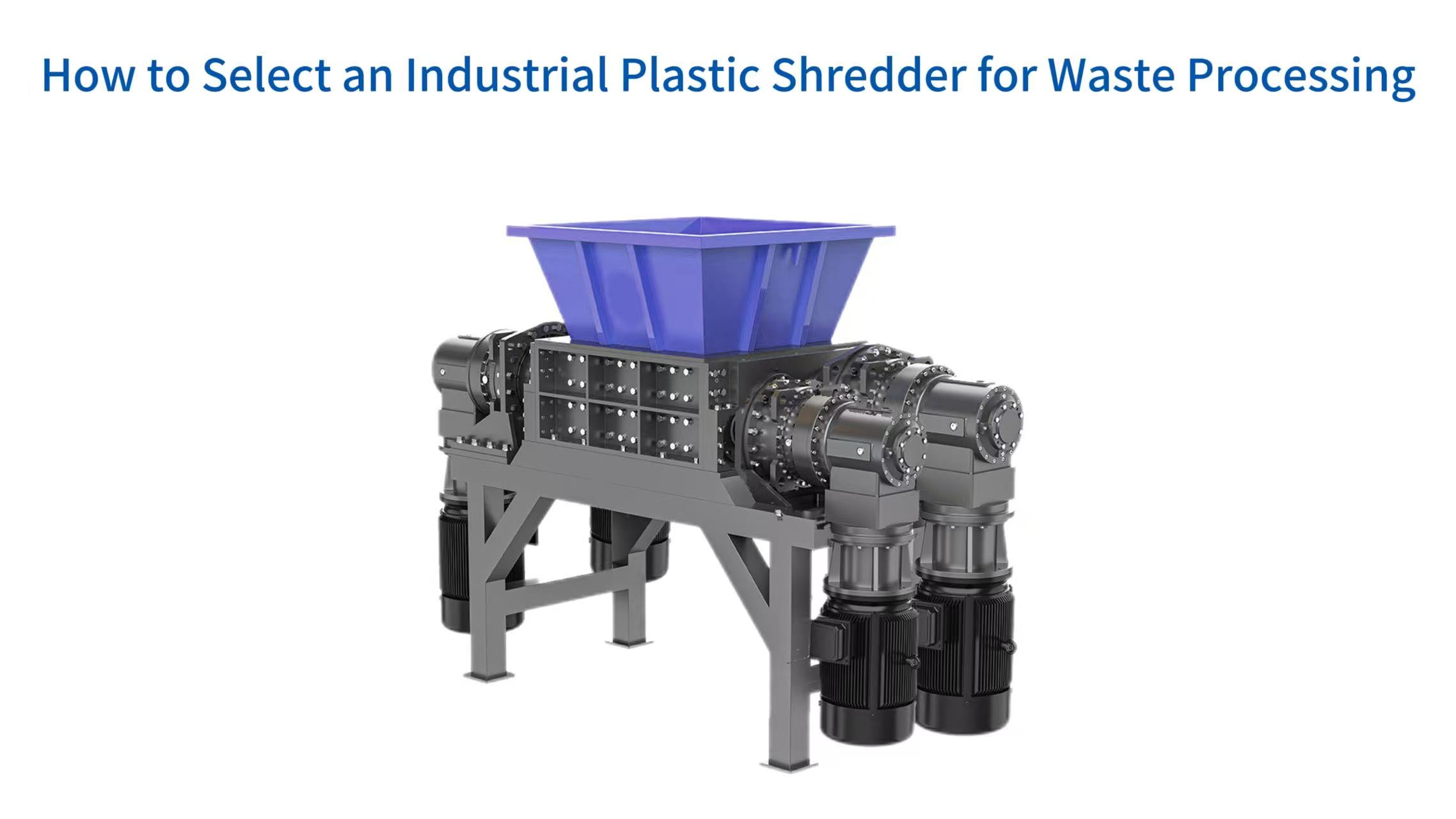
Waste plastic recycling has grown into a technically demanding industry. Environmental regulations around the world now require higher purity standards for recycled materials. Traditional manual sorting and basic crushing equipment cannot meet these new requirements. Many recycling operations still rely on outdated single-shaft grinders that struggle with mixed plastic waste. These older machines often jam when processing soft films or thick-walled containers. They consume excessive energy and produce inconsistent particle sizes. An industrial plastic shredder solves these problems through a combination of shearing, tearing, and fracturing forces. A modern shredder converts bulky plastic waste into uniform fragments. This prepared material feeds directly into washing lines, optical sorters, or extruders for pelletizing. MSW Technology has accumulated fifteen years of experience in this field. Our engineering team applies this knowledge to design shredding systems that address real-world material challenges. This guide explains the technical factors that determine shredder performance. Readers will learn how material properties, shaft configurations, and component quality affect long-term operating costs.
The Working Principle of a Waste Plastic Shredder
Energy Consumption Comparison
High-speed
100%
Low-speed
-15~20%
kWh per ton of plastic waste
Output Particle Size Requirements
| Process | Size (mm) |
|---|---|
| Washing Line | 10 - 14 mm |
| Electrostatic Separator | < 8 mm |
| Rotational Molding Powder | < 4 mm |
A waste plastic shredder operates through a controlled mechanical process. The machine does not simply cut plastic like a pair of scissors. Instead, it applies multiple forces simultaneously to break down the material structure. Understanding these forces helps operators select the right equipment for their specific plastic types.
High-Torque Low-Speed Power Transmission
The power system of an industrial shredder relies on a gearbox connected to a high-efficiency motor. This gearbox converts high rotational speed into high torque at the cutting shaft. Typical shaft speeds range from 30 to 120 revolutions per minute depending on the application. This design ensures that thick plastic items such as crates or drums cannot stall the cutting action. A high-speed grinder operating at 500 RPM or more generates heat and dust. That heat degrades sensitive polymers like ABS or polycarbonate. The low-speed approach keeps the plastic below its glass transition temperature. Material properties remain intact for downstream reprocessing.
Energy efficiency improves with this transmission method. A low-speed high-torque shredder draws steady current rather than experiencing frequent amperage spikes. Each spike represents wasted electricity and unnecessary stress on electrical components. Field data from recycling facilities shows that low-speed shredders consume 15 to 20 percent less energy per ton compared to conventional high-speed units. This difference becomes significant for operations processing hundreds of tons monthly.
PLC Control with Load Sensing and Auto-Reverse
Modern shredders incorporate programmable logic controllers for real-time monitoring. The control system tracks current draw on the main motor and hydraulic components. When current exceeds a preset threshold, the controller detects an overload condition. This overload often occurs when too much material enters the cutting chamber at once. It can also happen when a particularly dense or hard object enters the machine. The control system responds by reversing the shaft direction for several seconds. This action allows the material to reposition itself within the cutting chamber. The shaft then resumes forward rotation to continue shredding.
This auto-reverse function proves essential for processing stretch films, raffia bags, and other flexible plastics. Elastic materials tend to wrap around rotating shafts in conventional equipment. Clearing such wrapping requires stopping production and manually cutting away the material. An intelligent control system reduces these manual interventions by 80 percent or more. Some facilities report reducing unplanned downtime from several hours per week to less than one hour. The initial investment in a PLC-controlled shredder pays back through higher machine availability and lower labor requirements.
Combined Shearing, Tearing, and Ripping Action
A shredder achieves material reduction through three distinct mechanical actions. Shearing occurs when a moving blade passes against a fixed counter-knife. This action produces clean cuts suitable for rigid plastics. Tearing happens when hooked cutters pull material in opposite directions. Tearing is effective for breaking down large hollow objects like barrels or IBC containers. Ripping involves pulling material across a sharp edge at an angle. This action works well for fiber-reinforced plastics where simple cutting would leave long protruding fibers.
The combination of these three actions allows a single machine to handle mixed waste streams. A recycling center receiving post-consumer plastic waste encounters many material types. Shampoo bottles made of HDPE, yogurt cups made of PP, and detergent jugs made of PET enter the same hopper. A properly configured shredder processes this mixture into a homogeneous flake stream. The flake size distribution remains narrow enough for downstream density separation or optical sorting.
Screen Mesh Control for Output Particle Size
The screen mesh sits beneath the cutting rotor inside the shredding chamber. Material circulates within the chamber until pieces become small enough to pass through the screen openings. This closed-loop cutting cycle guarantees that oversized particles do not exit the machine. Different recycling processes require different output sizes. A washing line operates efficiently with flakes between 10 and 14 millimeters. A electrostatic separator requires particles smaller than 8 millimeters for effective charge separation. A grinder producing powder for rotational molding needs output below 4 millimeters.
Screen selection affects both production rate and energy consumption. A smaller screen opening retains material longer inside the chamber. This increases the number of cutting actions per particle. Throughput decreases as the screen opening becomes smaller. Operators must balance particle size requirements against production targets. Changing screens typically takes 15 to 30 minutes on well-designed machines. Facilities processing multiple material types often keep several screen sizes available. This flexibility allows the same shredder to serve different downstream processes throughout the production week.
Selecting the Right Shaft Configuration for Your Plastic Material
Shaft Configuration Selection Flow
Single-shaft
Double-shaft
Four-shaft
Anti-wrap Design
Shaft configuration determines how a shredder interacts with incoming material. Single-shaft, double-shaft, and four-shaft designs each excel with specific material types. Selecting the wrong configuration leads to poor throughput or frequent maintenance problems.
Single-Shaft Shredders for Rigid and Thick-Walled Plastics
A single-shaft shredder features one rotor equipped with cutting knives. A hydraulic ram pushes material against this rotating rotor. Fixed counter-knives mounted on the machine frame provide the shearing action. This design works best for materials with wall thickness exceeding five millimeters. Injection molding runners, extruded pipes, sheets, and profiles represent typical applications. The single-shaft design produces a very uniform output size because material cannot exit until it passes the screen repeatedly.
Engineering plastics such as ABS, PC, and nylon respond well to single-shaft shredding. These materials have high impact strength and resist tearing. A double-shaft shredder would pull and stretch these plastics rather than cutting them cleanly. The clean cut produced by a single-shaft machine reduces fines generation. Fines are very small particles that cause problems in downstream melt filtration. Clean rooms producing medical devices or food packaging require minimal fines. The single-shaft design meets this requirement better than other configurations.
Double-Shaft Shredders for High-Volume Mixed Plastics
A double-shaft shredder uses two counter-rotating shafts fitted with intermeshing cutters. Each cutter hook grabs material and pulls it against the opposing shaft. This action produces high tearing forces that break large items apart quickly. The open design allows bulky objects to enter without pre-cutting. A whole car bumper, a 200-liter drum, or a pallet fits directly into a double-shaft hopper. The absence of a screen in many double-shaft designs means throughput remains high regardless of material consistency.
Municipal solid waste processing facilities favor double-shaft shredders for their robustness. These facilities receive plastic mixed with other materials. A single-shaft machine would suffer damage from occasional metal contamination. A double-shaft shredder tolerates small amounts of metal due to its slower speed and higher torque. The cutters have enough mass to deflect small steel pieces without fracturing. This durability reduces the need for upstream metal removal equipment. Facilities processing construction and demolition waste also benefit from this tolerance.
Four-Shaft Shredders for High-Value Material Recovery
The four-shaft configuration adds a second set of cutters below the primary shafts. Material passes through two separate cutting stages before reaching the screen. The upper shafts perform coarse reduction to fist-sized pieces. The lower shafts then reduce these pieces to final granulate size. This two-stage process produces very uniform output without over-grinding. Over-grinding occurs when material remains in the cutting chamber too long, creating dust and fines. Four-shaft machines minimize over-grinding because material exits quickly after reaching target size.
Electronic waste recycling represents a key application for four-shaft shredders. Computer housings often contain metal inserts and circuit board fragments. A standard shredder would break these components without liberating the metal from the plastic. The four-shaft design applies gentler forces that separate materials at their bonding interfaces. This liberation step improves downstream metal recovery rates. Four-shaft plastic shredders achieve metal recovery rates above 95 percent when combined with eddy current separators. The higher equipment cost becomes justified through the sale of recovered copper and aluminum.
Specialized Film Shredders with Anti-Wrapping Design
Standard shredders struggle with thin flexible plastics. Stretch wrap, agricultural film, and woven bags wrap around rotating shafts. This wrapping quickly reduces cutting efficiency and can damage shaft seals. Specialized film shredders incorporate design features to prevent wrapping. The rotor geometry uses a V-shaped arrangement that pushes material toward the center. Cutters at the center then shred the material before it reaches the shaft ends. Fixed counter-knives are positioned to strip any wrapped material from the rotor.
Wet shredding offers another solution for film processing. Water introduced into the cutting chamber serves multiple functions. The water lubricates the cutting interface, reducing friction and heat. It also provides weight to help film sink into the cutting zone. Most importantly, water prevents film from clinging to screens and cutters. A plastic film shredder operating with water can process contaminated agricultural film directly. The water carries away dirt and sand while the shredder reduces the plastic. This integrated approach combines shredding and pre-washing in one machine.
Evaluating Component Durability and Material Selection
Key Component Specifications
| Component | Material / Standard | Performance |
|---|---|---|
| Cutters | Cr12MoV / D2 / SKD-11 | HRC 58-62 |
| Shaft | 40Cr / 42CrMo | High torque resistance |
| Bearings | FAG / SKF Heavy-duty | Long service life |
| Screen | NM400 / Hardox 400 | 3-5x longer life |
Shredder components experience extreme mechanical stress during operation. Cutter materials, shaft construction, and bearing quality determine machine lifespan. Evaluating these components before purchase prevents unexpected maintenance costs.
Tool Steel Grades for Plastic Shredder Cutters
Shredder cutters are typically manufactured from cold-work tool steels. Common grades include Cr12MoV, SKD-11, and D2 tool steel. These materials achieve hardness between 58 and 62 on the Rockwell C scale. This hardness provides resistance to abrasive wear from glass-filled or mineral-filled plastics. The steel must also maintain toughness to withstand impact forces. A cutter that is too hard becomes brittle and may crack when striking a metal contaminant. The optimal hardness represents a balance between wear resistance and impact strength.
Glass fiber reinforcement accelerates cutter wear dramatically. A standard D2 cutter processing 30 percent glass-filled nylon may require sharpening every 50 operating hours. High-vanadium tool steels or powder metallurgy grades extend this interval to 200 hours. The higher material cost is offset by reduced downtime and lower labor for cutter changes. Facilities processing abrasive plastics should request wear test data from multiple cutter suppliers. This data provides a basis for calculating cost per ton rather than cost per cutter.
Shaft and Bearing Selection for Heavy Loads
The shredder shaft transmits torque from the gearbox to the cutters. Shaft material must resist both torsional stress and bending loads. Alloy steels such as 40Cr or 42CrMo undergo heat treatment to achieve the required properties. The shaft diameter determines how much torque can be transmitted. Undersized shafts flex under load, causing uneven cutter wear and seal leakage. Properly sized shafts maintain alignment even when processing solid plastic purgings weighing hundreds of kilograms.
Bearings support the shaft and absorb radial and axial loads. Heavy-duty spherical roller bearings are standard in industrial shredders. These bearings accommodate slight misalignment that occurs during operation. Premium brands such as FAG or SKF provide longer service life than generic alternatives. An automatic lubrication system delivers small grease quantities at regular intervals. This maintains a fresh lubricating film inside the bearing. Facilities without automatic lubrication often experience bearing failure within months. With proper lubrication, the same bearings operate for years without replacement.
Screen Plate Thickness and Material Selection
Screen plates experience wear from material passing through the openings at high speed. Soft plastics like LDPE and LLDPE cause a different wear pattern than rigid plastics. Soft materials tend to push through openings, deforming the screen plate over time. Thicker screens between 10 and 15 millimeters resist this deformation. The trade-off is that thicker screens reduce open area, lowering throughput. Perforated plates with staggered hole patterns maximize open area while maintaining strength.
Abrasive plastics require screens made from wear-resistant steel grades. NM400 and Hardox 400 provide hardness values around 400 Brinell. These materials cost more than standard mild steel but last three to five times longer. Some recycling applications benefit from tungsten carbide coatings on the screen surface. The coating adds initial cost but extends screen life in extreme applications such as glass-filled nylon. The screen mesh specification should be reviewed with the equipment supplier based on the specific plastic being processed.
Rotor Speed and Cutter Mounting Arrangement
Single-shaft shredders typically operate at rotor speeds between 80 and 150 RPM. This speed range produces a clean cutting action suitable for regrind used in injection molding. Double-shaft shredders run slower at 20 to 60 RPM. The slower speed increases torque for tearing tough materials like purgings or thick-walled pipe. Matching rotor speed to material characteristics improves efficiency. Processing soft PVC at high speeds generates heat that degrades the material. Processing HDPE at low speeds may produce chips that are too large for downstream equipment.
Cutter mounting systems affect maintenance time significantly. Early shredder designs used cutters bolted directly to the rotor body. Sharpening required removing the entire rotor from the machine. Modern machines use split cutter seats or removable cutter pockets. Operators remove only the dull cutters while the rotor remains installed. This design reduces changeover time from several hours to less than one hour. A facility sharpening cutters weekly saves hundreds of labor hours annually. The granulator blade mounting system should be examined during equipment evaluation.
Total Cost of Ownership for Plastic Shredding Equipment
Energy Consumption (kWh/ton)
Inefficient
35-50
Standard
20-30
Cutter Cost Comparison
2-edge
$6-8/ton
4-edge
$<2/ton
Purchase price represents only a portion of the total investment in shredding equipment. Energy consumption, cutter maintenance, and labor costs accumulate over the machine lifetime. A lower-priced machine often becomes more expensive within two to three years of operation.
Energy Consumption Measured in Kilowatt-Hours per Ton
Electrical energy drives the shredding process. Motor nameplate power does not indicate actual energy consumption. A 75 kW motor may draw only 45 kW during normal operation. The more meaningful metric is kilowatt-hours consumed per ton of material processed. This value depends on motor efficiency, material hardness, and screen size. Processing rigid HDPE through a 12 mm screen typically requires 20 to 30 kWh per ton. Processing film through a similar screen requires 35 to 50 kWh per ton due to the additional cutting actions needed.
Inefficient shredders consume more energy while producing the same output. Poor rotor design causes material to circulate longer before exiting the screen. Low-quality gearboxes waste energy through internal friction and heat generation. A facility processing 500 tons per month spends between 1,500 and 2,500 USD on electricity. A difference of 5 kWh per ton between machines represents 7,500 USD annually. Over five years, this energy difference exceeds the purchase price of many machines. Requesting energy consumption data from multiple suppliers allows accurate comparison.
Cutter Maintenance Cost Per Ton Processed
Cutters require periodic sharpening as edges become dull. Sharpening frequency depends on the plastic type and cutter material. Processing unfilled polypropylene may allow 400 operating hours between sharpening. Processing glass-filled polypropylene reduces this interval to 60 hours. Each sharpening removes a small amount of steel from the cutter. A cutter can be sharpened five to ten times before reaching minimum size. The cost per ton includes sharpening labor, machine downtime, and eventual cutter replacement.
Multi-edge cutters reduce cost per ton significantly. A cutter with four edges can be rotated three times before needing sharpening. The operator simply loosens the mounting bolt and turns the cutter to a fresh edge. This takes minutes rather than the hours required for removal and regrinding. Some facilities achieve cutter costs below 2 USD per ton using four-edge designs. Facilities with conventional two-edge cutters often pay 6 to 8 USD per ton. Over a million tons processed, this difference amounts to millions of dollars.
Automation Impact on Labor Requirements
Manual shredding operations require constant operator attention. The operator feeds material at a rate that prevents overloading. When a jam occurs, the operator must stop the machine and clear the chamber. This activity consumes significant labor hours across multiple shifts. Automated shredders with intelligent feed systems reduce this requirement. A sensing conveyor measures material depth and adjusts speed to maintain optimal loading. The auto-reverse function clears minor jams without operator intervention. Fault diagnosis displays guide maintenance staff to the exact problem location.
One operator can monitor several automated shredders from a central control room. Alerts appear on screen when a machine requires attention. The operator responds only to these alerts rather than watching each machine continuously. Facilities report labor reductions of 60 to 70 percent after upgrading to automated equipment. This labor saving typically covers the additional automation cost within 12 to 18 months. High-toughness material shredding solutions offered by MSW Technology integrate these automation features as standard components.
Resale Value and Parts Standardization
Shredders from established manufacturers retain value in secondary markets. A well-maintained machine sells for 40 to 60 percent of original price after five years. This residual value reduces the net cost of ownership. Machines from small or unknown manufacturers have little resale value. Buyers cannot verify parts availability or technical support continuity. The lower purchase price does not compensate for the lack of residual value.
Standardized components simplify long-term maintenance. Cutters manufactured to industry-standard dimensions are available from multiple suppliers. Bearings and seals use common sizes stocked by local distributors. Electrical components follow standard wiring conventions and use readily available replacements. Non-standard machines require proprietary parts available only from the original manufacturer. If that manufacturer ceases operations, the machine becomes unusable. Requesting documentation of part standardization protects against this risk.
Solving Common Operational Problems in Plastic Shredding
Problem & Solution Flow
Real-world shredding operations encounter problems not visible in factory demonstrations. Bridging, adhesive buildup, noise, and metal contamination all affect productivity. Equipment designed to address these problems delivers higher uptime.
Bridging and Material Rebound with Soft Plastics
Soft plastics such as foam polystyrene or flexible PVC exhibit elastic behavior. When compressed in the hopper, these materials push against the hopper walls. Friction between the material and the wall prevents downward movement. This bridging effect stops material flow even though the hopper contains plastic. The shredder runs dry while material remains suspended above the cutting chamber. Operators must poke the material from above to break the bridge.
Anti-bridging hopper designs solve this problem mechanically. A tapered hopper shape reduces the surface area available for material to stick. Vibrating sections shake the hopper wall at controlled frequencies. This vibration transfers through the material, breaking bridges before they form. Hydraulic ram systems bypass the bridging issue entirely. The ram pushes material directly into the cutting zone regardless of hopper filling patterns. For highly elastic materials, cryogenic shredding introduces liquid nitrogen. The nitrogen freezes the plastic below its glass transition temperature. The material becomes brittle and fractures rather than rebounding from the cutters.
Adhesive Contamination from Labels and Tape
Recycling post-consumer plastic bottles presents a specific challenge. Labels are attached using pressure-sensitive adhesives. These adhesives do not dissolve in water and remain sticky after shredding. The adhesive transfers to screens and cutter surfaces during processing. Accumulated adhesive blocks screen openings and reduces cutter effectiveness. Production rate drops as the machine struggles to push material through clogged screens.
Heated cutting chambers offer one solution to adhesive buildup. Electric heaters raise the chamber walls above the adhesive softening point. The adhesive becomes less sticky and flows off surfaces rather than accumulating. Scraper bars mounted near the rotor wipe adhesive from cutter edges continuously. Water-cooled chambers take the opposite approach. Cooling makes the adhesive brittle so it fractures and falls away from surfaces. The optimal method depends on the specific adhesive chemistry. Testing representative material samples before equipment purchase identifies the better approach. Fixed bed knives with polished surfaces also reduce adhesive accumulation.
Noise and Dust Control for Regulatory Compliance
Industrial shredders generate noise from cutting action and material impact. Noise levels measured one meter from the machine often exceed 95 decibels. Occupational health regulations in most countries require hearing protection at 85 decibels. Double-wall machine housings with sound-dampening material between the layers reduce noise. The outer wall contains the sound while the inner wall provides structural strength. These enclosures reduce noise at the operator station to 80 to 85 decibels.
Dust generation varies with plastic type and shredding method. Brittle plastics like polystyrene produce fine dust during shredding. This dust escapes through hopper openings and discharge ports. A dust extraction system connected to the machine interior creates negative pressure. Air flows into the machine through openings rather than dust flowing out. The extracted air passes through a filter that captures particles down to one micron. Facilities processing dusty plastics should specify an integrated dust system. Adding dust control after installation costs significantly more and performs less effectively.
Metal Contamination Detection and Protection
Metal objects enter plastic waste streams through many pathways. A broken conveyor fastener falls into a gaylord box. A washer remains inside a shredded appliance. A screwdriver is discarded with production scrap. Any metal entering the shredding chamber risks catastrophic damage. A single steel bolt can break multiple cutters and crack the rotor body. Repair costs for such damage range from 5,000 to 20,000 USD plus weeks of downtime.
Metal detection equipment positioned before the shredder provides first-line defense. An induction coil detects ferrous and non-ferrous metals passing on the conveyor. The control system stops the conveyor when metal is detected. Operators remove the contaminant before restarting. Magnetic separators remove ferrous metals without stopping the material flow. A suspended magnet passes over the conveyor, lifting steel pieces away. Some shredders feature damage-tolerant design as a second line of defense. Hydraulic cylinders hold the cutter housing against the rotor with controlled pressure. When a metal object enters, the housing opens to let the object pass. The housing then returns to its normal position automatically.
System Integration for Complete Plastic Recycling Lines
Complete Recycling Line Flow
A shredder does not operate in isolation. The machine receives material from upstream equipment and delivers output to downstream processes. Proper integration between these components determines overall line performance.
Pre-Shredding Sorting to Protect Equipment
Sorting equipment positioned before the shredder removes contaminants and separates material types. A ballistic separator divides the stream based on density and shape. Flat materials such as film travel along the screen surface. Round materials such as bottles fall through the screen openings. This separation allows different shredder configurations for each material type. Magnetic drums extract ferrous metals that would damage cutters. Eddy current separators remove non-ferrous metals for separate recycling.
Optical sorting adds capability for mixed plastic streams. Near-infrared sensors identify polymer type as material passes on a belt. Air jets deflect each identified piece into a collection bin. PET bottles separate from PVC containers automatically. Shredding each polymer type separately produces higher value output. Mixed PET and PVC flakes cannot be separated after shredding. The PVC contaminates the PET during melting, producing low-quality regrind. Composite material shredding solutions offered by MSW Technology include integrated sorting components.
Wet Shredding for Integrated Cleaning
Wet shredding combines size reduction with pre-washing in one machine. Water injected into the cutting chamber performs several functions. The water cools the cutting interface, extending cutter life. It also provides lubrication, reducing power consumption. Most importantly, water removes surface contamination from the plastic. Dirt, sand, and food residue wash away during shredding. The resulting flakes emerge cleaner than those from dry shredding.
Sealing the shredder for wet operation requires additional engineering. Shaft seals must prevent water entry into bearings and gearboxes. Mechanical seals similar to those used in pumps provide reliable protection. These seals use ceramic faces that maintain contact during rotation. Air purge systems pressurize the seal area to prevent water ingress. Facilities considering wet shredding should verify seal specifications. A seal failure allows water to enter the gearbox, causing rapid bearing failure. MSW Technology has fifteen years of experience with wet shredding applications. Our seal designs have been refined through thousands of operating hours across multiple installations.
Material Conveying Between Processing Stages
Shredded plastic flakes have low bulk density and irregular shapes. Open belt conveyors allow dust to escape and material to fall off edges. Pneumatic conveying systems use air to transport flakes through sealed pipes. Material enters the pipe at the shredder discharge. A blower generates air velocity that carries flakes to the next process stage. Cyclone separators at the destination remove flakes from the air stream. This closed system contains dust and prevents material loss.
Screw conveyors offer an alternative for short distances and sloping installations. A rotating screw inside a tube pushes material forward without air assistance. Screw conveyors operate efficiently at any angle up to vertical. They also provide metering capability for feeding downstream equipment at controlled rates. The screw speed adjusts to match the output of the shredder. This synchronization prevents flooding or starvation of subsequent processes. The choice between pneumatic and screw conveying depends on distance, elevation change, and material characteristics. MSW Technology engineers evaluate these factors when designing complete systems.
Centralized Control for Production Lines
Individual machine controls create operational inefficiencies. Operators move between panels to start, stop, and adjust each machine. Alarm conditions on one machine may go unnoticed while the operator attends to another. Centralized control systems connect all equipment through a single interface. A single touchscreen panel displays status for every machine in the line. Buttons on this panel start the entire line in the correct sequence. The system prevents starting downstream equipment before upstream machines are ready.
Data collection provides insight for continuous improvement. The control system logs production rates, downtime events, and energy consumption. Operators review this data to identify bottlenecks and inefficiencies. A shredder showing increasing current draw over time indicates dull cutters needing sharpening. A conveyor stopping frequently suggests a feeding problem upstream. This data-driven approach reduces unplanned downtime. Facilities report 15 to 25 percent productivity improvements after installing centralized control. The air conveying system integration with centralized controls ensures coordinated operation across all line components.
MSW Technology brings fifteen years of specialized experience to plastic shredding applications. Our engineering team has designed and installed systems for hundreds of recycling facilities worldwide. We invite readers to contact our technical staff for application-specific recommendations. Our website provides detailed specifications for each shredder type discussed in this guide.