Needs Assessment & Planning
Security risk evaluation (PCI DSS/GDPR compliance)
Document volume analysis per store
Regulatory requirement mapping
Cost-benefit preliminary analysis
Network & Equipment Design
Topology design (star/hybrid network)
Equipment selection (paper shredder types)
Monitoring system architecture
Security protocol integration
Deployment & Implementation
Site preparation (power/connectivity)
Equipment installation & calibration
Staff training (operation/maintenance)
System integration testing
Operation & Optimization
24/7 performance monitoring
Preventive maintenance scheduling
Security audits & compliance checks
Continuous process improvement
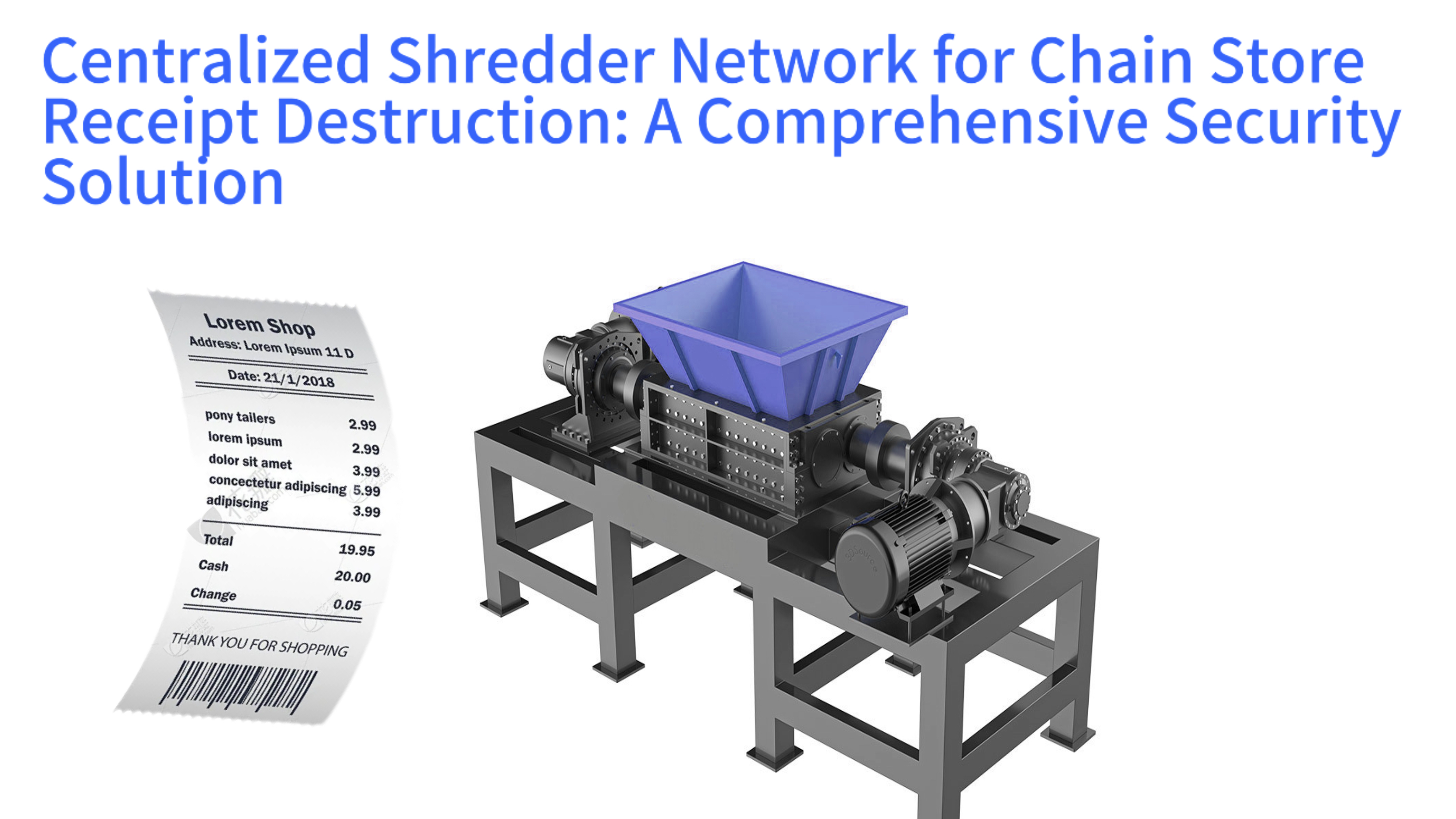
Modern retail chains generate enormous volumes of sensitive sales receipts containing customer payment information and purchase details. These documents require secure destruction to prevent data breaches and ensure regulatory compliance. Centralized shredder networks provide an efficient solution by connecting multiple store locations through coordinated destruction systems. This approach addresses security vulnerabilities in traditional distributed disposal methods while optimizing operational costs. The implementation of such networks involves strategic equipment selection, network design, and continuous monitoring to maintain data protection standards across all retail outlets.
The Critical Need for Centralized Shredding in Retail Operations
Retail chains handling daily sales receipts face significant data security challenges that demand systematic solutions. Individual store locations often lack standardized procedures for document destruction, creating inconsistent security protocols. Centralized shredder networks establish uniform security measures across all locations, ensuring consistent protection of sensitive customer information. These systems prevent potential data breaches that could result from improper document handling or storage.
Industry reports indicate that retail businesses experience approximately 27% of all data breaches through physical document mishandling. The centralized approach eliminates security gaps by implementing controlled destruction processes at designated locations. This method ensures all sales receipts undergo proper shredding before disposal, significantly reducing the risk of unauthorized access to customer data.
Security Vulnerabilities in Distributed Receipt Management
Traditional distributed receipt management systems present multiple security weaknesses that centralized shredding resolves. Individual stores often lack dedicated personnel and equipment for proper document destruction. This fragmentation creates opportunities for sensitive information to be compromised during storage or disposal phases. Centralized systems address these vulnerabilities through controlled access and monitored destruction processes.
Research shows that businesses using distributed shredding methods experience 43% more security incidents than those with centralized systems. The consolidation of shredding operations enables better monitoring and control over the entire document lifecycle. This approach ensures all receipts are destroyed according to established security protocols and compliance requirements.
Regulatory Compliance Requirements for Customer Data
Various data protection regulations mandate secure destruction of documents containing customer information. These requirements include specific standards for particle size and destruction verification that centralized systems can consistently maintain. Compliance with regulations such as PCI DSS and GDPR requires documented processes that centralized shredding networks provide through automated monitoring and reporting capabilities.
Financial penalties for non-compliance can reach up to 4% of annual global turnover for severe violations. Centralized systems generate audit trails and destruction certificates that demonstrate regulatory compliance during inspections. This documentation proves essential for businesses operating in multiple jurisdictions with varying data protection laws.
Operational Efficiency in High-Volume Environments
Centralized shredding networks significantly improve operational efficiency in retail chains processing thousands of receipts daily. These systems reduce the time store staff spend on document destruction tasks, allowing them to focus on customer service. The consolidation of shredding operations also decreases equipment maintenance requirements and associated costs.
Studies indicate that centralized shredding reduces document processing time by approximately 35% compared to distributed systems. This efficiency gain translates to lower labor costs and improved store productivity. The streamlined process ensures receipts are destroyed promptly after transaction completion, minimizing storage requirements and associated risks.
Cost Implications of Security Breaches
Data breaches involving sales receipts can result in substantial financial losses for retail businesses. These costs include regulatory fines, legal settlements, and reputational damage that affects customer trust and loyalty. Centralized shredding networks provide cost-effective protection against these potential losses through systematic document destruction.
The average cost of a retail data breach exceeds $3 million according to industry analysis. Implementing centralized shredding represents a fraction of this amount while providing comprehensive protection. The investment in proper shredding infrastructure demonstrates due diligence in protecting customer information, potentially reducing liability in case of security incidents.
Designing Effective Shredder Network Infrastructure
Successful shredder network implementation requires careful planning of infrastructure components and their integration. The network design must account for varying store sizes, transaction volumes, and security requirements across different locations. Proper infrastructure ensures reliable performance while maintaining security standards throughout the document destruction process.
Network architecture typically incorporates multiple security layers including access controls, monitoring systems, and backup mechanisms. These elements work together to create a robust system capable of handling peak transaction periods while maintaining security protocols. The infrastructure must support both current needs and future expansion as the retail chain grows.
Network Topology and Connectivity Solutions
Shredder network topology determines how individual store systems connect to central monitoring and management facilities. Star configurations with centralized monitoring provide optimal control and security management. This design allows real-time oversight of all shredding activities while maintaining individual store autonomy for daily operations.
Modern networks utilize encrypted connections to protect data transmission between stores and central monitoring stations. These security measures prevent interception of sensitive information during the shredding process. The connectivity solution must ensure reliable communication even during network outages or other technical issues.
Equipment Selection Based on Store Characteristics
Different store locations require specific paper shredder configurations based on their transaction volumes and space constraints. High-volume locations typically need industrial-grade equipment like double-shaft paper shredder capable of continuous operation, while smaller stores may utilize compact single-shaft paper shredder models. The selection process considers daily receipt volumes, security requirements, and available installation space.
Equipment specifications must align with the centralized network's security standards and monitoring capabilities. Compatibility with network management systems ensures seamless integration and consistent performance monitoring. The selected equipment should provide reliable operation with minimal maintenance requirements to support continuous retail operations.
Central Monitoring System Architecture
Central monitoring systems provide comprehensive oversight of all shredding activities across the retail chain. These systems track equipment performance, maintenance needs, and security compliance in real-time. The architecture includes redundant components to ensure continuous operation even during partial system failures.
Monitoring systems generate detailed reports on shredding volumes, equipment utilization, and potential security issues. These reports help management identify trends and optimize network performance over time. The system architecture must support secure remote access for authorized personnel while preventing unauthorized monitoring or control.
Security Integration and Access Control
Shredder networks incorporate multiple security layers to protect against unauthorized access and tampering. These measures include physical security controls, electronic access systems, and audit trails documenting all network activities. The integration of these elements creates a comprehensive security framework for document destruction processes.
Access control systems ensure only authorized personnel can operate shredding equipment or access destruction records. These controls prevent potential internal threats while maintaining accountability for all shredding activities. The security integration must balance protection needs with operational practicality for store staff.
Equipment Selection and Configuration Strategies
Choosing appropriate shredding equipment requires careful analysis of technical specifications and operational requirements. The selected machines must handle expected volumes while meeting security standards for particle size and destruction verification. Equipment configuration affects both security effectiveness and operational efficiency in daily use.
| Security Level | Particle Size (mm) | Shredder Type | Application |
|---|---|---|---|
| P-2 (Low) | 6×50 | Single-shaft | General documents |
| P-4 (Medium) | 4×30 | Double-shaft | Sales receipts |
| P-6 (High) | 2×15 | Four-shaft | Confidential payment data |
Security Levels & Particle Size Requirements for Receipt Destruction
Technical evaluation includes assessment of cutting mechanisms (including cutting blades), capacity ratings, and compatibility with network monitoring systems. These factors determine how well the equipment will perform in the retail environment and integrate with existing operations. The selection process must consider both current needs and potential future requirements as business grows.
Performance Specifications and Capacity Planning
Shredder performance specifications determine their suitability for different store locations and volume requirements. Key metrics include sheets-per-minute capacity, continuous operation duration, and particle size specifications. These specifications must align with each location's transaction volumes and security requirements.
Capacity planning ensures equipment can handle peak transaction periods without creating bottlenecks in document processing. Proper planning prevents operational delays while maintaining security protocols during high-volume periods. The selected equipment should provide some capacity buffer to accommodate unexpected volume increases.
Security Levels and Particle Size Requirements
Different security levels correspond to specific particle size requirements for shredded materials. Higher security levels produce smaller particles that are more difficult to reconstruct, providing better protection for sensitive information. The selection of security levels depends on the sensitivity of information contained in sales receipts and applicable regulatory requirements.
Particle size specifications typically range from strip-cut fragments to micro-cut particles measuring just a few millimeters. The appropriate selection balances security needs with practical considerations like storage requirements and disposal costs. Regulatory standards often specify minimum particle sizes for different types of sensitive information.
Durability and Maintenance Considerations
Shredder durability directly impacts long-term operational costs and reliability in retail environments. Equipment designed for continuous operation typically features more robust components and better heat management systems. These characteristics ensure consistent performance during extended operating periods common in retail settings.
Maintenance requirements affect both operational costs and equipment availability for daily use. Systems with self-diagnostic capabilities, anti-jamming mechanism, and remote monitoring reduce maintenance downtime and associated costs. The selected equipment should support preventive maintenance schedules that minimize disruption to store operations.
Integration with Network Management Systems
Equipment compatibility with network management systems enables centralized monitoring and control of shredding operations. This integration provides real-time visibility into equipment status, usage patterns, and potential issues across all locations. The capability supports proactive maintenance and quick response to operational problems.
Network integration features include automated reporting, remote configuration, and security event logging. These capabilities enhance overall network security while reducing administrative burdens on store staff. The integration must maintain security during data transmission and storage within the network management system.
Implementation Methodology for Multi-Location Deployment
Successful deployment of centralized shredder networks requires systematic implementation across multiple store locations. This process involves careful planning, coordinated execution, and thorough testing to ensure proper system operation. The implementation methodology must address both technical and operational aspects of network deployment.
Phased implementation approaches minimize disruption to store operations while ensuring proper system configuration at each location. This method allows learning from initial deployments to improve subsequent installations. The implementation process includes staff training, system testing, and performance verification before full operational deployment.
Multi-Location Deployment Workflow
Site Assessment and Preparation Requirements
Comprehensive site assessments identify specific requirements and constraints at each store location. These assessments evaluate space availability, power requirements, and network connectivity options. Proper preparation ensures successful equipment installation and integration with existing store infrastructure.
Site preparation may involve electrical upgrades, network connectivity installation, and physical space modifications. These preparations ensure the shredding equipment operates reliably within the store environment. The assessment process should identify any potential issues that might affect equipment performance or integration.
Equipment Installation and Configuration Procedures
Standardized installation procedures ensure consistent equipment setup across all store locations. These procedures cover physical installation, network connectivity, and initial configuration parameters. Consistent installation practices facilitate easier maintenance and troubleshooting throughout the network.
Configuration procedures establish security settings, operational parameters, and monitoring system integration. These settings ensure all equipment operates according to established security protocols and performance standards. The configuration process includes testing to verify proper operation before system activation.
Staff Training and Operational Transition
Comprehensive staff training ensures proper operation and maintenance of shredding equipment at each location. Training programs cover daily operation, basic troubleshooting, and security procedures. Well-trained staff can identify potential issues and perform basic maintenance tasks, reducing equipment downtime.
Operational transition plans minimize disruption during the switch from existing document disposal methods to the centralized system. These plans include phased implementation schedules and support mechanisms during the transition period. Proper transition management ensures staff confidence with the new system while maintaining document security throughout the process.
System Verification and Performance Validation
Thorough system verification confirms proper operation of all network components before full deployment. This process includes functionality testing, security validation, and performance measurement against established benchmarks. Verification ensures the system meets all operational and security requirements.
Performance validation involves testing under realistic operating conditions to identify any potential issues. This testing confirms the system can handle expected transaction volumes while maintaining security standards. Validation results provide baseline measurements for ongoing performance monitoring and optimization.
Operational Management and Continuous Improvement
Effective operational management ensures consistent performance and security throughout the shredder network's lifecycle. This involves regular monitoring, maintenance, and optimization of all system components. Proper management maintains security standards while maximizing operational efficiency across all store locations.
Continuous improvement processes identify opportunities to enhance system performance and security over time. These processes utilize operational data and feedback to drive incremental improvements in network operations. The approach ensures the system adapts to changing requirements and technological advancements.
Daily Operational Protocols and Procedures
Standardized operational protocols ensure consistent shredding processes across all store locations. These protocols define proper document handling, equipment operation, and security verification procedures. Consistent application of these protocols maintains security standards while optimizing operational efficiency.
Daily procedures include equipment checks (focused on feed opening functionality), documentation requirements, and incident reporting mechanisms. These elements work together to maintain system reliability and security during normal operations. The protocols must balance security requirements with practical operational considerations for store staff.
Performance Monitoring and Analytics
Continuous performance monitoring provides insights into system operation and identifies potential improvement opportunities. Monitoring systems track equipment utilization, maintenance needs, and security compliance metrics. These data points help optimize network performance and resource allocation.
Advanced analytics identify patterns and trends in shredding operations that might indicate potential issues or improvement opportunities. These insights support data-driven decisions about equipment maintenance, replacement schedules, and process improvements. The analytics capability enhances overall network management and operational efficiency.
Maintenance Scheduling and Management
Proactive maintenance scheduling prevents equipment failures and ensures consistent system performance. Maintenance plans include regular inspections, preventive maintenance tasks, and component replacement schedules (such as motor thermal protection checks). Proper maintenance management extends equipment lifespan while reducing unexpected downtime.
Maintenance management systems track service history, parts inventory, and technician assignments across all locations. These systems ensure timely completion of maintenance tasks while maintaining detailed records for compliance and optimization purposes. Effective maintenance management balances preventive measures with operational requirements.
Security Auditing and Compliance Verification
Regular security audits verify compliance with established protocols and regulatory requirements. These audits examine equipment operation, document handling procedures, and security controls throughout the shredding process. Audit findings identify potential vulnerabilities and improvement opportunities.
Compliance verification ensures the system continues to meet all applicable regulatory standards over time. This process includes documentation review, procedure verification, and actual performance testing. Regular verification maintains regulatory compliance while demonstrating due diligence in protecting customer information.
Economic Analysis and Return on Investment
Comprehensive economic analysis justifies the investment in centralized shredder networks through quantifiable benefits and cost savings. This analysis considers both direct financial impacts and indirect benefits such as risk reduction and compliance assurance. Proper evaluation supports informed decision-making about network implementation and expansion.
Return on investment calculations account for equipment costs, operational expenses, and avoided costs from prevented security incidents. These calculations provide a clear financial picture of the network's value to the organization. The analysis helps prioritize investments and optimize resource allocation across the shredder network.
Capital Investment and Implementation Costs
Initial capital investment includes equipment purchase (ranging from basic single-shaft paper shredder to high-capacity four-shaft paper shredder), installation expenses, and network infrastructure costs. These investments vary based on network size, equipment specifications, and implementation complexity. Proper budgeting ensures adequate funding for all implementation phases without compromising system quality or security.
Implementation costs cover site preparation, staff training, and system configuration activities. These expenses represent necessary investments for successful network deployment and operation. Accurate cost estimation prevents budget overruns while ensuring proper system implementation.
Operational Expense Analysis and Optimization
Ongoing operational expenses include maintenance costs, consumable supplies (like waste bin collection bag replacements), and personnel requirements. These costs must be monitored and managed to maintain network efficiency while ensuring security standards. Regular analysis identifies opportunities to optimize operational expenses without compromising system performance.
Expense optimization involves balancing cost reduction with maintaining necessary security and performance levels. This balance ensures the network remains cost-effective throughout its operational lifecycle. Optimization efforts focus on eliminating unnecessary expenses while preserving essential security functions.
Risk Mitigation and Cost Avoidance Benefits
Centralized shredder networks provide significant risk mitigation benefits by preventing potential data breaches and associated costs. These avoided costs include regulatory fines, legal expenses, and reputational damage that could result from security incidents. The financial value of risk reduction represents a major component of the network's overall return on investment.
Cost avoidance benefits extend beyond immediate financial impacts to include preserved customer trust and business continuity. These indirect benefits contribute to long-term business sustainability and competitive advantage. Proper valuation of these benefits demonstrates the comprehensive value of the shredder network investment.
Return Calculation Methodologies and Metrics
Standardized return calculation methodologies provide consistent evaluation of the shredder network's financial performance. These methodologies consider both quantitative financial metrics and qualitative benefits that contribute to overall business value. Proper calculation ensures accurate assessment of investment returns over time.
Key metrics include payback period, net present value, and internal rate of return calculations. These metrics help compare the shredder network investment with other potential uses of capital within the organization. Regular calculation updates reflect changing operational conditions and business requirements.