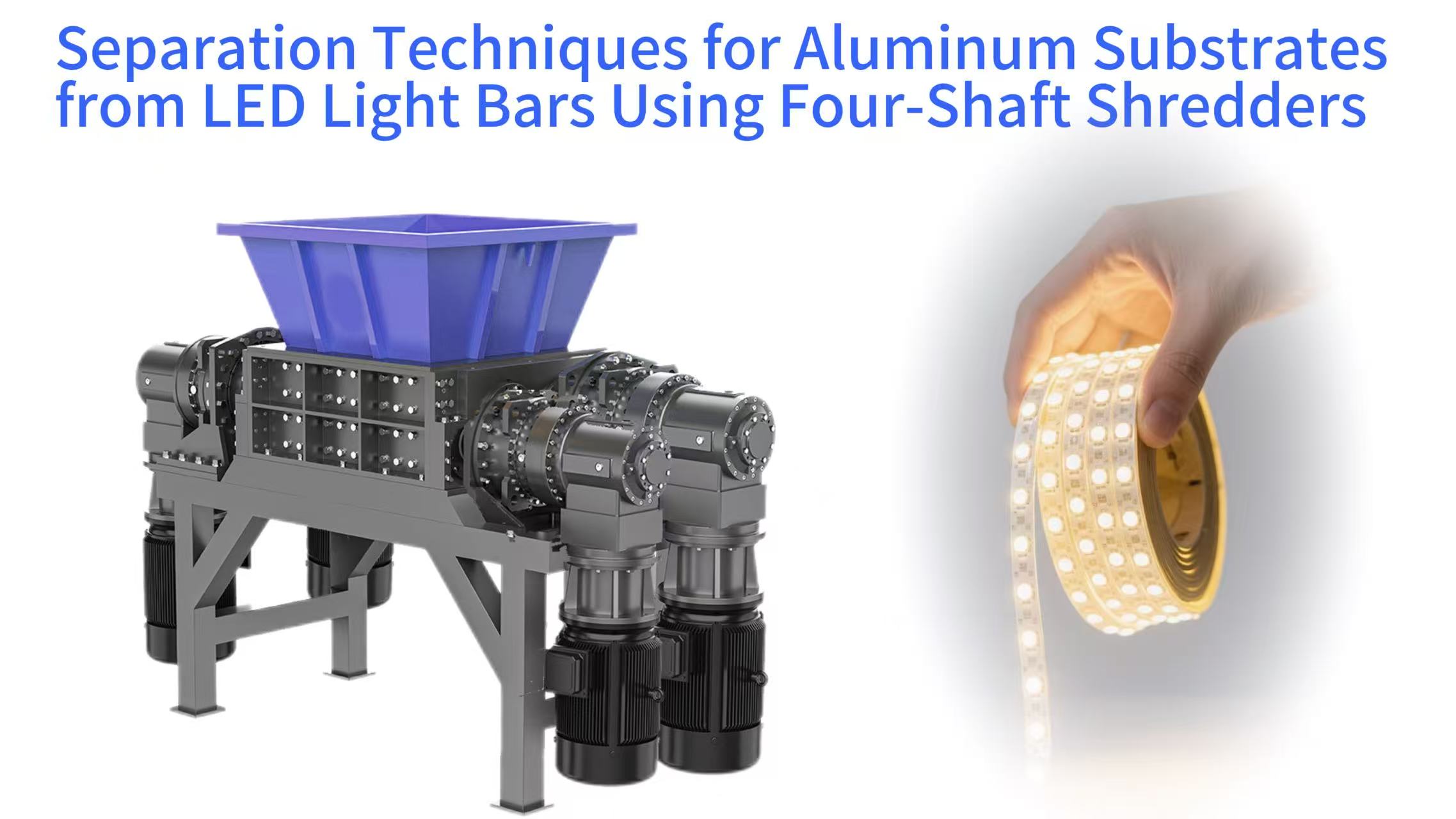
LED Strip Aluminum-Plastic Separation Core Process
Four-shaft Shredding
5-50mm Particle Size
Preprocessing
Magnetic + Air Classification
Advanced Separation
Electrostatic + Eddy Current
Purification
Multi-stage Refinement
Quality Control
Purity Verification
Modern LED strip recycling presents unique challenges in material separation due to the composite nature of aluminum-backed printed circuit boards. Following processing through four-shaft shredders, the resulting material mixture contains aluminum fragments, plastic particles, and electronic components that require sophisticated separation techniques. The economic viability of LED strip recycling depends heavily on achieving high-purity aluminum recovery while minimizing plastic contamination. Advanced separation technologies leverage the distinct physical properties of these materials to achieve separation efficiencies exceeding 95% in optimized systems. The global market for recycled aluminum from electronic waste continues to grow, with properly separated materials commanding premium prices compared to mixed fractions.
Successful aluminum-plastic separation requires understanding the complete processing chain from initial shredding to final purification. The particle size distribution, material morphology, and surface characteristics all influence separation efficiency and must be carefully managed throughout the recycling process. Modern separation facilities employ multiple complementary technologies arranged in sequential processing stages to maximize recovery rates and product purity. The strategic combination of mechanical, aerodynamic, and electrostatic separation methods enables recyclers to adapt to variations in incoming material composition and achieve consistent output quality. This comprehensive approach transforms what was once considered waste into valuable raw materials for new manufacturing processes.
Fundamental Material Characteristics Understanding
The successful separation of aluminum and plastic from shredded LED strips begins with thorough comprehension of material properties and behavior patterns. LED strip aluminum PCBs feature a layered construction where thin aluminum substrates support plastic polymer layers and electronic components. When processed through industrial shredders, these composite materials fracture along predictable lines determined by their mechanical properties and internal stresses. The aluminum components typically exhibit ductile deformation characteristics, forming irregularly shaped fragments with folded edges and substantial structural integrity. Plastic elements demonstrate brittle fracture patterns, creating more uniformly sized particles with sharp edges and minimal plastic deformation evidence.
Material behavior during separation processes depends significantly on particle size distribution and surface characteristics. Shredded aluminum fragments generally maintain metallic luster and conductivity despite mechanical processing, while plastic particles develop electrostatic charges through friction and impact. The presence of residual electronic components, including LED chips and resistors, introduces additional complexity to separation processes. These components often contain valuable metals but can interfere with separation efficiency if not properly addressed. Understanding these fundamental material characteristics enables recyclers to select appropriate separation technologies and optimize processing parameters for maximum recovery efficiency and product purity.
Aluminum and Plastic Layer Integration
The structural integration between aluminum substrates and plastic layers in LED strips determines fragmentation patterns and separation challenges. Manufacturing processes typically bond these dissimilar materials using adhesive layers or mechanical interlocking, creating strong interfaces that resist separation during initial processing. When subjected to shredding forces, these composite structures fracture in ways that leave some aluminum fragments with plastic residues and vice versa. The different mechanical properties cause aluminum to deform plastically while plastic layers undergo brittle fracture, resulting in distinct particle morphologies that separation systems can exploit. The thickness ratio between aluminum and plastic layers varies among LED strip designs, influencing the optimal processing approach for each material type.
Material behavior during fragmentation creates opportunities for selective separation based on physical characteristics. Aluminum fragments typically maintain their metallic properties including electrical conductivity and density, while plastic particles exhibit insulating characteristics and lower specific gravity. The interface between materials often becomes the weakest point during shredding, though complete separation rarely occurs in a single processing stage. The degree of material liberation achieved during shredding directly impacts subsequent separation efficiency, making initial processing parameters critically important. Understanding these material interactions enables recyclers to optimize their complete processing chain from fragmentation through final purification, maximizing both recovery rates and product quality.
Particle Size Distribution Analysis
Particle size distribution following shredding operations significantly influences separation efficiency and technology selection. Four-shaft shredders typically produce material mixtures with particle sizes ranging from 5mm to 50mm, though specific distributions depend on machine configuration and processing parameters. Aluminum fragments generally distribute across the larger size fractions due to their ductile nature and resistance to fine fragmentation. Plastic components often concentrate in intermediate size ranges, while electronic components and brittle materials may appear in both fine and coarse fractions. This size variation enables initial separation through screening technologies before applying more sophisticated separation methods based on other physical properties.
The relationship between particle size and separation efficiency follows predictable patterns across different separation technologies. Larger particles typically separate more efficiently in processes relying on density differences or electrical conductivity, while finer particles may require alternative approaches. The presence of very fine particles, particularly those below 2mm, often complicates separation processes and reduces overall efficiency. Optimal shredding parameters seek to maximize material liberation while minimizing the generation of problematic fine fractions. Particle shape characteristics also influence separation behavior, with flattened aluminum fragments behaving differently than more cubic plastic particles in certain separation environments. These factors collectively determine the most effective separation strategy for specific material streams.
Particle Size Distribution After Four-shaft Shredding
Key Insight: Aluminum fragments tend to concentrate in larger size fractions (10-50mm) due to ductile properties, while plastic particles distribute in intermediate ranges (5-30mm). Particles below 2mm may reduce separation efficiency and require special handling.
Residual Component Impact
Residual electronic components remaining after shredding operations present both challenges and opportunities in aluminum-plastic separation processes. LED chips, resistors, capacitors, and other electronic elements often survive initial shredding intact or partially fragmented. These components typically contain valuable materials including gold, silver, and copper, but their presence can interfere with aluminum-plastic separation efficiency. Metallic components may report with aluminum fractions during separation, potentially contaminating the aluminum stream with other metals. Non-metallic components might report with plastic fractions, reducing plastic purity and potentially introducing hazardous substances into the recycled material stream.
The strategic management of residual components requires understanding their behavior during separation processes. Magnetic separation effectively removes ferrous components before aluminum-plastic separation, simplifying subsequent processing stages. Eddy current separators can target non-ferrous metals, though their effectiveness depends on particle size and conductivity characteristics. Electronic components containing valuable precious metals often require specialized recovery processes separate from bulk aluminum and plastic recycling. The complete removal of these components before aluminum-plastic separation typically improves separation efficiency and product quality, though economic considerations may influence the optimal processing approach for specific material streams.
Surface Property Considerations
Surface characteristics of shredded materials significantly influence separation efficiency across various technologies. Aluminum fragments maintain high electrical conductivity and typically exhibit oxidized surfaces that affect their behavior in electrostatic separation processes. The surface roughness, cleanliness, and chemical composition of aluminum particles determine their response to different separation forces and can be modified through preprocessing to improve separation outcomes. Plastic particles develop surface charges through triboelectric effects during shredding and handling, with charge magnitude and polarity depending on plastic composition and processing history. These surface charges can be harnessed for separation purposes or may interfere with other separation methods if not properly managed.
Material surface properties interact with separation environments in complex ways that affect process efficiency. In air-based separation systems, surface characteristics influence particle aerodynamics and settling behavior. In electrostatic separators, surface conductivity and charge retention determine particle trajectories. Wet separation processes involve additional considerations including surface wettability and chemical interactions with separation media. Understanding these surface property effects enables recyclers to select appropriate separation technologies and optimize operating parameters for specific material characteristics. Preprocessing techniques including surface cleaning, conditioning, or chemical treatment can modify surface properties to enhance separation efficiency when dealing with challenging material streams.
Aluminum vs. Plastic Key Properties Comparison
Preprocessing Optimization Strategies
Strategic preprocessing before and during shredding operations significantly enhances subsequent aluminum-plastic separation efficiency. The configuration of four-shaft shredders directly influences the degree of material liberation and particle characteristics that determine separation performance. Optimal shredder settings vary according to LED strip design characteristics, with thicker aluminum substrates requiring different processing parameters than thinner varieties. The strategic removal of certain components before shredding can simplify downstream separation by reducing contamination sources and minimizing the presence of materials that interfere with separation processes. These preprocessing considerations represent critical opportunities to improve overall recycling efficiency and economic performance.
Integrated preprocessing systems combine multiple optimization strategies to prepare materials for efficient separation. Air classification systems integrated with shredder discharge streams provide initial separation of light plastic fractions from heavier aluminum and electronic components. Magnetic separation stages remove ferrous materials that might otherwise complicate subsequent processing. The strategic sequencing of these preprocessing steps maximizes their effectiveness while minimizing equipment requirements and operational complexity. Proper preprocessing not only improves separation efficiency but also reduces wear on separation equipment and decreases operational costs through more targeted processing of valuable material fractions. These benefits make preprocessing optimization a fundamental aspect of successful LED strip recycling operations.
Shredder Parameter Optimization
Shredder configuration parameters significantly influence the effectiveness of subsequent aluminum-plastic separation processes. The gap between cutting shafts and stationary blades determines the maximum particle size produced and affects the degree of material liberation achieved. Smaller gaps typically produce finer particles with higher liberation degrees but may increase energy consumption and generate more problematic fine fractions. Rotational speed affects cutting mechanics and particle morphology, with lower speeds generally producing more predictable fragmentation patterns. The strategic combination of gap settings and rotational speeds enables operators to balance particle size requirements against energy consumption and equipment wear considerations.
Advanced shredding systems incorporate adjustable parameters that can be optimized for specific LED strip characteristics. Variable speed drives allow real-time adjustment of processing intensity based on material feed characteristics and desired output specifications. Tungsten carbide cutters maintain sharp cutting edges longer than conventional materials, ensuring consistent particle size distribution throughout extended operation periods. Automated monitoring systems track processing parameters and output characteristics, enabling continuous optimization of shredder performance. The integration of these advanced features transforms shredding from a simple size reduction process into a sophisticated preparation stage that directly influences downstream separation efficiency and overall recycling economics.
Component Pre-removal Strategies
The strategic removal of specific components before shredding operations significantly simplifies subsequent separation processes and improves final product quality. Plastic end caps, connectors, and mounting hardware often contain materials that differ from the primary aluminum and plastic fractions in LED strips. Removing these components before shredding reduces contamination sources and minimizes the presence of materials that might interfere with separation efficiency. Manual disassembly proves practical for high-value or large-scale components, while mechanical separation methods effectively handle smaller or more integrated elements. The economic viability of pre-removal strategies depends on component characteristics, processing volumes, and the value of recovered materials.
Advanced preprocessing systems employ multiple complementary techniques for component removal and material preparation. Vibratory screening separates loose components based on size differences before shredding. Magnetic systems extract ferrous elements that might otherwise complicate subsequent processing. Optical sorting technologies identify and remove specific component types based on visual characteristics. The strategic combination of these preprocessing methods creates cleaner input streams for shredding operations, resulting in more homogeneous shredded materials that separate more efficiently. This preprocessing approach typically reduces separation equipment requirements, decreases operational costs, and improves final product quality compared to processing completely mixed material streams.
Integrated Air Classification Systems
Air classification systems integrated with shredding operations provide initial separation of light plastic fractions from heavier materials, significantly reducing downstream processing requirements. These systems utilize controlled airflow patterns to separate materials based on differences in density, size, and aerodynamic properties. Plastic particles typically exhibit lower density and different shape characteristics compared to aluminum fragments, enabling efficient separation through properly configured air classification. The strategic placement of air classification units immediately following shredder discharge captures separation opportunities when material trajectories and characteristics are most predictable. This integrated approach typically recovers 60-80% of plastic content before materials enter more complex separation systems.
Advanced air classification systems incorporate multiple separation stages with progressively refined operating parameters. Initial separation stages target the easiest-to-separate plastic fractions using higher airflow velocities and simpler separation geometries. Subsequent stages employ more sophisticated airflow patterns and lower velocities to separate more challenging material mixtures. Air conveying systems transport separated fractions to appropriate downstream processing equipment, minimizing manual handling and preventing re-mixing of separated materials. The integration of monitoring and control systems enables real-time adjustment of operating parameters based on feed material characteristics, maintaining optimal separation efficiency across varying input conditions. This approach maximizes plastic recovery while minimizing aluminum losses to plastic fractions.
Controlled Feeding Techniques
Consistent and controlled material feeding represents a critical factor in optimizing both shredding performance and subsequent separation efficiency. Irregular feeding patterns cause shredder operation outside optimal parameters, resulting in inconsistent particle size distribution and reduced material liberation. Controlled feeding systems maintain consistent material input rates that enable shredders to operate at peak efficiency, producing more predictable output characteristics that enhance downstream separation. These systems typically incorporate material metering devices, surge hoppers, and feed rate controls that maintain optimal processing conditions despite variations in incoming material characteristics.
Advanced feeding systems integrate monitoring and control capabilities that adapt to changing material conditions. Weight-based metering provides precise control over material input rates, while level sensors ensure consistent hopper loading. The strategic sequencing of different LED strip types can optimize shredder performance by maintaining consistent material characteristics throughout processing batches. Avoiding overfeeding prevents shredder overload conditions that produce undesirable particle size distributions and excessive fine generation. Similarly, preventing underfeeding maintains shredder efficiency and prevents the energy waste associated with operating below design capacity. These controlled feeding techniques contribute significantly to overall processing efficiency and separation performance in LED strip recycling operations.
Advanced Separation Technology Applications
Modern separation technologies leverage the distinct physical properties of aluminum and plastic to achieve high-purity material recovery from shredded LED strips. These technologies typically exploit differences in density, electrical conductivity, magnetic properties, or surface characteristics to separate material mixtures into purified fractions. The most effective separation systems combine multiple technologies in sequential processing stages, with each stage targeting specific separation mechanisms and material characteristics. This multi-stage approach typically achieves higher purity levels and recovery rates than single-technology systems, though equipment requirements and operational complexity increase accordingly. The strategic selection and configuration of separation technologies depends on specific material characteristics, throughput requirements, and purity targets.
Separation technology performance continues to advance through innovations in equipment design, control systems, and process optimization. Modern separation systems incorporate sophisticated sensors and control algorithms that adapt to changing material characteristics in real-time, maintaining optimal performance across variable input conditions. The integration of multiple separation mechanisms within single equipment units creates more compact and efficient processing systems. These advancements have significantly improved separation economics, making high-purity material recovery feasible across wider ranges of material types and processing scales. The continuing evolution of separation technology promises further improvements in recovery efficiency, energy consumption, and operational flexibility for LED strip recycling applications.
Air Separation Technology Principles
Air separation technology utilizes controlled airflow patterns to separate materials based on differences in density, size, and aerodynamic properties. This approach proves particularly effective for separating plastic and aluminum fractions from shredded LED strips due to their significant density differences. Aluminum fragments typically exhibit densities around 2.7 g/cm³, while common LED strip plastics range from 1.1 to 1.4 g/cm³. These density differences cause materials to respond differently to airflow forces, enabling efficient separation through properly configured systems. Air separation typically achieves plastic recovery rates of 85-95% with purity levels exceeding 90% when processing optimally prepared materials from LED strip recycling.
Advanced air separation systems employ multiple separation stages with progressively refined operating parameters. Initial separation stages utilize higher airflow velocities to remove the lightest plastic fractions quickly and efficiently. Subsequent stages employ lower velocities and more complex airflow patterns to separate more challenging material mixtures where density differences are less pronounced. The integration of air density separators with precise control systems enables operators to optimize separation parameters for specific material characteristics. These systems typically incorporate adjustable airflow patterns, variable feed rates, and real-time monitoring capabilities that maintain optimal separation performance across varying input conditions. This technological approach provides an efficient, low-cost separation method that forms the foundation of many LED strip recycling processes.
Electrostatic Separation Mechanisms
Electrostatic separation technology exploits differences in electrical conductivity between aluminum and plastic components to achieve high-purity material recovery. This approach utilizes high-voltage electrodes to create strong electric fields that affect conductive and non-conductive materials differently. Aluminum fragments, being electrically conductive, quickly lose any acquired charge to ground and experience different forces than plastic particles, which retain surface charges. These differential forces cause materials to follow different trajectories through separation zones, enabling efficient segregation into purified fractions. Electrostatic separation typically achieves aluminum purity levels exceeding 98% with recovery rates of 90-95% when processing properly prepared materials from LED strip recycling.
Modern electrostatic separators incorporate multiple electrode configurations and charging mechanisms to optimize separation efficiency for specific material characteristics. Corona electrostatic systems utilize high-voltage coronas to charge particles before separation, while triboelectric systems rely on frictional charging during material handling. Advanced designs combine multiple separation principles within single units to address challenging separation scenarios. The integration of sophisticated control systems enables real-time adjustment of voltage, electrode geometry, and other operating parameters based on feed material characteristics. These systems typically include comprehensive monitoring capabilities that track separation efficiency and product quality, enabling continuous optimization of operating conditions. This technological approach provides high-precision separation capabilities that complement other separation methods in comprehensive LED strip recycling processes.
Vibratory Screening Applications
Vibratory screening technology provides effective size-based separation that complements other separation methods in LED strip recycling processes. This approach utilizes vibrating screens with precisely sized openings to separate materials into different size fractions. The different fragmentation characteristics of aluminum and plastic components often result in distinct size distributions that screening can exploit for initial separation. Aluminum fragments typically concentrate in larger size fractions due to their ductile nature, while plastic particles often distribute across intermediate sizes. Electronic components and brittle materials may appear in both fine and coarse fractions, requiring additional processing for complete recovery. Vibratory screening typically achieves efficient size separation with throughput capacities suitable for industrial-scale recycling operations.
Advanced screening systems employ multiple deck configurations with progressively smaller screen openings to create several size fractions from single input streams. This multi-stage approach enables more targeted processing of specific size fractions using appropriate separation technologies. Screen grate designs continue to evolve with improved wear resistance and screening efficiency characteristics. Modern screening systems incorporate adjustable vibration parameters that can be optimized for specific material characteristics and separation requirements. The integration of automated cleaning mechanisms prevents screen blinding and maintains consistent separation performance throughout extended operation periods. These technological advancements have significantly improved screening efficiency and reliability in demanding recycling applications including LED strip processing.
Eddy Current Separation Efficiency
Eddy current separation technology provides highly efficient recovery of non-ferrous metals from mixed material streams, making it particularly valuable for aluminum recovery from shredded LED strips. This approach utilizes rapidly alternating magnetic fields to induce electrical currents in conductive particles like aluminum. These induced currents create secondary magnetic fields that interact with the original field, generating repulsive forces that propel conductive particles away from non-conductive materials. Eddy current separation typically achieves aluminum recovery rates of 95-98% with purity levels exceeding 99% when processing properly prepared materials. This high efficiency makes eddy current separation a cornerstone technology in modern LED strip recycling processes.
Advanced eddy current separators incorporate multiple design innovations that improve separation efficiency and operational reliability. High-frequency magnetic rotor systems generate stronger eddy currents in smaller particles, extending effective separation to finer size fractions. Variable speed controls allow optimization of separation parameters for specific material characteristics and throughput requirements. The strategic positioning of splitter plates enables precise separation of aluminum fragments from plastic particles based on their different trajectories. Modern systems incorporate automated monitoring and adjustment capabilities that maintain optimal performance despite variations in feed material composition. These technological advancements have significantly improved the economic viability of aluminum recovery from complex electronic waste streams.
Optimized Separation Process Configuration
The strategic configuration of separation processes determines overall efficiency and economic performance in LED strip recycling operations. Successful separation systems typically employ multiple technologies arranged in sequential stages, with each stage targeting specific separation mechanisms and material characteristics. This multi-stage approach enables progressive refinement of material purity while maximizing recovery rates across different particle size fractions and material types. The optimal process configuration depends on numerous factors including feed material characteristics, throughput requirements, purity targets, and economic considerations. Modern separation facilities increasingly employ modular designs that allow flexible reconfiguration to accommodate changing material streams and processing objectives.
Process optimization requires careful consideration of equipment selection, operational parameters, and material handling between stages. The strategic placement of size reduction, classification, and purification stages creates efficient processing pathways that minimize energy consumption and maximize product quality. Advanced control systems coordinate operations across multiple process stages, maintaining optimal performance through real-time adjustment of operating parameters. The integration of quality monitoring at key process points enables rapid detection of performance deviations and facilitates proactive process adjustments. This comprehensive approach to process configuration transforms individual separation technologies into cohesive systems that consistently achieve high recovery rates and product purity in LED strip recycling applications.
Process Flow Design Principles
Effective separation process design begins with thorough understanding of material characteristics and separation mechanism interactions. The typical process flow for LED strip aluminum-plastic separation initiates with size reduction through four-shaft shredders configured to achieve optimal material liberation. Initial separation stages typically employ screening technologies to divide materials into size fractions that can be processed most efficiently by subsequent separation equipment. Magnetic separation removes ferrous contaminants before materials enter non-ferrous metal recovery stages. Air classification systems provide initial separation of light plastic fractions, reducing loading on downstream separation equipment and improving overall process efficiency.
The core separation stages typically combine eddy current separation for aluminum recovery with electrostatic separation for final purification. Multiple separation passes through different technologies often prove necessary to achieve target purity levels, particularly for challenging material mixtures. Final processing stages may include additional screening, air classification, or manual sorting to address residual contamination issues. The strategic integration of material handling systems ensures smooth transitions between process stages while preventing re-mixing of separated fractions. Process water and air management systems address environmental considerations while maintaining optimal operating conditions. This comprehensive process design approach enables recyclers to achieve consistent performance across variable input materials while meeting stringent quality requirements for recovered products.
Multi-stage Separation Strategy
Multi-stage separation strategies significantly improve both recovery rates and product purity compared to single-stage approaches in LED strip recycling. The initial separation stage typically focuses on high-throughput processing to remove easily separable fractions quickly and efficiently. This coarse separation stage might employ air classification or basic screening to separate materials based on obvious physical differences. Intermediate separation stages apply more sophisticated technologies to address challenging separation scenarios where material characteristics overlap. These stages often combine multiple separation mechanisms to achieve progressive purification across different particle size fractions and material types.
Final separation stages employ high-precision technologies to achieve target purity levels in recovered products. These stages typically operate at lower throughput rates but with significantly higher separation precision. The strategic recirculation of intermediate products between separation stages enables additional recovery opportunities and improves overall process efficiency. Advanced control systems coordinate operations across multiple stages, adjusting parameters based on real-time performance data and feed material characteristics. This multi-stage approach typically achieves aluminum purity levels exceeding 99% and plastic purity above 95% while maintaining recovery rates above 90% for both material streams. The flexibility inherent in multi-stage systems also enables adaptation to varying input material characteristics without significant process modifications.
Equipment Selection Criteria
Equipment selection for aluminum-plastic separation requires careful consideration of multiple technical and economic factors. Throughput capacity represents a primary consideration, with equipment sizing determined by processing volumes and operational schedules. Separation efficiency characteristics must align with purity targets and recovery rate requirements for specific applications. Particle size handling capabilities should match the expected size distribution from upstream shredding operations. Equipment reliability and maintenance requirements significantly influence operational costs and should be evaluated against expected service life and availability requirements.
Advanced separation equipment often incorporates features that improve performance and reduce operational challenges. Automated control systems maintain optimal separation parameters despite variations in feed material characteristics. Wear-resistant components extend service intervals and reduce maintenance costs in abrasive processing environments. Integrated monitoring systems provide real-time performance data and facilitate proactive maintenance scheduling. Energy efficiency characteristics become increasingly important in high-volume operations where energy costs constitute significant operational expenses. The availability of technical support, spare parts, and service expertise also influences equipment selection decisions. These comprehensive evaluation criteria ensure selected equipment meets both technical requirements and economic objectives in LED strip recycling applications.
Process Monitoring and Control
Advanced process monitoring and control systems significantly enhance separation efficiency and consistency in LED strip recycling operations. Real-time monitoring of key process parameters enables rapid detection of performance deviations and facilitates proactive adjustments. Sensor technologies track material flow rates, composition characteristics, and separation efficiency at multiple process points. Control systems utilize this data to maintain optimal operating conditions across variable feed materials and processing requirements. The integration of these monitoring and control capabilities transforms separation processes from static operations into dynamic systems that continuously optimize performance.
Modern control systems employ sophisticated algorithms that learn from operational data to improve process performance over time. These systems can predict optimal parameter adjustments based on incoming material characteristics, reducing response times to process changes. The strategic placement of quality control checkpoints enables rapid verification of separation efficiency and product quality. Automated sampling and analysis systems provide continuous feedback on process performance without interrupting material flow. Data logging capabilities create comprehensive process records that support performance analysis, optimization efforts, and regulatory compliance. These advanced monitoring and control features represent significant advancements beyond basic automation, actively contributing to separation efficiency and economic performance in LED strip recycling applications.
Operational Optimization Techniques
Operational optimization represents a continuous improvement process that enhances separation efficiency and economic performance in LED strip recycling. Successful optimization requires systematic analysis of all process aspects from material receiving through final product shipment. Key performance indicators including recovery rates, product purity, energy consumption, and operational costs provide quantitative measures of process effectiveness. Regular performance reviews identify improvement opportunities and track the impact of implemented changes. The most successful optimization programs engage personnel at all organizational levels, leveraging their operational experience and process knowledge to identify enhancement opportunities.
Advanced optimization approaches employ statistical analysis and modeling techniques to understand process behavior and identify optimal operating conditions. Experimental design methodologies systematically evaluate the effects of multiple process variables on key performance indicators. Process modeling enables simulation of alternative configurations and operating strategies without disrupting production. The integration of these analytical approaches with operational experience creates comprehensive optimization strategies that address both technical and practical considerations. Continuous optimization typically yields incremental improvements that collectively significantly enhance process economics and environmental performance. This ongoing improvement mindset distinguishes high-performing recycling operations from basic processing facilities.
Key Operational Parameters Optimization
Moisture Control Strategies
Moisture content significantly influences separation efficiency across multiple technologies in LED strip recycling processes. Excessive moisture can interfere with electrostatic separation by facilitating charge dissipation and altering particle behavior in electric fields. In air classification systems, moisture affects particle aerodynamics and can cause material agglomeration that reduces separation efficiency. Optimal moisture levels typically range between 3-8% depending on specific separation technologies and material characteristics. Moisture control strategies may include material drying before separation, environmental control in processing areas, or process modifications to accommodate inherent moisture variations.
Advanced moisture management systems incorporate real-time monitoring and control capabilities that maintain optimal conditions despite external variations. In-line moisture sensors provide continuous measurement of material moisture content at key process points. Automated control systems adjust drying parameters or process conditions based on these measurements, maintaining consistent separation performance. The strategic placement of dust collection systems helps manage humidity in processing areas while addressing airborne particulate concerns. In some applications, controlled moisture addition proves beneficial for dust suppression or to modify material characteristics for improved separation. These comprehensive moisture management approaches significantly contribute to consistent separation performance and operational reliability.
Feed Rate Optimization
Optimal feed rates significantly influence separation efficiency and equipment performance in LED strip recycling operations. Excessive feed rates typically reduce separation efficiency by overwhelming equipment capacity and creating material interactions that interfere with separation mechanisms. Insufficient feed rates decrease processing throughput and may cause equipment to operate outside designed performance ranges. The optimal feed rate varies according to equipment characteristics, material properties, and separation objectives. Advanced feeding systems incorporate control capabilities that maintain consistent feed rates despite variations in material characteristics or upstream process conditions.
Modern feed rate optimization employs sophisticated control strategies that consider multiple process variables simultaneously. Weight-based metering systems provide precise control over material input rates, while level sensors and flow monitors ensure consistent material presentation to separation equipment. The integration of feed rate control with separation performance monitoring enables real-time adjustment of feeding parameters to maintain optimal separation conditions. Variable speed drives and adjustable gate mechanisms provide the flexibility needed to accommodate different material types and separation requirements. These advanced feeding systems typically improve separation efficiency by 10-25% compared to basic feeding approaches while increasing equipment utilization and reducing operational costs.
Maintenance Protocol Implementation
Systematic maintenance protocols significantly contribute to consistent separation performance and equipment reliability in LED strip recycling operations. Preventive maintenance schedules address wear components before failure occurs, minimizing unplanned downtime and maintaining separation efficiency. Regular inspection routines identify potential issues early, enabling proactive repairs that prevent more serious equipment damage. Maintenance documentation provides valuable historical data that supports equipment life cycle management and replacement planning. The most effective maintenance programs balance preventive, predictive, and corrective maintenance activities to optimize equipment performance while controlling maintenance costs.
Advanced maintenance approaches incorporate condition monitoring technologies that provide early warning of developing issues. Vibration analysis detects bearing wear and imbalance conditions before they affect separation performance. Thermal imaging identifies overheating components that may indicate lubrication issues or impending failures. Lubrication systems with automated monitoring ensure optimal lubrication while extending component service life. Maintenance management software coordinates maintenance activities, tracks equipment history, and optimizes spare parts inventory. These comprehensive maintenance approaches significantly reduce operational disruptions while maintaining separation efficiency and product quality throughout equipment service life.
Quality Control Procedures
Comprehensive quality control procedures ensure consistent product quality and provide data for continuous process improvement in LED strip recycling. Regular sampling and analysis of separated fractions verify compliance with purity specifications and identify potential process issues. Standardized testing protocols enable meaningful comparison of performance data over time and across different processing conditions. Statistical process control techniques detect performance trends and variations that may indicate developing process issues. The integration of quality control data with process operating parameters facilitates root cause analysis and targeted process improvements.
Modern quality control systems incorporate both manual and automated testing approaches to comprehensively evaluate product quality. Visual inspection procedures identify obvious contamination issues and provide immediate feedback on separation performance. Laboratory analysis including chemical composition testing and physical property measurement provides detailed quality assessment. In-line sensors and automated sampling systems enable continuous quality monitoring without interrupting production. Quality control data integration with process control systems enables real-time adjustment of operating parameters based on product quality feedback. These comprehensive quality control approaches ensure consistent product quality while providing valuable data for process optimization and customer satisfaction.
Economic Analysis and Problem Resolution
The economic viability of LED strip aluminum-plastic separation depends on multiple factors including material values, processing costs, and market conditions. High-purity aluminum typically commands prices 40-60% higher than mixed aluminum fractions, providing significant economic incentive for effective separation. Plastic recovery creates additional revenue streams while reducing disposal costs for residual materials. Processing costs include equipment depreciation, energy consumption, labor, and maintenance expenses that must be balanced against recovered material values. Comprehensive economic analysis considers all these factors to determine the optimal processing approach for specific operational contexts and market conditions.
Problem resolution represents an ongoing requirement in LED strip recycling operations due to material variations and process complexities. Common challenges include fluctuating input material characteristics, equipment performance issues, and changing market requirements. Successful problem resolution employs systematic approaches that identify root causes and implement effective solutions. Process monitoring data, equipment performance records, and product quality information provide essential information for problem diagnosis and resolution. The most effective problem resolution strategies address both immediate issues and underlying causes to prevent recurrence. This comprehensive approach to economic optimization and problem resolution ensures sustainable operation and continuous improvement in LED strip recycling facilities.
Market Value Comparison (High-Purity vs. Mixed Materials)
Economic Insight: High-purity aluminum (≥99%) commands a 40-60% price premium compared to mixed aluminum fractions. Separated plastic achieves 3x higher value than mixed plastic waste, creating dual revenue streams for recycling operations.
Market Value Assessment
The market value of separated aluminum and plastic from LED strips depends on multiple factors including purity levels, material composition, and market conditions. High-purity aluminum (99%+) typically commands premium prices due to its suitability for high-value applications without additional processing. Aluminum contaminated with plastic or other materials requires additional processing and typically receives lower pricing. Plastic value varies significantly according to polymer type, contamination levels, and color characteristics. Transparent or light-colored plastics generally achieve higher prices than dark or mixed-color materials. Market conditions including supply-demand balance, commodity prices, and regulatory factors also significantly influence material values.
Comprehensive market assessment requires ongoing monitoring of pricing trends, quality requirements, and market developments. Relationships with multiple buyers typically provide better market understanding and more competitive pricing for recovered materials. Quality specifications may vary among different buyers, creating opportunities to match specific product characteristics with appropriate markets. The development of value-added products through additional processing or compounding can significantly enhance material values beyond basic commodity pricing. Transportation costs, payment terms, and contract conditions also influence the net value realization for recovered materials. These comprehensive market considerations inform processing decisions and economic optimization in LED strip recycling operations.
Loss Management Strategies
Effective loss management significantly impacts economic performance in LED strip aluminum-plastic separation processes. Material losses occur through multiple mechanisms including incomplete separation, handling losses, and quality control rejections. Incomplete separation represents the most significant loss category, with aluminum reporting to plastic fractions and vice versa. Handling losses include material adherence to equipment surfaces, dust generation, and spillage during transfer between process stages. Quality control rejections occur when products fail to meet purity specifications and require reprocessing or downgrading. Comprehensive loss tracking enables targeted improvement efforts that address the most significant loss sources first.
Advanced loss management employs multiple strategies to minimize material losses while maintaining processing efficiency. Process optimization reduces separation losses by improving equipment performance and operating parameters. Material handling system design minimizes transfer losses through proper equipment selection and layout. Dust collection and filtration systems capture airborne particulates that would otherwise represent permanent losses. Quality control procedures identify separation issues early, enabling rapid correction before significant material quantities are affected. The strategic reprocessing of intermediate products recovers additional materials that would otherwise report to waste streams. These comprehensive loss management approaches typically improve overall recovery by 5-15% while maintaining product quality and processing efficiency.
Residual Contamination Solutions
Residual contamination in separated fractions represents a common challenge in LED strip recycling that requires targeted solutions. Aluminum fractions often contain small plastic particles that adhere to metal surfaces or become mechanically trapped. Plastic fractions may include fine aluminum particles that report with plastic due to similar aerodynamic characteristics or electrostatic effects. Additional processing stages typically address these residual contamination issues through specialized separation mechanisms. Thermal processes can separate aluminum and plastic based on melting point differences, though this approach requires careful temperature control to prevent plastic degradation. Chemical methods utilizing density separation or surface treatment may prove effective for specific contamination scenarios.
Advanced contamination resolution employs multiple complementary approaches to achieve target purity levels. Secondary electrostatic separation often effectively removes fine plastic contamination from aluminum fractions. Additional air classification stages can separate lightweight plastic particles from heavier aluminum based on subtle density and aerodynamic differences. Magnetic separation addresses ferrous contamination that may report with either aluminum or plastic fractions. Manual sorting provides final quality assurance for high-value products, though this approach becomes impractical for high-volume operations. The strategic combination of these contamination resolution methods typically achieves the purity levels required for premium market applications while maintaining economic viability.
Process Adaptation Strategies
Process adaptation capabilities prove essential for handling the material variations inherent in LED strip recycling operations. Different LED strip designs feature varying aluminum thickness, plastic composition, and component configurations that affect separation behavior. Process parameters must accommodate these variations to maintain consistent separation performance and product quality. Advanced control systems with learning capabilities can automatically adjust operating parameters based on incoming material characteristics. Flexible equipment configurations enable rapid changes between different processing modes to optimize performance for specific material types. The strategic sequencing of material batches can minimize transition periods and parameter adjustments between different material characteristics.
Comprehensive process adaptation strategies incorporate multiple approaches to maintain performance across variable conditions. Material characterization upon receipt enables pre-selection of appropriate processing parameters before materials enter the separation system. Intermediate process monitoring provides feedback for real-time parameter adjustment as material characteristics change during processing. Equipment with adjustable operating ranges accommodates wider variation in material properties without requiring physical modifications. Operator training emphasizes recognition of material characteristics and appropriate response strategies. These comprehensive adaptation approaches enable consistent performance despite the inherent variability of LED strip materials, ensuring economic operation across diverse input streams and market conditions.