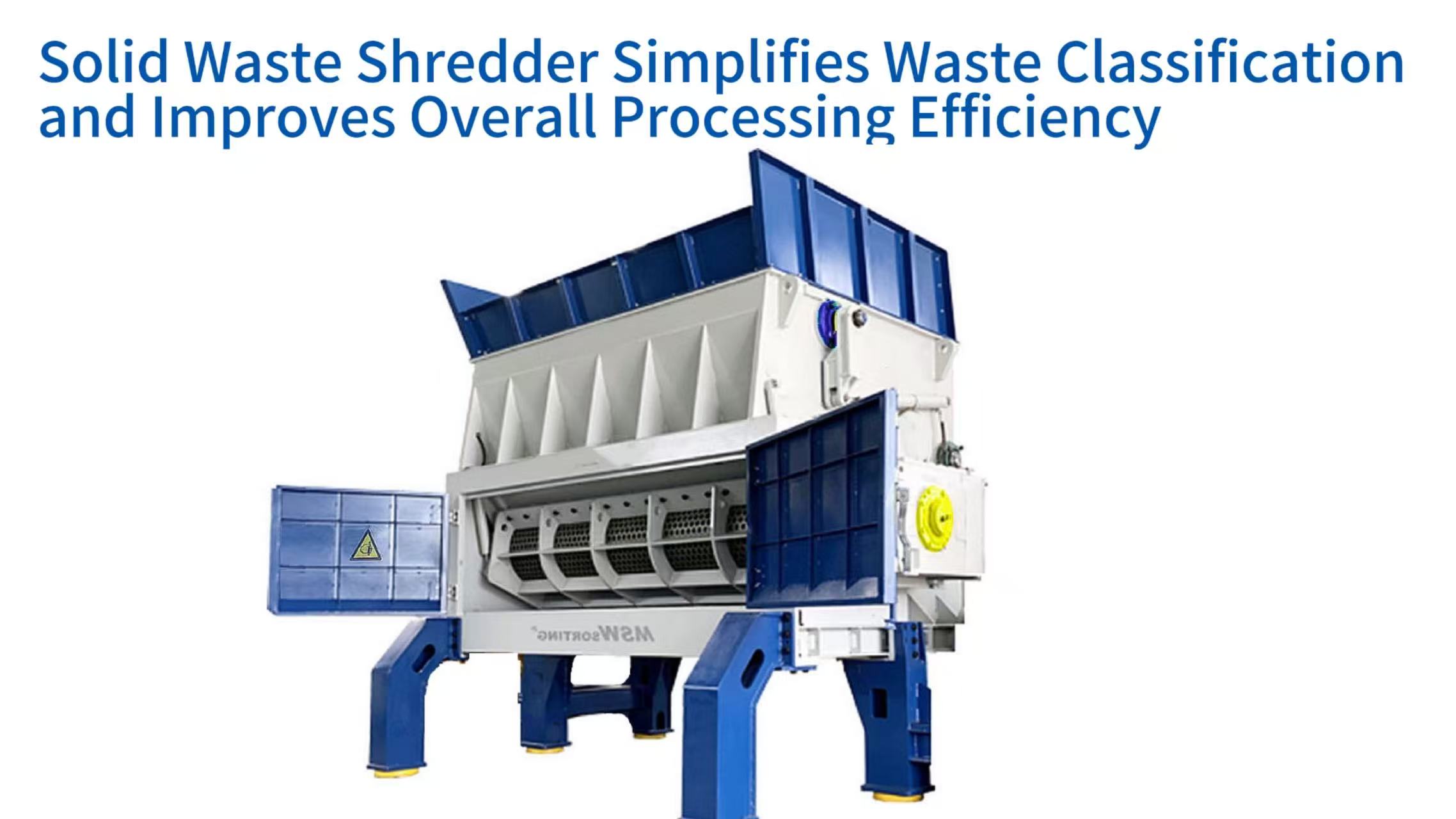
The global generation of municipal and industrial solid waste continues to escalate at an unprecedented rate. Contemporary data indicates that worldwide municipal solid waste production approached 2.4 billion tons in 2023, with this figure exhibiting an annual growth trajectory of approximately 2 to 3 percent . This relentless increase places immense pressure on waste management infrastructure, compelling recycling facilities and treatment centers to pursue greater operational scale, precision, and environmental responsibility. The industry demands processing equipment capable of handling heterogeneous material streams efficiently while facilitating accurate classification. Traditional waste management methodologies, heavily reliant on manual sorting or outdated fragmentation machinery, encounter significant limitations. These conventional approaches suffer from low classification throughput, inconsistent separation accuracy, convoluted processing workflows, substantial material loss, and increased difficulty in downstream refinement. Such inefficiencies not only inflate operational expenditures but also heighten the risk of non-compliance with tightening environmental regulations. The solid waste shredder emerges as a transformative solution to these persistent challenges. By integrating advanced shear-based fragmentation mechanisms with intelligent system design, this technology overcomes traditional processing bottlenecks. It enables rapid waste categorization through precise particle size reduction, streamlines the entire treatment sequence, and markedly elevates overall operational efficiency. For waste recovery operations and processing facilities, this translates into enhanced productivity, reduced environmental footprint, and improved economic competitiveness.
Fundamental Definition and Core Operational Principles of the Solid Waste Shredder
Core Operational Principles of Solid Waste Shredder
Electric Motor → Gearbox/Chain Drive → Cutting Shafts → Shearing Force
PLC Controller → Parameter Adjustment → Automated Operation
Shear/Tearing → Size Reduction → Density-Based Separation
Overload Protection → VFD Technology → >20% Energy Savings
A solid waste shredder constitutes a sophisticated industrial system that integrates mechanical power transmission, intelligent process control, and durable wear-resistant construction. Its primary function resides in the fragmentation, preconditioning, and classification support of diverse solid waste streams within the recycling and treatment sectors. This equipment demonstrates the capacity to process materials exhibiting widely varying physical characteristics with high efficiency and precise control. It serves as an indispensable link between the initial collection of heterogeneous waste and subsequent recovery operations, adapting effectively to the scale requirements of both large treatment centers and smaller recycling enterprises. The machine's operational foundation rests upon several interconnected technological principles that govern its performance, reliability, and safety.
Core Power Transmission Mechanism
The power transmission system forms the energetic backbone of the solid waste shredder. This system typically utilizes high-capacity electric motors as the prime mover, converting electrical energy into mechanical rotational force. This rotational power transfers through carefully engineered drivetrain components, which may include heavy-duty gearboxes, durable chain drives, or direct coupling systems, depending on the specific machine configuration. The transmission elements ensure stable and continuous delivery of torque to the cutting shaft assemblies, enabling the rotors to maintain sufficient force for shearing and tearing solid waste materials. Engineering considerations for noise reduction and vibration damping are incorporated into the transmission design, which minimizes parasitic energy losses during operation and preserves the stability of power output over extended periods. Compared to older waste processing technologies that frequently suffer from inadequate power delivery, excessive energy consumption, and unreliable operation, the modern shredder's power system exhibits superior load-handling capability, reduced energy intensity, and enhanced endurance for continuous duty cycles. These characteristics satisfy the demanding requirements of treatment centers operating around the clock, preventing processing interruptions caused by power insufficiency and maintaining workflow continuity.
Intelligent Control Architecture
The operational intelligence of the modern solid waste shredder resides within its programmable logic controller, which functions as the system's central nervous system. This electronic control unit interfaces with operators through intuitive touch-screen panels and often incorporates remote monitoring capabilities for enhanced supervisory control. The control architecture enables fully automated machine operation, allowing for precise adjustment of critical parameters including rotational speed of the cutter shafts, clearance between cutting elements, and material feed rate. These parameters can be modulated dynamically according to the specific characteristics of the incoming waste stream, ensuring that the fragmentation outcome aligns with downstream classification requirements. The implementation of intelligent control facilitates unattended operation, substantially reducing the need for continuous manual intervention and minimizing the potential for operator-induced errors. Parameter storage functionality permits the retention of optimized settings for different material types, enabling rapid recipe changeover as feedstock composition varies. Real-time data acquisition and remote terminal access allow operational supervisors to monitor equipment status, adjust parameters proactively, and diagnose anomalies from remote locations, significantly enhancing operational convenience and aligning with the precision requirements of large-scale waste processing operations.
Integrated Fragmentation and Classification Assistance
The solid waste shredder employs a compound fragmentation mechanism combining shear and tearing actions. High-torque rotating cutter shafts interact with stationary anvils or counter-knives mounted within the machine housing to reduce large, bulky waste items into uniformly sized smaller fragments. This mechanical action exploits differences in material hardness and density to initiate preliminary classification concurrently with size reduction. Fragments of higher density materials, such as metals and rigid plastics, tend to behave differently during and after the shredding process compared to lighter components like paper, film plastics, and textiles. This differential behavior facilitates natural separation tendencies in the material stream exiting the shredder, reducing the workload for subsequent manual or mechanical sorting operations. The integration of fragmentation with classification assistance fundamentally restructures the traditional waste processing sequence. The conventional paradigm requiring extensive upfront sorting before size reduction gives way to a streamlined approach where fragmentation supports and simplifies categorization. This methodological shift substantially reduces the complexity of classification steps, enhances sorting accuracy, and produces uniformly sized particles that are more easily transported, screened, and prepared for final recovery processes.
Comprehensive Safety and Energy Conservation Systems
Operational safety and energy efficiency constitute fundamental design imperatives for the solid waste shredder. A multilayered safety system protects both personnel and equipment during operation. Overload protection mechanisms continuously monitor drivetrain loads and automatically initiate shutdown sequences when encountering unshreddable objects or material jams, preventing catastrophic damage to critical components. Strategically positioned emergency stop devices provide operators with immediate manual intervention capability. The fragmentation chamber itself features fully enclosed construction, containing the shredding process and preventing projectile ejection or uncontrolled dust dispersion into the work environment. Physical barriers and safety interlocks further restrict access to hazardous areas during machine operation. In parallel with these safety provisions, energy conservation engineering reduces the environmental footprint and operating costs of the equipment. Variable frequency drive technology enables the control system to modulate motor speed according to instantaneous material feed rate, eliminating energy waste during idle or light-load periods. The selection of high-efficiency motors and wear-resistant, low-friction components further reduces electrical consumption during operation. Field data suggests that these integrated design features can reduce overall energy consumption by more than 20 percent compared to conventional waste fragmentation equipment, delivering both economic and environmental benefits to the operating facility.
Principal Classifications of Solid Waste Shredders and Their Application Environments
Solid Waste Shredder Types & Applications
| Shredder Type | Key Features | Best Applications | Capacity |
|---|---|---|---|
| Single-Shaft | Compact, high precision, sizing screen | Medium-scale facilities, paper/plastic/lumber | Medium |
| Dual-Shaft | High torque, anti-jamming, contra-rotating | Large-scale centers, bulky/mixed waste | High |
| Four-Shaft | Precision fragmentation, multi-stage | High-hardness materials, metal/plastics/debris | Very High |
| Mobile | Wheeled/tracked, no permanent foundation | Dispersed waste, construction/demolition | Variable |
Solid waste shredders are manufactured in several distinct configurations, each embodying design characteristics optimized for specific processing scenarios. The selection of an appropriate machine type depends upon a careful analysis of the waste stream composition, desired output specifications, available physical space, and financial parameters of the project. Matching the shredder configuration to the application maximizes equipment effectiveness, enhances classification outcomes, and controls operational expenditures. The following sections describe the primary shredder types and the waste processing environments for which they are best suited.
Single-Shaft Shredder Utilization in Waste Processing
The single-shaft shredder employs a rotor configuration featuring one rotating cutter shaft operating in conjunction with a stationary bed knife and a hydraulically powered material ram. This design yields a compact machine footprint and relatively high cutting precision. Single-shaft units are well adapted to medium-scale waste processing facilities and smaller recovery operations where space constraints or capital limitations may be factors. They demonstrate particular effectiveness when processing materials of moderate hardness, including paper, plastic articles, and dimensional lumber. The presence of a sizing screen beneath the rotor enables precise control over output particle dimensions, producing material with excellent uniformity that facilitates downstream classification and material recovery. Operational simplicity and straightforward maintenance requirements characterize this machine type, making it suitable for facilities processing moderate volumes of relatively homogeneous waste streams. The ability to achieve rapid size reduction with consistent particle dimensions helps smaller operations overcome the time and labor burdens associated with manual sorting approaches.
Dual-Shaft Shredder Utilization in Waste Processing
The dual-shaft shredder configuration employs two parallel cutter shafts rotating in opposite directions to achieve material fragmentation. This design generates substantially higher torque compared to single-shaft alternatives, providing enhanced capability for processing challenging waste streams. Dual-shaft machines demonstrate proficiency in handling bulky waste items, mixed material streams such as discarded furniture and appliance housings, and composite wastes containing multiple material types. The contra-rotating shaft action draws material into the cutting zone efficiently, reducing the tendency for jamming that can occur with simpler configurations. These characteristics make the solid-waste-double-shaft-shredder the preferred choice for large-scale waste treatment centers and high-volume recycling facilities. The substantial processing capacity and operational stability of dual-shaft units support continuous 24-hour operation, enabling facilities to maintain throughput targets even under heavy loading conditions. An additional advantage resides in the preliminary separation effect achieved during dual-shaft shredding, as the tearing action tends to liberate joined materials from one another, simplifying subsequent classification operations and improving overall recovery efficiency.
Four-Shaft Shredder Utilization in Waste Processing
The four-shaft shredder represents the pinnacle of fragmentation precision among solid waste processing equipment. This configuration utilizes two pairs of counter-rotating shafts arranged in series, with material passing through an initial coarse fragmentation stage before advancing to a secondary fine shredding stage. The multistage approach yields exceptional control over output particle dimensions and demonstrates remarkable adaptability to materials with widely varying characteristics. Four-shaft machines excel when processing higher hardness waste components, including smaller metal items, engineering plastics, and construction debris fragments. The fine, consistent output produced by these machines facilitates sophisticated downstream classification and enhances the efficiency of material recovery operations. The design incorporates features that resist material wrapping and prevent clogging when processing fibrous or tacky waste components, maintaining operational continuity under challenging conditions. Integration with automated sorting equipment is simplified by the uniform particle size distribution achieved through four-shaft processing, enabling seamless material transfer from fragmentation to classification stages. Facilities requiring high-precision separation and maximum recovery value from complex waste streams often select four-shaft configurations as the core of their processing lines.
Mobile Shredder Utilization in Decentralized Processing Scenarios
The mobile solid waste shredder mounts the complete processing system on a wheeled or tracked chassis, eliminating the requirement for permanent foundation construction. This mobility enables the equipment to relocate readily between different operational sites as processing demands dictate. Mobile units prove particularly valuable in scenarios involving dispersed waste generation, such as materials recovery facilities serving multiple collection zones, temporary waste accumulation sites, or construction and demolition projects. The capability to position processing capacity directly at the waste source substantially reduces material transportation costs, as bulky unprocessed waste can be reduced in volume on-site before shipment. Mobile units retain the essential fragmentation and classification assistance functions of stationary equipment while offering enhanced adaptability to varying site conditions and waste characteristics. Operators can adjust processing parameters on location to match the specific material encountered, achieving efficient size reduction and preliminary classification without the logistical burden of transporting raw waste to a central facility. This flexibility proves especially advantageous in remote areas lacking established waste processing infrastructure and for temporary projects where permanent equipment installation would be impractical.
Core Functional Capabilities Enabling Simplified Classification and Enhanced Throughput
| Capability | Benefit | Efficiency Gain |
|---|---|---|
| Mixed Waste Processing | Eliminates pre-segregation, reduces labor costs | 30% |
| Integrated Classification Support | 50% reduction in post-shred sorting labor | 50% |
| Integrated Conveyance | Continuous material flow, no manual handling | 25% |
| Adjustable Parameters | Material-specific optimization, rapid changeover | 20% |
| Continuous Operation | Reduced downtime, 24/7 processing capability | 40% |
The fundamental value proposition of the solid waste shredder resides in its capacity to streamline waste categorization workflows while simultaneously elevating overall processing efficiency. Its functional capabilities encompass the entire material handling sequence from initial size reduction through final discharge, addressing the persistent industry challenges of difficult separation, inadequate throughput, and convoluted operational procedures. These integrated functions provide waste treatment centers and recovery facilities with comprehensive solutions for achieving higher performance standards.
Mixed Waste Processing Capability
The solid waste shredder demonstrates exceptional proficiency in handling heterogeneous waste streams containing diverse material types simultaneously. A single machine can accept feed material comprising paper, plastics, wood fragments, metal components, discarded furniture, and packaging waste without requiring prior segregation. The shear-based fragmentation mechanism reduces these mixed materials to uniformly sized particles through controlled application of cutting and tearing forces. This capability fundamentally alters the traditional processing sequence, eliminating the necessity for extensive manual sorting prior to size reduction. The labor costs associated with preliminary classification decrease substantially, and the overall workflow becomes significantly more streamlined. The equipment's adaptability to varying material hardness and morphology overcomes a fundamental limitation of older fragmentation technologies, which frequently restricted feed streams to single material types to maintain operational stability. This expanded processing envelope enhances the versatility of waste treatment facilities and enables more efficient handling of the inherently variable waste streams characteristic of modern consumption patterns.
Integrated Classification Support During Fragmentation
The fragmentation process itself contributes actively to material classification through exploitation of differential physical properties. As mixed waste passes through the cutting zone, materials respond to the applied shear and tearing forces according to their individual characteristics. Following size reduction, the resulting particle stream exhibits natural segregation tendencies based on density and morphology. Denser fragments, including metal pieces and rigid plastic particles, tend to settle toward the lower portions of the material stream, while lighter components such as paper, film plastics, and textile fibers remain nearer the surface. This stratification, occurring without additional equipment or energy input, substantially simplifies subsequent manual or mechanical sorting operations. The classification assistance function can reduce the labor required for post-shred sorting by approximately 50 percent compared to conventional approaches where classification relies entirely on manual effort following size reduction. The improved separation efficiency also minimizes the accumulation of unsorted material that might otherwise degrade or become contaminated during extended storage, establishing a more favorable foundation for subsequent recovery processes.
Integrated Material Conveyance Functionality
Modern solid waste shredder systems incorporate engineered material handling equipment that receives fragmented output directly from the discharge chute and transports it to downstream processing stations or storage containers. This integrated conveyance eliminates the manual material handling steps that traditionally interrupted workflow between size reduction and subsequent operations. The conveying equipment, typically comprising belt conveyors, vibratory feeders, or screw conveyors depending on material characteristics, transfers processed fragments without additional labor intervention. Conveyor speed can be adjusted to match the output rate of the shredder and the processing capacity of downstream sorting equipment, maintaining balanced material flow throughout the facility. Anti-jam features and tracking controls prevent material accumulation that could interrupt operations, ensuring that fragmented material moves efficiently from the shredder to subsequent processing stages. The integration of size reduction and material transport into a unified system reduces labor requirements, minimizes material loss during handling, and contributes to overall process efficiency by maintaining continuous rather than batch-wise operation.
Adjustable Processing Parameters for Material-Specific Optimization
The intelligent control systems incorporated in modern solid waste shredders enable operators to adjust processing parameters in response to changing material characteristics and product requirements. Rotational speed of the cutter shafts, clearance between cutting elements, and material feed rate can all be modulated through the control interface to achieve specific fragmentation outcomes. When processing waste intended for detailed categorization, operators may select finer cut settings that produce smaller, more uniform particles conducive to efficient mechanical separation. For applications where higher throughput takes precedence over particle size uniformity, coarser settings with faster feed rates may be selected. This operational flexibility enables a single machine to accommodate the varying requirements of different waste streams and end-market specifications. The ability to store parameter sets as process recipes facilitates rapid changeover between material types, reducing transition times and maintaining overall facility productivity. Precise control over fragmentation outcomes eliminates the inefficiencies associated with inappropriate particle size distribution, which can complicate classification efforts and reduce recovery rates when mismatched to downstream separation technology requirements.
Sustained Continuous Operation Capability
The engineering of solid waste shredders emphasizes durability and reliability sufficient to support sustained continuous operation under demanding conditions. Critical components, including cutter assemblies, drive trains, and bearing systems, incorporate wear-resistant materials and robust construction techniques. Thermal management features, including adequate cooling capacity for drive motors and hydraulic systems, prevent performance degradation during extended operating periods. Dust protection seals and contamination barriers shield sensitive components from the abrasive environment characteristic of waste processing facilities. Jam prevention features, including automatic reversal cycles and torque monitoring, maintain operational continuity by clearing minor obstructions without operator intervention. This design philosophy enables shredders to achieve annual operating hours substantially exceeding those of conventional fragmentation equipment. For large-scale treatment centers processing high volumes of material, the capability for uninterrupted operation directly translates to increased processing capacity and reduced unit costs. The elimination of frequent maintenance stops and unplanned downtime events ensures that downstream processes receive a consistent supply of properly fragmented material, maintaining overall facility throughput and efficiency.
Principal Solid Waste Categories Processed and Associated Application Environments
Waste Categories & Application Environments
Key Processing Outcomes:
Volume reduction: 40-60% for municipal waste, 70-80% for bulky waste
Classification labor reduction: ~50% compared to manual sorting
Material recovery rate improvement: 20-30% for recyclable fractions
Energy recovery efficiency increase: 15-20% for waste-to-energy facilities
The solid waste shredder demonstrates remarkable versatility across the spectrum of materials encountered in waste management operations. Different waste categories exhibit distinct physical characteristics that influence fragmentation behavior and determine optimal processing parameters. The shredder's adjustable configuration enables it to accommodate these variations, achieving efficient size reduction and classification support across diverse application environments. Understanding the processing characteristics of each waste type facilitates appropriate machine selection and parameter optimization.
Municipal Solid Waste Processing Applications
Municipal solid waste encompasses the heterogeneous mixture of materials generated through residential and commercial activities. This stream typically includes paper products, plastic containers and packaging, glass bottles, food waste solids, textile items, and miscellaneous manufactured goods. The composition varies seasonally and regionally, presenting a continuously changing processing challenge. The solid waste shredder accepts this variable feedstock without requiring extensive front-end separation, reducing the entire waste stream to uniformly sized particles through controlled application of shear forces. During fragmentation, the differential behavior of lightweight materials versus heavier components initiates preliminary separation, simplifying subsequent classification operations. For municipal treatment facilities, this capability translates into enhanced processing efficiency and reduced reliance on manual sorting labor. The volume reduction achieved through shredding decreases transportation costs for residual materials destined for disposal and improves the combustion characteristics of waste directed to energy recovery facilities. The processed material's uniformity facilitates more efficient operation of downstream separation equipment, including magnetic separators for ferrous recovery and eddy current systems for non-ferrous metal extraction.
Industrial Solid Waste Processing Applications
Manufacturing operations generate solid waste streams distinct from municipal refuse in both composition and characteristics. Industrial waste includes production offcuts, rejected components, packaging materials, defective products, and equipment decommissioning waste. These materials frequently exhibit higher average hardness and larger individual piece sizes compared to municipal waste. Plastic components may include engineering grades with enhanced mechanical properties, and metal content may be more prevalent. The solid waste shredder adapts to these requirements through parameter adjustments that increase cutting force and modify fragmentation behavior. For industrial recovery facilities and factory-based waste processing operations, the shredder enables conversion of heterogeneous production waste into uniform fragments suitable for material recovery. Plastic fragments can be directed to washing and pelletizing lines for conversion back to raw material. Metal components separate cleanly from attached non-metallic materials, enhancing the value of recovered scrap. The efficiency gains realized through mechanical processing reduce the labor intensity of industrial waste management while increasing the proportion of material successfully diverted from disposal to productive reuse.
Bulky Waste Processing Applications
Bulky waste items, including discarded furniture, abandoned appliances, large packaging materials, and similar oversize objects, present unique handling challenges due to their dimensions and weight. Traditional management approaches require specialized transportation equipment and often involve labor-intensive disassembly or cutting operations. The solid waste shredder, particularly in dual-shaft and four-shaft configurations, accepts these oversize items directly, reducing them to fragments of manageable size in a single operation. During fragmentation, composite items such as upholstered furniture separate into constituent materials, with wood, foam, textiles, and metal components liberating from one another. This liberation effect substantially simplifies subsequent classification and enables recovery of materials that would otherwise require extensive manual separation. For facilities dedicated to bulky waste processing, shredder technology transforms a problematic, labor-intensive waste stream into a manageable material flow with multiple recovery opportunities. The volume reduction achieved during shredding decreases transportation costs for residuals and extends the useful life of disposal capacity by reducing the space required for landfilled materials.
Hazardous Waste Preprocessing Applications
Certain categories of hazardous waste require size reduction as a precondition for subsequent treatment or disposal operations. Materials including contaminated containers, spent battery assemblies, and packaging bearing hazardous residues necessitate processing under controlled conditions that prevent release of harmful substances. Solid waste shredders configured for hazardous service incorporate enhanced containment features, including fully sealed fragmentation chambers, negative pressure ventilation connections, and construction materials resistant to chemical attack. The enclosed processing environment prevents escape of hazardous particulates or vapors during fragmentation, protecting operators and the surrounding environment from exposure. Size reduction facilitates subsequent treatment steps, including thermal destruction, chemical stabilization, or secure encapsulation, by producing uniform particles with accessible surface area. The controlled processing environment also enables segregation of hazardous components from incidental non-hazardous materials, reducing the volume requiring specialized treatment and the associated costs. For facilities handling hazardous waste streams, shredder technology provides essential preprocessing capability while maintaining the containment and safety standards required for regulatory compliance.
Technical Principles Underlying Simplified Classification and Enhanced Efficiency
Technical Principles for Efficiency & Classification
Stratified Material Separation Mechanics
Natural stratification based on density simplifies downstream separation processes
| Technical Principle | Key Features | Benefit |
|---|---|---|
| Fragmentation Chamber Engineering | Specialized alloy cutters, precision clearance, optimized geometry | Uniform particle size, extended component life |
| Stratified Separation Mechanics | Density-based natural stratification, gravity separation | 50% reduction in sorting labor |
| Integrated Control System Coordination | Sensor monitoring, automated parameter adjustment, jam prevention | Stable operation, reduced downtime |
| Wear Mitigation and Component Longevity Engineering | Wear-resistant alloys, hard facing, lubrication systems | Extended service intervals, lower maintenance costs |
The effectiveness of solid waste shredders in simplifying classification and improving processing efficiency derives from the integration of multiple engineering disciplines within a unified machine design. Mechanical engineering establishes the structural foundation and force-generating capability. Materials science informs the selection of wear-resistant components capable of sustained operation under abrasive conditions. Control engineering provides the intelligence enabling automated adaptation to varying process requirements. The synthesis of these technical domains produces equipment capable of overcoming traditional waste processing limitations through scientifically grounded design.
Fragmentation Chamber Engineering Principles
The fragmentation chamber represents the mechanical heart of the solid waste shredder, where material size reduction actually occurs. This chamber houses the rotating cutter assemblies and stationary cutting elements, configured in arrangements specific to each machine type. Cutter teeth employ staggered patterns along the shaft length, ensuring continuous engagement with incoming material throughout each rotation. Tooth profiles vary according to intended application, with shear configurations optimized for softer materials and tearing configurations for harder, more resistant waste components. The cutter materials themselves consist of specialized alloy steels selected for their ability to maintain hardness and edge geometry under high-stress conditions. These alloys undergo controlled heat treatment processes that optimize the balance between surface hardness for wear resistance and core toughness for impact resistance. The chamber geometry incorporates streamlined internal surfaces that facilitate material flow and prevent accumulation in dead zones where clogging could initiate. Precision manufacturing ensures consistent clearance between rotating and stationary cutters, maintaining cutting efficiency and uniform particle size production throughout the component service life.
Stratified Material Separation Mechanics
The natural separation of materials by density following fragmentation occurs through straightforward physical principles operating within the material stream. As the mixture of fragments exits the shredding chamber, gravitational forces act preferentially on higher-density particles, causing them to settle toward the lower portion of the flowing stream. Lower-density materials remain suspended longer or float on the surface of the moving bed, creating a vertically stratified distribution. This stratification, occurring without mechanical intervention, presents an opportunity for simplified separation. Facilities may exploit this natural layering through split-stream collection systems that divert upper and lower portions of the material stream to different processing paths. Alternatively, the stratified material may be directed to density-based separation equipment, including air classifiers or fluidized bed separators, that complete the separation initiated during fragmentation. The integration of natural stratification with subsequent mechanical separation reduces the complexity and energy consumption of the overall classification system while improving separation accuracy compared to approaches that rely solely on manual sorting.
Integrated Control System Coordination
The control systems governing modern solid waste shredders coordinate multiple operational parameters to maintain optimal processing conditions automatically. Sensors distributed throughout the machine monitor critical variables including drive motor current, shaft rotational speed, bearing temperature, and material flow rate at the discharge. The control processor evaluates these inputs continuously, comparing observed values to established operating envelopes. When conditions deviate from optimal ranges, the system initiates corrective actions without operator intervention. Increasing material feed rate may trigger a corresponding increase in drive power or a temporary reduction in conveyor speed to maintain stable loading. Detection of an impending jam condition may initiate shaft reversal to clear accumulating material before full blockage occurs. Observation of stratification patterns may prompt adjustment of discharge gate position to optimize separation. This coordinated control architecture maintains process stability while freeing operators from continuous monitoring responsibilities. The result is consistent product quality, reduced downtime events, and optimal equipment utilization throughout extended operating periods.
Wear Mitigation and Component Longevity Engineering
The abrasive nature of solid waste processing imposes severe wear on all machine components in contact with the material stream. Engineering solutions addressing this challenge extend across multiple aspects of shredder design. Primary wear components, including cutter teeth and chamber liners, are fabricated from specialized alloys formulated to resist abrasive and impact wear. These materials undergo rigorous quality control to ensure consistent properties throughout each component. Surface treatments, including hard facing and thermal spray coatings, further enhance wear resistance at points of maximum contact. Component geometries incorporate wear allowances, with additional material provided in high-wear areas to extend service intervals. The attachment systems securing wear components to underlying structures facilitate rapid replacement when service limits are reached, minimizing machine downtime for maintenance. Lubrication systems deliver controlled quantities of protective films to bearing surfaces and moving joints, reducing friction and excluding contaminants. This comprehensive approach to wear management ensures that shredders maintain processing efficiency and product quality throughout extended operating lives, with predictable maintenance intervals that facilitate proactive planning rather than reactive crisis response.
Economic Value Creation and Investment Return Analysis
| Value Driver | Quantifiable Impact | Notes |
|---|---|---|
| Labor Cost Reduction | $150K - $1M+/year | 1 shredder replaces 15-20 manual sorters |
| Material Recovery Revenue | $100 - $500/ton | Plastic/metal recovery value |
| Energy Savings | >20% reduction | vs conventional equipment |
| Investment Payback | 1-2 years | Typical for medium-large facilities |
The deployment of solid waste shredder technology generates measurable economic returns for processing facilities through multiple concurrent mechanisms. Cost reductions in labor and energy combine with revenue enhancements from improved material recovery to create compelling investment economics. Environmental compliance benefits, while sometimes more difficult to quantify directly, contribute additional value through risk reduction and enhanced market access. The following analysis examines the principal value drivers and their contribution to overall investment returns.
Labor Cost Reduction and Operational Efficiency Gains
The automation of size reduction and classification assistance functions dramatically reduces the manual labor required for waste processing operations. A single solid waste shredder, operated by one or two monitoring personnel, can replace manual sorting crews of 15 to 20 individuals performing equivalent tasks through conventional methods. The annual labor cost savings from this substitution typically reach several hundred thousand dollars for medium-volume facilities and exceed one million dollars for large-scale operations. Beyond direct wage reduction, the mechanization of processing eliminates the management burden associated with large workforces, including recruitment, training, supervision, and turnover costs. Processing cycle times decrease significantly as mechanical operations proceed continuously without the fatigue limitations inherent in manual work. Material accumulation and associated storage costs decline as through-put increases relative to input rates. The combination of these factors typically yields complete investment recovery within one to two years of operation commencement, with continuing cost savings accruing throughout the equipment's service life.
Recovery Rate Enhancement and Revenue Improvement
The classification assistance provided by solid waste shredders increases the proportion of incoming material successfully recovered for beneficial use. The liberation effect achieved during fragmentation separates joined materials from one another, exposing recyclable components that would remain embedded within composite items during conventional processing. The uniformity of shredded particles facilitates efficient operation of automated sorting equipment, including magnetic separators, eddy current systems, and optical sorters, increasing both the quantity and purity of recovered materials. Higher material recovery translates directly to increased revenue from recyclable commodity sales. Plastic fragments recovered through shredding and sorting can command prices of several hundred dollars per ton when directed to appropriate recycling markets. Metal concentrates, including both ferrous and non-ferrous fractions, provide additional revenue streams with values fluctuating according to global commodity markets but consistently contributing positive returns. The incremental revenue from improved recovery typically adds hundreds of thousands of dollars annually to facility income, complementing the cost savings achieved through reduced labor requirements.
Environmental Compliance and Risk Mitigation Value
The regulatory environment governing waste management continues to tighten globally, with increasing restrictions on disposal options and more stringent requirements for processing operations. Facilities unable to demonstrate compliant operations face potential fines, operational restrictions, and in extreme cases, forced closure. The solid waste shredder contributes to regulatory compliance through multiple mechanisms. Enclosed processing contains dust and particulate emissions within the machine, preventing fugitive releases to the surrounding environment. Noise reduction features minimize sound emissions, facilitating compliance with local noise ordinances and improving community relations. The reduction in landfilled volume achieved through shredding extends the useful life of disposal capacity and reduces the environmental footprint of residual waste management. Proper processing of challenging waste streams, including hazardous materials and bulky items, ensures that these materials receive appropriate treatment rather than inappropriate disposal. For facilities seeking certification to environmental management standards or qualification as preferred suppliers to environmentally conscious customers, the demonstrated capability for responsible processing provided by shredder technology delivers additional competitive advantage.
Capacity Expansion and Growth Enablement
The throughput capacity of solid waste shredders enables processing facilities to expand their operations beyond the limitations of conventional methods. A single shredder line can process volumes that would require multiple conventional systems and substantially larger workforces to achieve through traditional means. This capacity concentration reduces the physical footprint required for equivalent throughput, conserving valuable facility space for other uses. The capability for sustained continuous operation supports around-the-clock processing schedules, maximizing asset utilization and enabling facilities to accept larger waste volumes without proportional increases in capital investment. For growing operations, shredder technology provides the processing capacity necessary to pursue larger contracts and serve expanding markets. Integration with downstream processing equipment, including automated sorting systems and material refining lines, creates opportunities for vertical integration into higher-value product markets. Facilities equipped with modern shredding and separation technology can produce finished recyclable commodities suitable for direct sale to manufacturers, capturing value that would otherwise accrue to intermediate processors.
Equipment Selection Methodology and Maintenance Practice Guidelines
Equipment Selection & Maintenance Guidelines
Realizing the full value of solid waste shredder technology requires careful attention to equipment selection and systematic maintenance practices. The selection process must match machine capabilities to the specific requirements of each application, considering material characteristics, throughput targets, and site constraints. Subsequent maintenance activities must preserve equipment condition and prevent degradation of processing performance over time. The following guidelines provide a framework for informed selection and effective maintenance.
Throughput-Based Selection Criteria
The processing volume required establishes a fundamental constraint on equipment selection. Smaller facilities processing moderate waste quantities typically find single-shaft shredders adequately matched to their needs, with these machines offering lower capital cost, compact footprint, and simplified operation appropriate to smaller-scale applications. Larger treatment centers processing high volumes of mixed waste require the enhanced capacity and robust construction of dual-shaft or four-shaft configurations. The selection process should consider not only average daily throughput but also peak loading conditions and future growth projections. Equipment sized with 20 to 25 percent margin above current requirements provides operational flexibility to accommodate volume fluctuations without creating processing bottlenecks. Site characteristics also influence selection, with fixed installations appropriate for permanent facilities and mobile configurations offering advantages for operations serving multiple locations or processing waste at distributed generation points. The selection decision should balance immediate processing needs against anticipated future requirements, avoiding both undersizing that limits growth and oversizing that unnecessarily ties up capital in unutilized capacity.
Material-Driven Configuration Decisions
The physical characteristics of the waste stream strongly influence optimal shredder configuration. Facilities processing predominantly softer materials, including paper, film plastics, and dimensional lumber, may achieve satisfactory results with single-shaft machines optimized for these applications. Operations handling mixed municipal waste benefit from the versatility and jam resistance of dual-shaft configurations. Facilities processing materials with higher hardness, including metal components, engineering plastics, and construction debris, require the enhanced cutting force and wear resistance of four-shaft machines. Sites accepting hazardous waste streams must select equipment with appropriate containment features and material specifications resistant to chemical attack. The selection process should include thorough characterization of the waste stream, including identification of maximum particle dimensions, typical and maximum material hardness, moisture content, and the presence of contaminants that could affect processing. Matching machine configuration to material characteristics ensures that the selected equipment will achieve required processing rates and product quality while maintaining acceptable component life and maintenance intervals.
Systematic Maintenance Practice Implementation
The preservation of shredder performance and reliability depends upon systematic implementation of preventive maintenance practices. Regular inspection of cutting components identifies wear progression and enables timely replacement before performance degradation or secondary damage occurs. Documentation of wear patterns and component life provides data for optimizing replacement intervals and identifying opportunities for design improvement. Lubrication of bearings, drive components, and moving joints according to manufacturer specifications prevents premature wear and maintains operating efficiency. Cleaning of the fragmentation chamber and material passages prevents accumulation that could restrict flow or harbor contaminants. Inspection of safety systems, including emergency stops, interlocks, and overload protection devices, ensures continued operator protection. Calibration of sensors and control systems maintains processing accuracy and enables early detection of developing problems. Systematic maintenance, documented through formal records, provides the basis for predictive analysis that can anticipate failures before they occur, scheduling interventions during planned downtime rather than responding to unexpected breakdowns.
Diagnostic Troubleshooting Procedures
Effective response to operational abnormalities requires structured diagnostic procedures that identify root causes efficiently. When material flow interruptions occur, the initial response should verify proper feed rates and examine the fragmentation chamber for accumulations that may require clearing before resuming operation. Power consumption variations may indicate changes in material characteristics requiring parameter adjustment or progressive wear requiring component inspection. Product quality deviations, including inappropriate particle size distribution or inadequate classification assistance, suggest the need for parameter optimization or cutter maintenance. Systematic troubleshooting, guided by machine documentation and manufacturer technical support resources, resolves most operational issues without extensive downtime. Recording of problem occurrences, diagnostic findings, and corrective actions creates a knowledge base supporting continuous improvement in operating practices. For complex or persistent issues, consultation with equipment manufacturers provides access to specialized expertise accumulated through broad experience across diverse applications and operating environments.
The evolution of waste management practices continues to demand higher performance from processing equipment. Companies with extensive experience in this field, such as MSW Technology with fifteen years of specialized engagement in shredder design and manufacture, contribute to this evolution through continuous refinement of equipment and processes. This depth of experience informs the engineering decisions that enhance reliability, improve processing efficiency, and extend equipment service life. The integration of mechanical innovation with practical operational knowledge produces equipment capable of meeting the challenges presented by increasingly complex waste streams and more demanding regulatory requirements. For waste treatment facilities and recycling operations, the selection of appropriately designed and properly supported shredding equipment provides the foundation for efficient, compliant, and profitable operations in an industry where these attributes are essential for long-term success.
| Maintenance Activity | Frequency | Key Objective |
|---|---|---|
| Cutter Inspection & Replacement | Monthly/Quarterly | Maintain cutting efficiency, prevent secondary damage |
| Lubrication of Moving Parts | Weekly | Reduce friction, extend component life |
| Chamber Cleaning | Daily | Prevent material accumulation and jamming |
| Safety System Testing | Monthly | Ensure operator protection and compliance |
| Sensor Calibration | Quarterly | Maintain process accuracy and early fault detection |