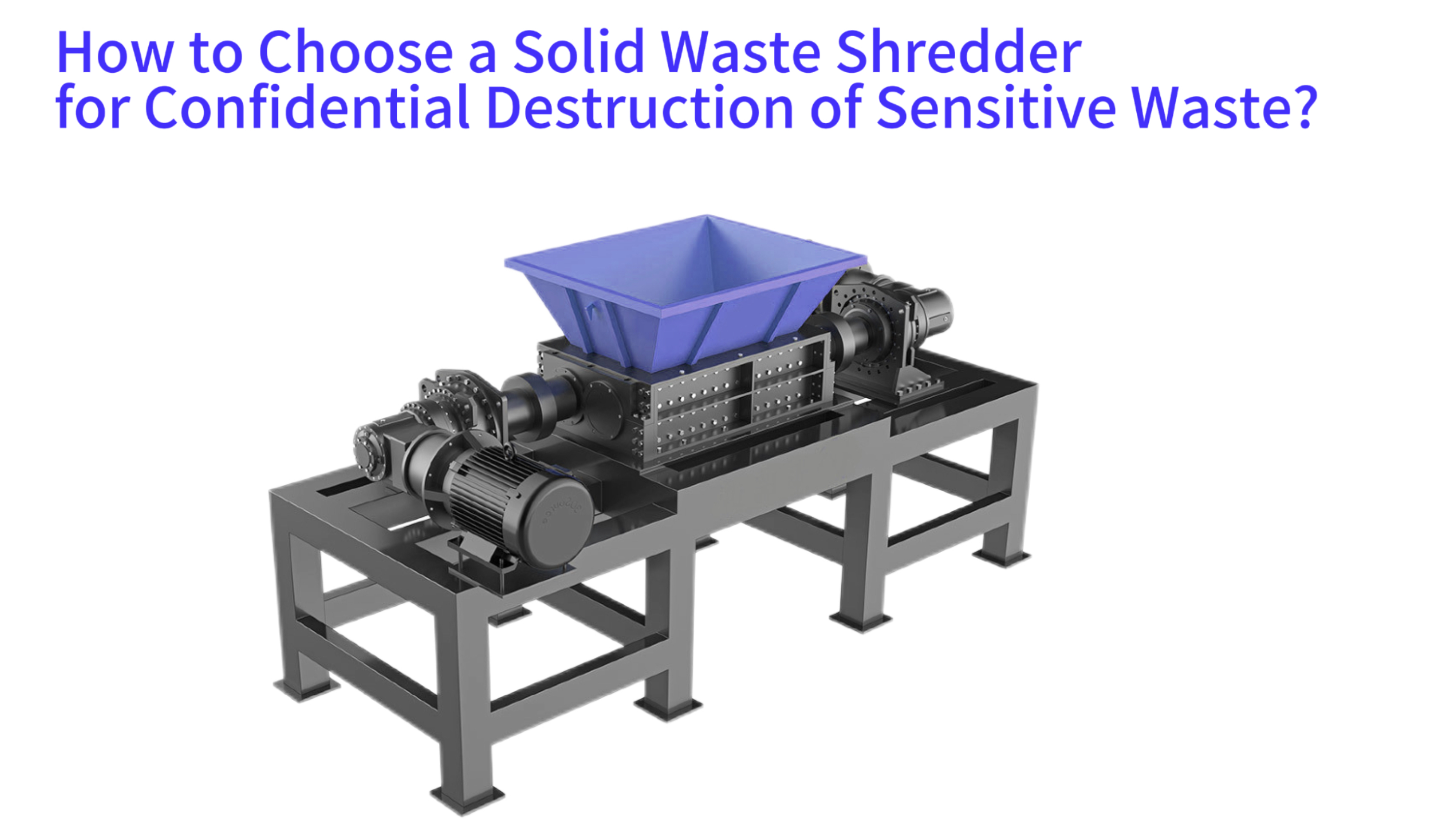
The secure disposal of sensitive materials represents a critical operational requirement across multiple industries. Standard volume reduction equipment, such as a conventional solid waste shredder, fails to meet the stringent demands of destroying regulated items. This process requires specialized machinery engineered for absolute security and regulatory compliance. This guide provides a framework for selecting a Confidential Destruction Shredder capable of handling materials like expired pharmaceuticals, cosmetics, and proprietary goods. It examines the necessary security features, material compatibility factors, and lifecycle cost considerations. The objective is to facilitate an informed investment in technology that guarantees irreversible destruction while mitigating legal and reputational risks.
Defining the Scope and Standards of Confidential Destruction
DIN 66399 Destruction Security Levels
| Security Level | Material Type | Max Particle Size/Dimensions |
|---|---|---|
| P-1 | General Paper | Unspecified (low security) |
| P-3 | Confidential Paper | ≤ 320 mm² cross-cut area |
| P-5 | High-Security Hardware | 2mm x 15mm strips or smaller |
| P-7 | Pharmaceuticals/Sensitive Goods | ≤ 10mm (irrecoverable) |
Confidential destruction constitutes a distinct process governed by specific security levels. Unlike general waste shredding, its primary goal is rendering material permanently unrecoverable. This requirement stems from legal obligations to protect data, consumer safety, and intellectual property. The process must produce a consistent, verifiable output particle size that meets defined destruction grades.
International standards provide clear benchmarks for security levels. DIN 66399 and similar frameworks classify destruction from Level P-1 to P-7, specifying maximum particle dimensions for different material types. A secure shredder for pharmaceuticals must achieve a particle size, often below 10mm, that prevents identification or reconstruction. This quantifiable standard forms the foundational criterion for any equipment selection, moving beyond simple functionality to demonstrable forensic security.
Security Levels and Particle Size Requirements
Particle size directly correlates to the security level of the destruction process. A P-3 security level for confidential paper requires a cross-cut particle area not exceeding 320 square millimeters. For high-security P-5 level disposal of hardware, the particle size is reduced to 2mm x 15mm strips or smaller fragments. Selecting a shredder necessitates matching its minimum output size to the mandated security grade for the target waste stream.
Analyzing the Composition of Sensitive Waste Streams
Sensitive waste streams present complex physical and chemical challenges. Expired pharmaceuticals may contain active compounds, requiring containment of potent dust. Cosmetic waste often combines viscous liquids, glass containers, metals from applicators, and composite plastics. This heterogeneous mix tests a shredder's ability to handle varied material strengths and consistencies without jamming or compromising the cutting system.
The Regulatory Framework Governing Secure Disposal
Numerous regulations mandate secure destruction, creating a compliance imperative. Data protection laws like GDPR govern the disposal of information carriers. Product stewardship laws and hazardous waste regulations control the end-of-life management of chemicals and drugs. Non-compliance can result in significant financial penalties, often exceeding hundreds of thousands of dollars, making regulatory adherence a primary driver for equipment investment.
Consequences of Inadequate Disposal Methods
Employing inadequate disposal methods introduces severe organizational vulnerabilities. The financial liability from regulatory fines represents a direct cost. Indirect costs include reputational damage from product diversion or data breaches, potentially eroding customer trust. Environmental contamination from improperly handled hazardous components presents another layer of long-term liability and remediation expense.
Critical Security Features of a Dedicated Destruction Shredder
Integrated Security Features Framework
1. Containment Systems
Fully enclosed cutting chamber + HEPA filtration + negative air pressure
2. Access Control & Audit Trails
Biometrics/PIN/key cards + automated logging (operator, time, weight)
3. Tamper Resistance & Monitoring
Locked panels + in-feed/discharge cameras + tamper alarms
4. Emergency & Safety Protocols
Safety interlocks + metal detection + secure jam clearance
A Confidential Destruction Shredder integrates specialized engineering features to maintain control over the entire destruction process. These features address containment, access, and verification needs that standard industrial shredders lack. The design philosophy prioritizes preventing any form of material diversion or process compromise from the point of feed to final output handling.
Core security features function as an integrated system. Physical containment prevents escape of particulates, while electronic controls restrict machine operation to authorized personnel. Automated monitoring creates an immutable record of each destruction event. This multi-layered approach ensures the process withstands internal and external scrutiny, providing defensible evidence of compliant operations.
Containment Through Closed Design and Airflow Management
A fully enclosed cutting chamber is a non-negotiable feature for confidential shredding. This design contains aerosols, dust, and fragments generated during processing. Integrating a negative air pressure system with High-Efficiency Particulate Air (HEPA) filtration ensures any airborne particles are captured within the machine. This containment is crucial for operator safety and preventing cross-contamination when processing potent pharmaceutical powders.
Access Control and Automated Audit Trail Generation
Electronic access control forms the first gate for process security. Systems utilizing key cards, biometric scanners, or PIN codes ensure only trained, authorized personnel can operate the equipment. Upon access, the machine should automatically log the operator identity, session start and end times, and the calculated weight of processed material. This digital audit trail is essential for regulatory compliance and internal accountability.
Tamper Resistance and Integrated Process Monitoring
Physical security features deter and detect unauthorized interference. These include locked service panels, sealed housings, and sensors that trigger alarms if the machine is opened improperly. Integrating visual monitoring, such as in-feed and discharge cameras, provides visual verification of the material entering and the resulting output. This recorded footage complements digital logs, creating a comprehensive evidence package.
Emergency Protocols and Safe Material Handling
Robust safety interlocks and emergency stop systems are mandatory. Sensors must detect metal contaminants or overloads, triggering an immediate and safe shutdown to protect the machine's cutting chamber and drive train. Procedures for safely clearing a jam must be designed to maintain containment, often using reverse functions or secure manual access ports that do not compromise the integrity of the destroyed material.
Technical Compatibility with Complex Material Inputs
Technical Requirements for Complex Waste Streams
| Waste Type | Key Technical Feature | Specifications |
|---|---|---|
| Pharmaceuticals (powders/aerosols) | Cutting Tool Metallurgy | Tungsten carbide coatings or D2/H13 tool steel (corrosion/wear resistance) |
| Mixed Waste (glass/metal/plastic) | Drive System | High-torque, low-speed motor + heavy-duty gearbox + high-inertia rotor |
| Variable Security Level Waste | Particle Size Control | Interchangeable screens + adjustable knife clearances |
| All Sensitive Waste | Post-Shredding Compaction | Integrated compactor/baler (90% volume reduction) |
Machine performance must be precisely matched to the physical characteristics of the sensitive waste. Technical specifications like drive power, cutting geometry, and material of construction determine operational success. A mismatch leads to frequent downtime, excessive wear, or failure to achieve the required output particle size, undermining the entire security objective.
Evaluating compatibility requires a detailed analysis of the waste stream's most challenging components. The machine must be configured to handle the hardest, toughest, or most abrasive elements within the mixed load. This ensures consistent performance and prevents process failure when encountering unexpected items, guaranteeing the shredder acts as a reliable bottleneck for all incoming material.
Cutting Tool Metallurgy for Corrosion and Wear Resistance
The selection of cutting tool material is paramount for durability and chemical resistance. Blades manufactured from high-grade tool steels like D2 or H13 offer excellent wear resistance. For processing chemically active waste, blades with specialized coatings or those made from tungsten carbide provide superior corrosion resistance. This extends service intervals and maintains cut quality, ensuring consistent particle size output over time.
Drive System Power and Torque for Heterogeneous Loads
Processing mixed-material packages demands a drive system with high torque at low rotational speeds. A heavy-duty gearbox coupled with a high-inertia rotor provides the necessary twisting force to fracture glass vials, shear metal components, and tear plastic blisters simultaneously. Insufficient torque results in stalled motors and incomplete destruction, creating security gaps and operational inefficiencies.
Precise Output Particle Size Control and Adjustability
The ability to control and verify final particle size is a defining characteristic. This is typically achieved through an integrated screen or grate system in the discharge path. The screen aperture determines the maximum particle dimension. For applications requiring flexibility, interchangeable screens or adjustable knife clearances allow the same machine to meet different security levels for varying waste streams, optimizing capital utilization.
Integrated Post-Shredding Compaction for Enhanced Security
Direct integration of a compactor or baler at the shredder discharge port significantly elevates security. This process immediately densifies the shredded material, reducing its volume by up to 90%. Compaction renders the waste virtually unreconstructible and simplifies secure handling and transportation to final disposal sites, such as licensed hazardous waste landfills or high-temperature incineration facilities.
Establishing a Verifiable Chain of Custody and Compliance
Verifiable Chain of Custody for Sensitive Waste
1. Material Receipt
Inventory logging
Secure staging
2. Shredding Process
Weight logs
Camera verification
Audit trails
3. Shredded Output
Compaction
Secure containment
4. Final Treatment
Incineration/landfill
Destruction certificate
5. Compliance Audit
Full documentation
Third-party verification
Vendor Compliance Support & Automation
Automated Verification
Built-in scales (batch weight) + inventory linkage
Certificate Generation
Unique batch certificates (date, time, operator, serial #)
Regulatory Guidance
Vendor support for GDPR/product stewardship laws
Third-Party Certification
NAID AAA certification assistance
The shredding event is a single link in a longer chain of custody that must remain unbroken. A secure process encompasses all stages from material receipt through to final disposition. Documentation and verification mechanisms must connect each step, providing auditors with a clear, logical pathway demonstrating compliant handling from start to finish.
This chain relies on both technology and procedural rigor. The shredder itself generates key data points, including weight logs and images. This information must be integrated with upstream inventory records and downstream destruction certificates from final treatment partners. The complete package forms a defensible audit trail that satisfies regulatory requirements for material accountability.
Integration with Final Treatment Pathways
The shredded output must be directed to a sanctioned final treatment pathway. Common routes include high-temperature incineration in licensed facilities, chemical neutralization, or secure landfilling. The shredder's design should facilitate this linkage, for example, by discharging directly into DOT-approved containers or using an integrated hopper that interfaces with a closed conveying system to prevent spillage or exposure during transfer.
Automated Verification and Certificate Generation
Advanced shredding systems automate the verification process. Built-in scales provide a precise weight for each batch, which can be linked to a known inventory. Some systems print or electronically generate a unique destruction certificate for each batch, incorporating data like date, time, operator, weight, and machine serial number. This automation reduces human error and creates immediate, professional documentation.
Vendor Support for Regulatory Compliance and Certification
Equipment suppliers should offer more than hardware. Comprehensive vendors provide guidance on relevant regulations and assist in developing compliant workflows. Some support clients in obtaining third-party security certifications, such as NAID AAA certification, by demonstrating how their equipment's features meet the stringent audit requirements. This advisory role adds significant value to the capital investment.
Developing a Formal Standard Operating Procedure (SOP)
A detailed, written SOP is the backbone of a compliant operation. This document must specify every step: from secure material intake and staging, authorized operator protocols, machine operation and monitoring, to handling and transferring the final residue. The SOP ensures consistency, provides a training baseline, and serves as a reference for internal and external audits, demonstrating controlled and repeatable processes.
Financial Analysis: Total Cost of Ownership and Justification
Total Cost of Ownership (TCO) Components
| Cost Category | Key Items | Typical Costs |
|---|---|---|
| Upfront Capital | Purchase price + site prep + electrical upgrades + ancillary systems (dust collection) | Variable (hidden costs: 20-30% of purchase price) |
| Ongoing Operational | Energy + wear parts (rotary cutters/counter-knives) + labor | Energy: >50 kW/hour; Preventive maintenance: 3-5% of capital/year |
| Risk Mitigation Value | Avoided fines + reputational protection + remediation costs | GDPR fines: Up to €20M or 4% of global turnover |
Acquisition Model Comparison
Capital Purchase
✓ Full asset ownership
✗ Large upfront expenditure
✗ In-house maintenance required
Leasing
✓ Predictable operational expense
✓ Preserved cash flow
✗ No asset ownership
Full-Service Contract
✓ Fixed periodic fee (machine + maintenance + labor)
✓ Vendor assumes uptime risk
✓ No technical staff required
Investing in a Confidential Destruction Shredder requires a comprehensive financial evaluation beyond the initial purchase price. The Total Cost of Ownership (TCO) model provides a realistic picture of long-term financial commitment. This analysis balances capital expenditure against operational savings, risk mitigation, and potential revenue protection, justifying the investment from a business management perspective.
A thorough TCO calculation spans the machine's expected service life. It accounts for direct costs like energy consumption, blade replacement, and scheduled maintenance. It also quantifies indirect benefits, such as the avoidance of regulatory fines and the protection of brand equity. This holistic view enables decision-makers to compare the shredder investment against the ongoing cost and risk of alternative disposal methods like third-party destruction services.
Assessing Initial Capital and Hidden Deployment Costs
The purchase price is a single component of upfront costs. Significant additional expenses often accompany deployment. These can include site preparation, such as reinforcing flooring to support several tons of machinery, electrical service upgrades to power a high-torque drive motor, and installation of necessary ancillary systems like dust collection or compressed air. Omitting these factors can lead to substantial budget overruns during project implementation.
Evaluating Ongoing Operational and Maintenance Expenses
Recurring costs directly impact operational budgets. Energy consumption for a mid-sized industrial shredder can exceed 50 kW per operating hour. Wear parts, particularly rotary cutters and counter-knives, require periodic replacement; their cost and frequency depend on material processed. A preventive maintenance contract, typically costing 3-5% of the capital price annually, ensures reliability but must be factored into long-term planning.
Quantifying the Financial Value of Risk Mitigation
The shredder's value in mitigating financial risk is a critical justification metric. This involves estimating the potential cost of non-compliance events that the shredder helps prevent. For instance, a single GDPR fine for data mishandling can reach €20 million or 4% of global turnover. Quantifying this avoided exposure, even on a probabilistic basis, frames the shredder as a risk management asset rather than merely a cost center.
Exploring Leasing and Full-Service Contractual Models
Alternative acquisition models can improve financial flexibility. Leasing arrangements convert a large capital outlay into a predictable operational expense, preserving cash flow. Full-service contracts bundle the machine, maintenance, parts, and sometimes even operator labor into a fixed periodic fee. This model transfers performance and uptime risk to the vendor, providing budget certainty and simplifying management for organizations lacking technical maintenance staff.
Operational Best Practices for Sustained Security and Performance
Sustained Security & Performance Framework
1. Operator Training
Technical operation + security protocols + safety (annual refresh) + documented training records
2. Predictive/Preventive Maintenance
Hour/tonnage-based inspections + PLC-HMI diagnostic data + cutting edge/bearing checks
3. Secure Output Handling
Locked containers + access-controlled staging + documented carrier handover
4. Efficacy Audits & Testing
Third-party audits + physical reconstruction testing + security level validation
Key Maintenance Monitoring Metrics
| Metric | Monitoring Tool | Alert Threshold |
|---|---|---|
| Cutting Edge Wear | Visual inspection + particle size analysis | >10% deviation from target particle size |
| Motor Current | PLC-HMI control panel | >15% increase in baseline current |
| Bearing Temperature | Thermal sensors | >60°C operating temperature |
| Hydraulic Pressure | Pressure gauges + PLC logging | ±10% deviation from set pressure |
Optimal long-term performance depends on disciplined operational and maintenance regimes. Proper procedures extend equipment lifespan, ensure consistent security output, and maintain a safe working environment. These practices transform the shredder from a purchased asset into a reliable, integral component of the organization's secure waste management infrastructure.
Sustained performance requires a systematic approach. This encompasses initial and recurrent training for operators to ensure correct and secure usage. A data-driven maintenance schedule prevents unexpected failures. Clear protocols for handling the shredded output maintain chain-of-custody integrity after the material leaves the machine. Regular validation testing confirms the entire system continues to meet its defined security objectives.
Implementing Comprehensive Operator Training Programs
Effective training programs cover technical operation, security protocols, and safety. Operators must understand not only how to run the machine but also the critical importance of access control, log-in procedures, and visual inspection of feed material. Safety training focuses on emergency responses, lock-out/tag-out procedures, and safe jam clearance methods. This training should be documented and refreshed annually to maintain a high standard of operation.
Executing a Predictive and Preventive Maintenance Schedule
Maintenance must be proactive rather than reactive. A schedule based on operating hours or processed tonnage should include regular inspection of cutting edges, bearing temperatures, hydraulic system pressure, and electrical connections. Utilizing the machine's own PLC-HMI control panel diagnostic data can enable predictive maintenance, identifying trends like increasing motor current that signal wear before a failure occurs.
Secure Handling and Staging of Shredded Output Residue
Security protocols must govern the material after shredding. Procedures should mandate the immediate transfer of shredded material into locked, labeled containers. These containers must be staged in a secure, access-controlled area pending final removal. The handover to a licensed waste carrier requires documented verification, including weight tickets and waste manifests, to complete the internal chain of custody.
Conducting Regular Destruction Efficacy Audits and Testing
Periodic independent verification is essential for validating the entire system. This can involve hiring a third-party auditor to review processes and records. It also includes physical testing, such as shredding sample items with known identifiers and attempting to reconstruct them from the output to verify the particle size meets the required security level. These audits provide objective assurance and identify potential procedural drift before it becomes a compliance issue.