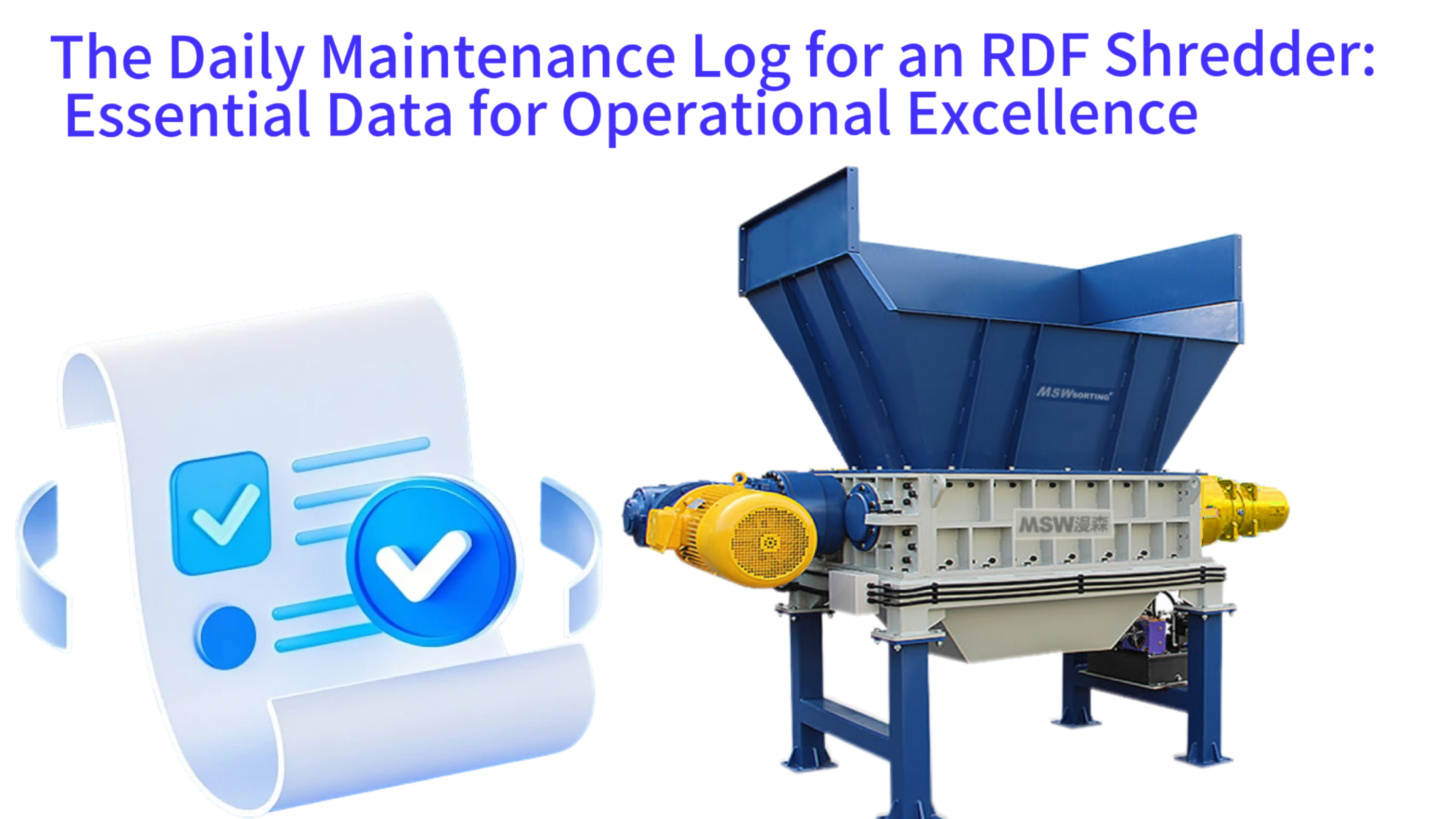
Systematic documentation within a daily maintenance log transforms routine observation into a strategic asset for managing Refuse-Derived Fuel (RDF) shredding equipment. This practice extends beyond basic compliance, establishing a foundational database for the machine's operational lifecycle. A meticulously kept log captures the interplay between machine parameters, processed material characteristics, and component wear. This data facilitates a transition from reactive repairs to a predictive maintenance paradigm. The consequent benefits include a significant reduction in unplanned downtime, optimized consumption of wear parts, and enhanced overall equipment effectiveness for the waste-to-energy line.
The Foundational Role of Maintenance Logs in Asset Management
Core Value of RDF Shredder Maintenance Logs in Asset Management
(Empirical Record)
Maintenance
Quantification
Excellence
(Minimize Downtime)
Also Enables: Safety Compliance & Spare Parts Inventory Optimization
A comprehensive maintenance log serves as the central nervous system for industrial asset management. It provides an empirical record that supports technical decision-making and financial planning. This documented history is indispensable for conducting thorough root cause analysis following a component failure or performance deviation. Over time, the accumulated data establishes a reliable performance baseline for the specific RDF shredder. Operators and engineers can detect subtle shifts in operational parameters long before they escalate into critical failures. The log also acts as a vital tool for knowledge transfer across shifts and during personnel changes.
Enabling Predictive Maintenance Strategies
Predictive maintenance relies on trend analysis derived from consistent historical data. A daily log providing records of motor current, vibration levels, and bearing temperatures allows for the identification of anomalous patterns. This proactive approach contrasts sharply with traditional schedule-based or reactive maintenance. The operational cost savings from preventing a single major breakdown can justify the investment in rigorous logging practices. Data-driven predictions regarding component lifespan become increasingly accurate with each logged entry.
Quantifying Operational Costs and Performance Metrics
Accurate operational cost calculation requires detailed data on consumables and machine utilization. The log documents the consumption rates of critical wear parts like cutting blades and screen meshes. It records active running hours against total available time, providing a clear picture of machine availability and utilization rates. These metrics are essential for evaluating the true cost-per-ton of processed RDF material. Financial planning for maintenance budgets and machine upgrades depends heavily on this quantified performance history.
Ensuring Safety and Procedural Adherence
A formal log reinforces standard operating procedures and safety protocols. Recording pre-start checks and safety system verifications instills a disciplined operational culture. It creates an audit trail that demonstrates compliance with internal safety policies and external regulatory requirements. Documenting near-misses or minor incidents provides valuable material for safety reviews and preventative training. This record-keeping is a critical component of a responsible industrial safety management system.
Informing Spare Parts Inventory and Procurement
Efficient inventory management of spare parts balances availability costs against the risk of downtime. Maintenance log data reveals the actual failure intervals and wear rates of components under specific operating conditions. This history enables planners to move from guesswork to statistically informed ordering cycles. It helps identify which parts should be held in stock and which can be procured on an as-needed basis. This optimization directly reduces capital tied up in inventory while improving maintenance readiness.
Core Structural Elements of an Effective Maintenance Log
Core Structural Elements of an Effective RDF Shredder Maintenance Log
Chain
Operational Mode
Characterization
Conditions
| Structural Element | Key Required Fields (English) | Purpose |
|---|---|---|
| Clear Chain of Responsibility | Date, Shift Designation, Operator ID/Name | Establish accountability & smooth shift handover |
| Equipment & Operational Mode | Machine Identifier, Operational Mode (Continuous/Batch) | Provide context for comparative performance analysis |
| Waste Stream Characterization | Waste Type, Composition Notes, Bulk Density, Moisture Content | Link material input to machine wear and tear |
| Ambient Environmental Conditions | Ambient Temperature, Humidity Level | Explain seasonal performance variations |
An effective log is structured to capture information systematically across several key dimensions. This structure ensures no critical data point is overlooked during busy operational periods. The framework typically integrates temporal, identification, operational, and material data blocks. Each block contains specific fields designed to be completed quickly yet comprehensively. This organized approach transforms the log from a notepad into a relational database of machine health.
Establishing a Clear Chain of Responsibility
Every log entry must begin with fundamental identification data. This includes the precise date, the operator's shift designation, and the full name or identifier of the personnel completing the entry. This practice establishes unambiguous accountability for the observations and actions recorded. It allows supervisors to easily trace questions back to the source and clarifies communication during shift handovers. A clear chain of responsibility is a cornerstone of professional operations management.
Precise Equipment Identification and Operational Mode
The log must specify the exact machine identifier, crucial in facilities with multiple similar units. It should also record the operational mode employed, such as continuous feed, batch processing, or a specific programmed setting. Different modes exert distinct stresses on the solid waste shredder system. Documenting the mode provides essential context for interpreting other logged parameters like power consumption and throughput rates, enabling accurate comparative analysis over time.
Characterizing the Processed Waste Stream
The composition and condition of the input material profoundly influence shredder performance. The log should describe the waste type, such as commercial or municipal solid waste. Qualitative notes on observable composition, like the presence of excessive film plastic, textiles, or moist organics, are valuable. Estimates of bulk density or moisture content, even if subjective, help explain fluctuations in machine load. This material characterization links cause to effect in the wear and tear process.
Documenting Ambient Environmental Conditions
External environmental factors can affect machine operation and recorded data. Ambient temperature and humidity levels should be noted, as they influence hydraulic oil viscosity and electrical cooling efficiency. Extreme cold can make materials more brittle, while high humidity can increase adhesion in the hopper. Recording these conditions provides necessary context for diagnosing seasonal variations in performance or unusual parameter readings.
Recording Operational Parameters and Condition Monitoring Data
| Monitoring Category | Key Metrics to Log (English) | Early Warning Signs |
|---|---|---|
| Electrical Load & System Health | Main Drive Motor Amperage, Hydraulic Motor Current, System Pressure | Sustained high current (excessive resistance in cutting chamber) |
| Hydraulic System Performance | Hydraulic Oil Temperature, Reservoir Level, Circuit Pressure | Rising oil temperature trend (cooler inefficiency or internal leakage) |
| Sensory Inspections | Unusual vibrations, Acoustic signatures, Excessive housing heat | Metallic grinding noise (potential bearing or blade damage) |
| Feed Consistency & Disruptions | Hopper bridging, Uneven feed, blockage/jamming details | Frequent jamming (upstream material handling or feed mechanism issues) |
Continuous monitoring and recording of key operational parameters provide the quantitative heartbeat of the shredder. This data reveals the machine's response to its workload in real-time. Systematic tracking allows for the establishment of normal operating ranges for critical systems. Deviations from these established baselines serve as early warning indicators of developing issues. This practice turns the operator's subjective perception into objective, actionable information.
Monitoring Electrical Load and System Health
The main drive motor's amperage draw is a primary indicator of operational load. Logging this value at regular intervals, or noting its peak during a processing batch, is essential. Similarly, for systems with hydraulic drives, the motor current and system pressure should be recorded. Sustained high current or pressure readings often signal excessive resistance within the cutting chamber, potentially due to dull blades, a jam, or overly dense feedstock.
Assessing Hydraulic System Performance
The hydraulic system is the powerhouse for many shredder functions, including feed rams and tool movement. Key data points include hydraulic oil temperature and reservoir level. A rising oil temperature trend can indicate cooler inefficiency, internal leakage, or excessive continuous operation. Pressure readings at various circuit points, compared to manufacturer specifications, help diagnose pump health and valve functionality. Consistent logging builds a profile of normal thermal behavior.
Conducting Sensory Inspections for Anomalies
Beyond instrument readings, human senses remain vital diagnostic tools. The log should capture qualitative observations of unusual vibrations, changes in acoustic signatures, or unexpected heat emanating from housings or bearings. Descriptions like "increased high-frequency vibration near the gearbox" or "unusual metallic grinding noise during startup" provide crucial clues. These sensory notes often precede measurable instrument failures, prompting timely investigation.
Tracking Feed Consistency and Disruption Events
The consistency of material feed directly impacts shredder stability. The log should note observations of bridging in the hopper or uneven feed from the conveyor. Any events of blockage or jamming must be detailed, including the location, the suspected cause, and the method used to clear it. The frequency and nature of these events are key performance indicators for both upstream material handling and the shredder's own feed mechanism design.
Specialized Tracking for Critical Wear Components
Specialized Tracking for RDF Shredder Critical Wear Components
Cutting Tools (Blades/Hammers/Rotors)
Edge rounding/chipping/cracking
Edge recession measurement
Operating hours since last change
Tonnage processed post-replacement
Screen / Grate
Plugging/bowing/broken wires
Output size uniformity correlation
Hole formation status
Compliance with RDF particle specs
Bearings & Seals
Bearing housing temperature (IR)
Unusual humming/grinding noise
Grease replenishment records
Seal integrity (lubricant loss prevention)
High-Wear Structural Elements
Wear-resistant liners thickness
Pusher ram head tip condition
Anvil block abrasion
Planned chamber refurbishment tracking
| Component Name | Part Number | Last Replacement Date | Current Wear Status (1-10) | Projected Replacement Date |
|---|---|---|---|---|
| Cutting Blade (Primary) | RDF-SH-001 | 2026-01-01 | 6 (Moderate edge rounding) | 2026-01-20 |
| Screen Mesh (50mm) | RDF-SC-003 | 2025-12-10 | 4 (Minor plugging, no breaks) | 2026-02-15 |
| Main Shaft Bearing | RDF-BR-007 | 2025-10-05 | 3 (Normal temp, no noise) | 2026-04-01 |
| Cutting Chamber Liner | RDF-LN-012 | 2025-09-20 | 7 (Reduced thickness at reference points) | 2026-01-30 |
Specific components within the shredder are subject to intense mechanical stress and predictable wear. Targeted inspection and documentation of these parts are central to maintenance planning. This focused tracking shifts parts replacement from a surprise expense to a planned, budgeted activity. It allows for the optimization of component life without risking catastrophic failure or severe damage to adjacent systems.
Documenting Cutting Tool Wear Progression
The condition of the shredder's cutting tools, whether blades, hammers, or rotors, dictates product quality and machine efficiency. The log should detail visual inspections, noting observations like edge rounding, chipping, or cracking. Some operations implement simple gauges to measure edge recession periodically. Recording the hours of operation or tonnage processed since the last tool change or rotation builds a reliable database for forecasting future replacement intervals under similar material conditions.
Inspecting Screen Integrity and Output Quality
The screen or grate determines the final particle size of the RDF. Daily checks should verify the screen is not plugged, bowed, or exhibiting broken wires or holes. The log must correlate screen condition with observations of output size uniformity. An increase in oversized particles can signal screen damage or excessive wear allowing bypass. This inspection is critical for ensuring the RDF product meets the specification required by the downstream energy recovery facility.
Monitoring Bearing and Seal Conditions
Bearings support high-load rotating assemblies, and their failure can cause secondary damage. Log entries should include periodic checks of bearing housing temperatures using infrared thermometers. Unusual noise, such as humming or grinding from bearing locations, must be noted. Records of grease replenishment for lubricated bearings are essential to prevent under- or over-lubrication. Seal integrity checks prevent lubricant loss and contamination ingress.
Evaluating Other High-Wear Structural Elements
Several other components endure significant abrasion. The log should schedule periodic inspections of items like the wear-resistant liners inside the cutting chamber, the tips of pusher ram heads, and anvil blocks. Measuring liner thickness at reference points over time quantifies wear rates. Documenting the condition of these parts helps plan for scheduled chamber refurbishments during planned downtime, avoiding unproductive emergency repairs.
Standardizing Records for Maintenance Actions and Irregular Events
Standardized Record Process for Maintenance Actions & Irregular Events
(Preventative/Unplanned)
Data Capture
Documentation
Proactive Follow-Up
| Record Type | Mandatory Fields (English) | Key Output |
|---|---|---|
| Preventative Maintenance Completion | Task Description, Completion Time, Technician Initials, Lubrication/Filter Details | Proof of care for warranty claims; No missed scheduled tasks |
| Corrective Actions & Fault Diagnostics | Symptoms, PLC/HMI Error Codes, Downtime, Root Cause (if identified) | Fault library for accelerated future diagnostics |
| Spare Parts Consumption | Part Number, Replacement Reason, Machine Operating Hours, Serial/Batch Number | Data for part life analysis & warranty returns |
| Recurring Issues & Hazards | Issue Frequency, Hazard Description, Immediate Reporting Confirmation | Risk management & engineering review triggers |
A disciplined approach to recording all interventions ensures a complete history. This includes both routine preventative tasks and unplanned corrective actions. Standardizing the format for this information guarantees its utility for future analysis. A well-documented event provides a case study that can prevent recurrence. This section of the log turns daily activity into institutional knowledge.
Documenting Preventative Maintenance Task Completion
Every executed preventative task must be logged upon completion. This includes routine lubrication of all specified points, visual inspections, bolt tightening checks, and cleaning of air filters or cooling fins. The entry should state the task, the time it was performed, and the initials of the technician. This record is proof of care, valuable for warranty claims, and a checklist to ensure no scheduled task is inadvertently missed.
Detailing Corrective Actions and Fault Diagnostics
When a malfunction occurs, the log must capture a detailed snapshot. The description should include the symptoms, any error codes displayed on the control panel (PLC/HMI), the immediate corrective action taken, and the total downtime incurred. If the root cause was identified, it should be stated clearly. If not, the entry should flag it as an item for further investigation. This creates a fault library that speeds up future diagnostics.
Logging Spare Parts Consumption and Replacement
Any part replacement, whether planned or unplanned, requires a detailed entry. This should include the exact part number and description, the reason for replacement (e.g., normal wear, sudden failure), and the machine operating hours at the time of change. If possible, noting the batch or serial number of the installed part can help track quality across suppliers. This data is fundamental for analyzing part life and managing warranty returns.
Flagging Recurring Issues and Potential Hazards
The log should have a mechanism for flagging issues that persist or potential hazards observed. A note like "recurrent material wrapping on primary shaft, requires engineering review" elevates a minor nuisance to a project status. Observations of compromised guards, fluid leaks, or unusual smells should be prominently logged and reported immediately. This proactive documentation is a key element of risk management.
Transforming Logged Data into Actionable Business Intelligence
Data to Actionable Business Intelligence: RDF Shredder Maintenance Log Value Chain
(Daily Entries)
Analysis
Insights
Decisions & Excellence
| Analysis Type | Key Activities (English) | Business Value Output |
|---|---|---|
| Trend Analysis & Alert Thresholds | Plot motor amperage/hydraulic temp, set control limits, trigger proactive investigations (e.g., lubrication system checks) | Minimize unplanned downtime, avoid catastrophic failures |
| Material Input & Machine Stress Correlation | Cross-reference waste stream data with wear/load metrics, identify high-stress feedstocks | Optimize feedstock blending, negotiate cost-effective waste contracts |
| Spare Parts Demand Forecasting | Analyze historical part lifespan (hours/tonnage), implement just-in-time ordering | Reduce inventory capital, eliminate emergency procurement costs |
| Data-Driven Overhaul Planning | Optimize overhaul timing, minimize production disruption, justify capital expenses |
The true value of maintenance logging is realized only through systematic data analysis. Raw data points become intelligence when reviewed for patterns, trends, and correlations. This analytical process should be conducted at regular intervals, such as weekly or monthly reviews. The goal is to extract predictive insights that inform tactical and strategic decisions, moving the maintenance function from a cost center to a value-adding operation.
Performing Trend Analysis and Setting Alert Thresholds
Plotting key parameters like motor amperage or hydraulic temperature over time reveals their normal operating envelope. Statistical process control methods can help establish upper and lower control limits. When logged data shows a parameter trending consistently toward a limit, it triggers a planned investigation. This could involve inspecting filters, checking for lubrication system issues, or assessing blade sharpness before a failure occurs.
Correlating Material Input with Machine Stress
Advanced analysis involves cross-referencing operational data with feedstock descriptions. The log may reveal that processing certain waste streams, like heavily textile-based loads, consistently results in higher motor current and faster blade wear. This correlation provides concrete evidence to support operational changes, such as pre-sorting or blending feedstock. It also offers data for negotiating contracts that account for the true cost of processing difficult materials.
Forecasting Spare Parts Demand from Historical Wear
Historical replacement data for blades, screens, and liners allows for the creation of data-driven procurement forecasts. By knowing the average lifespan of a part in hours or tons processed, planners can accurately predict future demand. This enables just-in-time ordering, reduces emergency air freight costs, and ensures parts are available for scheduled maintenance windows. It turns the spare parts inventory into a strategically managed asset.
Developing a Data-Driven Overhaul Plan
A major machine overhaul is a significant capital expense that requires precise justification. A comprehensive maintenance log provides the evidence base for this decision. It documents the cumulative wear on major subsystems, the frequency of failures, and the rising cost of repairs. This data allows management to schedule an overhaul at the optimal point, maximizing component life while preventing a costly in-service breakdown. The plan can be budgeted and executed with minimal disruption to production.