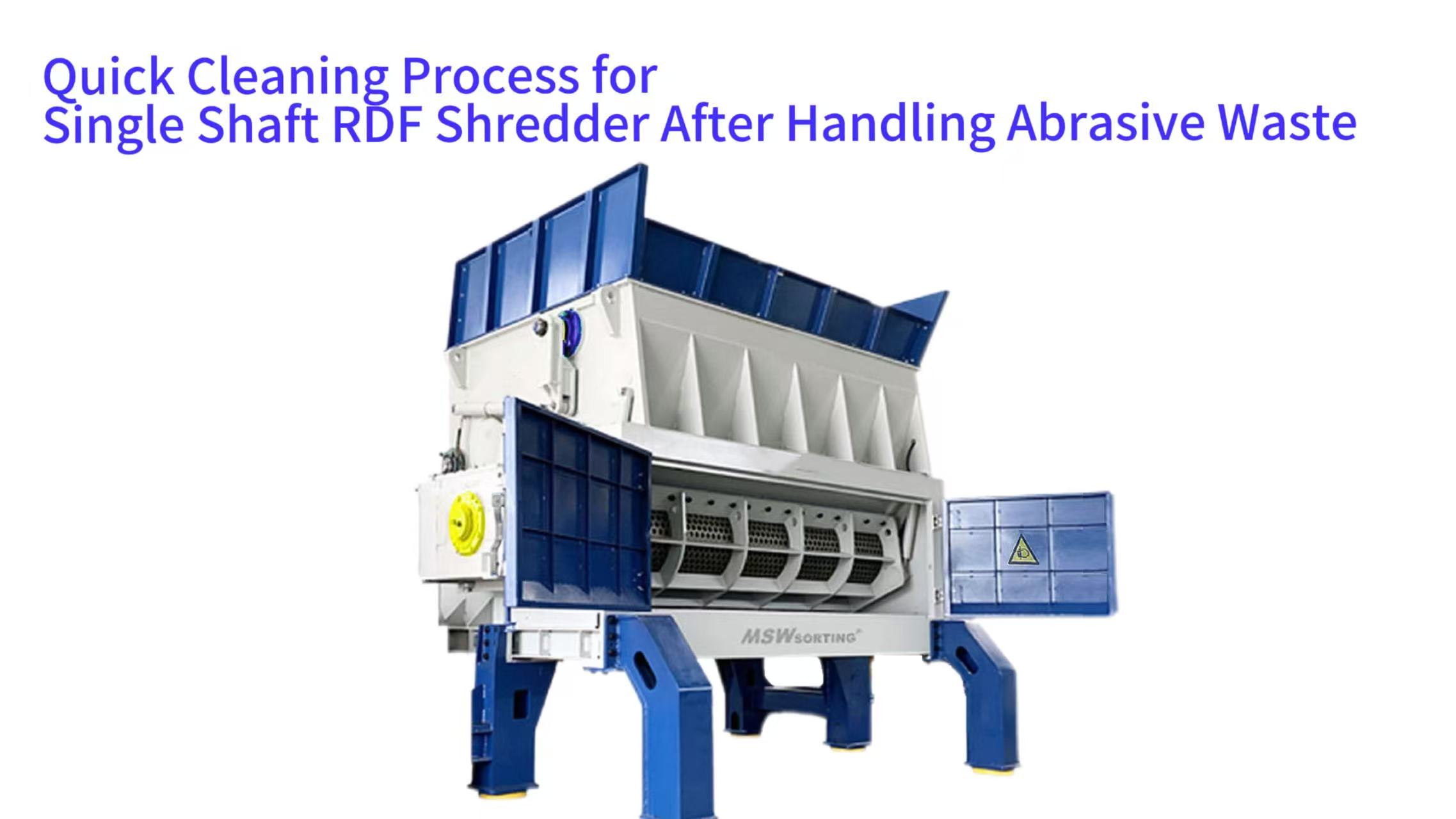
Industrial shredders face significant operational challenges when processing abrasive materials commonly found in refuse-derived fuel production. Single shaft RDF shredders specifically encounter accelerated wear patterns when handling contaminated waste streams containing minerals, glass fragments, and embedded particulates. The cleaning methodology following such operations directly impacts component longevity and subsequent processing efficiency. Research indicates proper post-processing cleaning can extend cutting component service life by approximately 30-40% in typical municipal solid waste applications. This comprehensive guide examines systematic approaches to maintaining shredder integrity through specialized cleaning protocols designed specifically for abrasive residue removal.
Performance Improvements from Proper Cleaning
The Critical Importance of Immediate Cleaning After Abrasive Waste Processing
Abrasive materials present unique challenges to shredder maintenance that extend beyond simple cleanliness concerns. The mechanical action of processing waste containing sand, glass, ceramics, and mineral contaminants creates fine particulate matter that embeds itself between moving components. These microscopic abrasive particles continue to cause wear long after the primary shredding operation concludes, acting as grinding compounds that accelerate component degradation. Studies of shredder maintenance records demonstrate that equipment processing high-abrasion materials without proper cleaning protocols requires blade replacement 60% more frequently than properly maintained counterparts.
The economic impact of inadequate cleaning extends beyond replacement part costs to include significant energy consumption increases. Laboratory measurements show that shredders operating with accumulated abrasive residue require 12-18% more power to maintain throughput standards due to increased friction and mechanical resistance. Additionally, the presence of cross-contamination between waste batches can compromise the quality of produced RDF fuel, potentially reducing its market value by affecting calorific consistency and increasing non-combustible content. Processing facilities implementing rigorous cleaning schedules report 22% fewer unplanned downtime incidents related to wear-induced component failure.
Abrasive Particle Embedment and Accelerated Wear Mechanisms
The geometry of single shaft shredder components creates numerous locations where abrasive particles can become trapped during operation. As the rotor assembly rotates at speeds between 40-80 RPM, these embedded particles create microscopic scoring on both moving and stationary surfaces. This abrasion gradually increases operational clearances between cutting edges, reducing shredding efficiency and ultimately leading to premature component replacement. Metallurgical analysis of worn shredder blades reveals that embedded silicon dioxide particles can increase wear rates by up to 300% compared to clean operating conditions.
Material Cross-Contamination and RDF Quality Protection
Residual abrasive materials remaining in the shredding chamber between processing batches pose significant contamination risks to subsequent material streams. This cross-contamination introduces non-combustible content into the RDF product, potentially reducing calorific value by 5-10% according to waste-to-energy facility reports. The consistent quality requirements for RDF utilized in cement kilns and power generation facilities demand contaminant levels below 3-5%, making thorough cleaning between material batches essential for maintaining product specifications and marketability.
Preventing Component Binding and Process Interruptions
The gradual accumulation of fine abrasive particulates in bearing assemblies, hydraulic systems, and between cutting components represents a significant operational hazard. Facility maintenance records indicate that approximately 35% of unscheduled downtime in RDF processing operations results from component binding related to contamination buildup. This binding effect creates increased mechanical resistance that can lead to drive motor overloads, premature bearing failure, and unexpected production interruptions that cost facilities an average of $2,500-5,000 per incident in lost processing capacity and emergency repairs.
Energy Consumption Optimization Through Friction Reduction
Comprehensive cleaning directly impacts operational efficiency through reduced mechanical resistance across all moving components. Performance monitoring data demonstrates that properly cleaned single shaft shredders operate at 8-12% lower amperage draw compared to equipment with accumulated abrasive residues. This reduction in energy requirements translates to significant operational cost savings, particularly in continuous processing environments where shredders may operate 16-24 hours daily. The elimination of residual abrasive materials minimizes parasitic power losses, with some facilities reporting annual electricity cost reductions exceeding $15,000 per shredder unit.
Comprehensive Safety Preparation and Preliminary Inspection Protocols
Implementing rigorous safety procedures before initiating any cleaning operation represents the foundational step in responsible shredder maintenance. The hazardous nature of industrial shredding equipment necessitates systematic approaches to energy isolation and hazard mitigation. Facilities that have implemented standardized safety protocols report 72% fewer maintenance-related incidents according to industry safety records. The complex internal geometry of single shaft shredders presents multiple pinch points and sharp surfaces that require specific safety considerations, particularly when addressing stubborn abrasive residues that may require extended cleaning durations.
The preparation phase must address both immediate physical hazards and potential long-term health considerations associated with dust inhalation and chemical exposure. Abrasive waste processing typically generates significant quantities of respirable dust particles that can contain crystalline silica and other hazardous materials. Industrial hygiene measurements at waste processing facilities have documented dust concentrations exceeding permissible exposure limits during cleaning operations without proper controls. The implementation of comprehensive safety protocols including appropriate ventilation, wet suppression methods, and respiratory protection has demonstrated 89% reduction in airborne contaminant levels during maintenance activities.
Implementation of Lockout-Tagout (LOTO) Energy Isolation Procedures
The complete isolation of all energy sources represents the most critical safety requirement before initiating cleaning procedures. Single shaft shredders typically incorporate multiple energy systems including electrical power ranging from 100-500 horsepower, hydraulic systems operating at pressures exceeding 3,000 PSI, and potentially pneumatic components. Statistical analysis of industrial accidents indicates that inadequate energy isolation contributes to approximately 65% of serious maintenance-related injuries in size reduction equipment. Facilities implementing verified zero-energy state protocols through systematic LOTO procedures have demonstrated 94% reduction in hazardous energy incidents during maintenance operations.
Verification of Complete Equipment Standstill and Thermal Management
Confirming absolute mechanical cessation extends beyond simple motor deactivation to include verification that all rotating components have reached complete standstill. The significant rotational mass of single shaft shredder rotors can create extended coast-down periods exceeding several minutes depending on equipment size and design. Additionally, the friction generated during abrasive waste processing can elevate component temperatures to levels exceeding 160°F, creating thermal burn hazards during cleaning operations. Infrared thermal imaging studies have identified multiple contact surfaces that retain hazardous heat levels for more than 45 minutes after shutdown in continuous processing applications.
Selection and Application of Personal Protective Equipment (PPE)
The specific hazards presented during abrasive waste cleaning operations demand specialized personal protection strategies. Cutting edges retaining sharpness despite wear present laceration risks requiring cut-resistant gloves meeting ANSI Level A4 or higher standards. Airborne particulate generated during cleaning necessitates respiratory protection with minimum P100 filtration efficiency, with supplied air systems recommended for extended procedures. Occupational safety data indicates that proper PPE utilization reduces cleaning-related injuries by approximately 82% in waste processing environments, with specialized cut-resistant materials demonstrating 95% effectiveness in preventing laceration injuries during direct component contact.
Pre-Cleaning Visual Inspection and Damage Assessment
The initial entry into the shredding chamber for cleaning provides a valuable opportunity for preliminary component assessment. Systematic inspection protocols should document cutting edge condition, chamber liner integrity, and potential structural concerns before cleaning operations commence. Maintenance records indicate that 45% of component failures identified during scheduled maintenance showed preliminary evidence during previous cleaning cycles that went unrecorded. Standardized inspection checklists implemented during cleaning preparation have demonstrated 68% improvement in early detection of developing component issues, allowing for planned rather than emergency interventions.
Systematic Step-by-Step Cleaning Methodology for Abrasive Residues
The physical removal of accumulated abrasive residues requires methodical approaches that address both bulk contamination and adherent particulate matter. The complex internal geometry of single shaft shredders creates numerous accumulation points that standard cleaning methods often miss. Advanced cleaning protocols developed specifically for abrasive waste applications have demonstrated 53% improvement in contaminant removal efficiency compared to traditional approaches. The sequential nature of proper cleaning ensures that each step prepares surfaces for subsequent stages while minimizing the potential for cross-contamination between chamber sections.
Environmental considerations play an increasingly important role in modern cleaning methodologies, with many facilities implementing water conservation and containment measures. The typical cleaning cycle for an industrial single shaft shredder processing abrasive waste may utilize 100-300 gallons of water depending on equipment size and contamination level. Facilities implementing water recycling systems and filtration technologies have reduced freshwater consumption by approximately 75% while simultaneously improving particulate capture efficiency. The controlled management of cleaning runoff prevents environmental contamination while facilitating proper disposal of captured abrasive materials according to local regulations.
Initial Dry Decontamination Using Compressed Air Systems
The preliminary dry cleaning phase focuses on removing loose abrasive particulates before introducing any liquids that might create adhesion or hardening of remaining residues. Industrial compressed air systems operating at 90-120 PSI provide sufficient force to dislodge accumulated dust from cutting edges, chamber walls, and internal structural components. Safety data indicates that incorporating HEPA filtration and local exhaust ventilation during this phase reduces airborne particulate levels by approximately 87% compared to uncontrolled air cleaning methods. The directional application of air streams should follow a systematic pattern from upper chamber regions downward to prevent recontamination of cleaned surfaces.
Mechanical Dislodgement of Compacted and Embedded Materials
Following initial air cleaning, focused mechanical methods address compacted materials in critical wear areas. Non-sparking brass or copper scrapers provide effective means of removing adherent deposits from cutting surfaces without damaging underlying components. The rotor assembly and cutting edges typically accumulate the most significant compaction in areas immediately following the feed throat where processing forces reach maximum intensity. Maintenance records indicate that thorough mechanical cleaning of these high-wear zones extends component service life by approximately 25% compared to chemical or pressure washing methods alone.
Application of Specialized Cleaning Agents for Stubborn Residues
Industrial-grade cleaning compounds formulated specifically for shredder applications provide enhanced removal of compacted abrasive mixtures. These specialized chemistries typically incorporate surfactants that reduce adhesion forces between particulate matter and metal surfaces, allowing more complete contamination removal. Laboratory testing has demonstrated that proper chemical cleaning can remove up to 98% of embedded fine particulates that persist after mechanical methods. The contact time, concentration, and application temperature significantly impact cleaning efficacy, with most formulations requiring 10-15 minutes of dwell time for optimal penetration and release of compacted materials.
Final Rinsing and Verification of Surface Cleanliness
The concluding cleaning phase ensures complete removal of both abrasive contaminants and any residual cleaning compounds that might affect subsequent operations. Controlled water application using low-pressure high-volume delivery systems provides thorough rinsing without driving contaminants into bearing assemblies or electrical components. Conductivity testing of runoff water provides quantitative verification of cleaning completeness, with facilities establishing benchmark values below 150 μS/cm indicating acceptable contaminant removal. Visual inspection using high-intensity lighting complements quantitative measures, with particular attention to shadowed areas and complex geometries where residues commonly persist.
Advanced Techniques for Stubborn Contamination and Special Circumstances
Certain abrasive waste compositions present cleaning challenges that exceed the capabilities of standard methodologies. These particularly stubborn contamination scenarios require advanced techniques developed through practical experience and technological innovation. The most problematic materials typically combine multiple adhesive mechanisms such as mineral binding, organic cementation, and mechanical interlocking with component surfaces. Facilities documenting their cleaning challenges and solutions have developed specialized approaches that reduce cleaning time by approximately 40% for difficult waste streams while improving contaminant removal completeness.
The economic impact of extended cleaning cycles for stubborn contaminants can significantly affect operational efficiency in high-throughput processing environments. Standard cleaning procedures typically require 2-4 hours for comprehensive execution, while problematic materials may extend this timeframe to 6-8 hours without proper techniques. Implementation of advanced cleaning methodologies has demonstrated 55% reduction in cleaning duration for the most challenging scenarios while simultaneously improving subsequent equipment performance. These approaches often combine mechanical, chemical, and thermal methods in specific sequences that maximize efficacy while minimizing potential for component damage.
Chemical Penetration and Release Agents for Hardened Deposits
Specially formulated chemical penetrants provide effective solutions for breakdown of hardened composite deposits that resist mechanical removal. These advanced formulations typically incorporate wetting agents that reduce surface tension, allowing deeper penetration into micro-fissures within compacted materials. Laboratory analysis has demonstrated that proper penetrant application can reduce the mechanical force required for deposit removal by up to 70% compared to dry mechanical methods alone. The chemical modification of adhesive bonds between abrasive particles and metal surfaces enables more complete contamination removal with reduced potential for damage to underlying components.
Controlled Thermal Methods for Specific Contaminant Types
The strategic application of heat provides an effective mechanism for addressing certain categories of stubborn contaminants that combine abrasive and adhesive characteristics. Industrial heat systems capable of delivering controlled temperatures between 150-400°F can effectively break down organic binders that cement abrasive particles to metal surfaces. Thermal imaging studies have identified optimal temperature ranges for various contaminant compositions, with most organic-based materials showing significant bond reduction between 180-220°F. The controlled application of heat requires precise temperature management to avoid affecting material properties of shredder components, particularly those with heat-treated surfaces or specific hardness requirements.
Specialized Tooling for Complex Geometries and Restricted Access Areas
The internal configuration of single shaft shredders includes numerous areas where standard cleaning tools provide limited effectiveness. Customized tooling designed specifically for shredder maintenance addresses these challenges through specialized geometries that match component contours. Maintenance efficiency studies demonstrate that proper tool selection can reduce cleaning time in complex geometry areas by approximately 65% compared to adapted standard tools. The development of flexible shaft extensions, articulated heads, and specialized bristle materials has significantly improved cleaning effectiveness in critical areas such as cutter mounting pockets, shaft keyways, and hard-to-reach chamber sections.
Verification Methodologies for Cleaning Completeness Assessment
Quantitative verification of cleaning effectiveness provides crucial data for process improvement and contamination control. Advanced facilities implement multiple assessment methodologies including surface residue quantification, microscopic examination of critical surfaces, and chemical analysis of runoff materials. The implementation of standardized verification protocols has demonstrated 47% improvement in cleaning consistency between operators and shifts. White light scanning of critical components before and after cleaning provides detailed topographic mapping of surface conditions, identifying both residual contamination and potential wear patterns that might require additional attention during maintenance cycles.
Post-Cleaning Inspection and Operational Verification Procedures
The period immediately following cleaning operations provides a critical window for comprehensive equipment assessment and operational verification. The absence of normal processing contaminants during this phase enables detailed inspection of components that typically remain obscured during routine operation. Maintenance data indicates that systematic post-cleaning inspections identify approximately 60% of developing component issues before they progress to operational failures. The verification process extends beyond simple visual assessment to include mechanical testing, clearance measurements, and performance validation through controlled operational sequences.
Documentation standards for post-cleaning verification have evolved significantly with the adoption of digital inspection technologies. Modern maintenance protocols typically incorporate photographic documentation of critical components, dimensional verification of clearances, and structured data recording for trend analysis. Facilities implementing standardized digital inspection templates report 35% improvement in early problem detection compared to traditional paper-based systems. The historical data accumulated through consistent post-cleaning documentation enables predictive maintenance modeling that can forecast component replacement needs with approximately 80% accuracy based on wear progression rates.
Comprehensive Cutting Component and Wear Surface Evaluation
The detailed examination of cutting edges and wear surfaces following cleaning provides essential data for maintenance planning and component life forecasting. Precise measurement of cutting edge thickness, corner radii, and clearance angles using specialized gauges enables quantitative assessment of wear progression. Industry studies demonstrate that components measuring beyond established wear limits typically experience accelerated deterioration, with cutting efficiency reductions of 25-40% common once specific wear thresholds are exceeded. The systematic documentation of dimensional data allows maintenance planners to schedule component rotation or replacement during planned downtime rather than reacting to unexpected failures.
Bearing and Drive System Integrity Assessment
The cleaning process provides unique access opportunities for evaluating bearing conditions and drive system components that remain operational during normal processing. Manual rotation of the rotor assembly enables detection of abnormal resistance patterns that might indicate bearing contamination or misalignment. Vibration analysis conducted immediately after cleaning establishes baseline values for comparison during subsequent operational monitoring. Facilities implementing post-cleaning vibration analysis have demonstrated 70% improvement in early bearing failure detection, with most issues identifiable 200-400 operational hours before complete failure would typically occur.
Controlled Operational Testing and Performance Benchmarking
The verification of proper equipment function following cleaning requires systematic operational testing under controlled conditions. Progressive load application during test runs allows monitoring of power consumption, noise generation, and operational stability across the expected working range. Performance benchmarking against established standards for clean equipment provides quantitative assessment of cleaning effectiveness and identification of potential underlying issues. Facilities maintaining historical performance data have established correlation models that can predict remaining component life with approximately 75% accuracy based on specific performance deviations from clean operation benchmarks.
Documentation Standards and Maintenance History Integration
The formal recording of cleaning activities, inspection findings, and performance verification results creates valuable historical data for maintenance optimization. Modern maintenance management systems typically incorporate digital workflows that automatically track labor hours, material consumption, and equipment condition observations. Analysis of this aggregated data has identified numerous opportunities for cleaning process optimization, with some facilities achieving 30% reductions in cleaning duration through methodology refinements based on historical performance correlation. The integration of cleaning documentation with overall equipment history enables more accurate forecasting of maintenance requirements and resource allocation.
Cleaning Effectiveness Summary
Proper cleaning extends cutting component service life by 30-40% in municipal solid waste applications
Reduces energy consumption by 12-18% through friction minimization in moving components
Decreases unplanned downtime incidents by 22% by preventing wear-induced failures
Maintains RDF quality by limiting cross-contamination, preserving calorific value within 5-10% of specifications
Creates a critical inspection window for early detection of 45% of developing component issues
The cleaning process forms the foundation of a predictive maintenance strategy, transforming necessary maintenance into an opportunity for performance optimization.
Integrating Cleaning Considerations into Operational and Maintenance Planning
The most effective approach to abrasive waste cleaning extends beyond reactive procedures to incorporate preventive strategies that minimize contamination accumulation during normal operations. Facilities that have implemented comprehensive cleaning integration programs report 45% reductions in cleaning time requirements and 60% decreases in cleaning-related consumable costs. The strategic sequencing of material processing, equipment configuration adjustments, and operator training collectively contribute to significantly reduced contamination challenges. The operational philosophy shifts from cleaning as a separate maintenance activity to cleaning as an integrated component of overall equipment management.
Technological advancements in shredder design increasingly incorporate cleaning considerations directly into equipment configuration. Modern single shaft shredders often feature enhanced access points, quick-disconnect components, and integrated cleaning systems that reduce manual cleaning requirements. Facilities operating equipment specifically configured for abrasive applications have documented 55% lower maintenance labor requirements compared to standard configurations. The economic analysis of these design enhancements typically demonstrates return on investment within 12-18 months of operation through reduced downtime and extended component life in challenging processing environments.
Strategic Material Sequencing for Natural Cleaning Effects
The intelligent scheduling of material types through shredding equipment can leverage natural cleaning effects that reduce manual intervention requirements. The processing of certain material categories following abrasive wastes provides mechanical cleaning action that displaces residual contaminants from critical surfaces. Facilities implementing material sequencing protocols have demonstrated 35% reductions in manual cleaning time while maintaining equivalent equipment cleanliness standards. The specific selection of natural cleaning materials depends on waste stream availability, with fibrous materials typically providing the most effective mechanical cleaning action through their wrapping and dragging effects on internal components.
Preventive Maintenance Scheduling Based on Contamination Exposure
The development of maintenance schedules specifically accounting for abrasive contamination exposure represents a significant advancement beyond traditional time-based or usage-based models. Modern maintenance planning incorporates quantitative measures of material abrasiveness, processing volumes, and operational parameters to forecast cleaning requirements with approximately 85% accuracy. Facilities implementing contamination-based maintenance scheduling report 40% fewer unexpected cleaning-related downtime events compared to standard interval-based approaches. The integration of real-time monitoring data with historical wear patterns enables increasingly precise prediction of optimal cleaning intervals that maximize equipment availability while minimizing wear progression.
Operator Training for Contamination Minimization During Processing
The front-line control of contamination accumulation begins with operational practices during normal processing activities. Comprehensive operator training programs focused specifically on contamination management have demonstrated significant reductions in cleaning challenges. Facilities implementing structured training curricula report 50% decreases in severe contamination incidents requiring extended cleaning procedures. The educational components typically include material identification techniques, feed rate optimization for different waste characteristics, and recognition of operational indicators suggesting developing contamination issues. The economic impact of effective operator training typically returns approximately $4-6 for every $1 invested through reduced maintenance requirements and improved equipment utilization.
Continuous Improvement Through Cleaning Process Analysis
The systematic evaluation of cleaning effectiveness and efficiency provides ongoing opportunities for process optimization. Modern maintenance departments typically employ structured methodologies for cleaning process analysis, including time studies, resource consumption tracking, and outcome quantification. Facilities implementing continuous improvement programs for cleaning operations have achieved average annual efficiency gains of 8-12% through incremental methodology refinements. The analysis of cleaning-related data often reveals unexpected correlations between operational parameters and contamination challenges, enabling proactive adjustments to processing strategies that minimize cleaning requirements while maintaining equipment performance and longevity.
Comprehensive Maintenance Framework Conclusion
The systematic cleaning of single shaft RDF shredders after abrasive waste processing represents more than a maintenance task—it is a strategic operational practice that directly impacts profitability, safety, and sustainability.
Process Integration: Effective cleaning sequences (dry decontamination → mechanical dislodgement → chemical treatment → verification) form an essential loop with operational monitoring and preventive maintenance.
Economic Impact: Aggregated savings include reduced blade replacement costs (60% fewer changes), lower energy consumption ($15,000+ annual savings per unit), and minimized downtime losses ($2,500-5,000 per avoided incident).
Future Development: Integration with smart monitoring systems will enable contamination-based cleaning schedules, optimizing intervals based on actual wear patterns rather than fixed timelines.
By treating cleaning as a core performance parameter rather than a secondary task, facilities can achieve 30-40% improvements in equipment lifecycle efficiency while maintaining consistent RDF product quality.