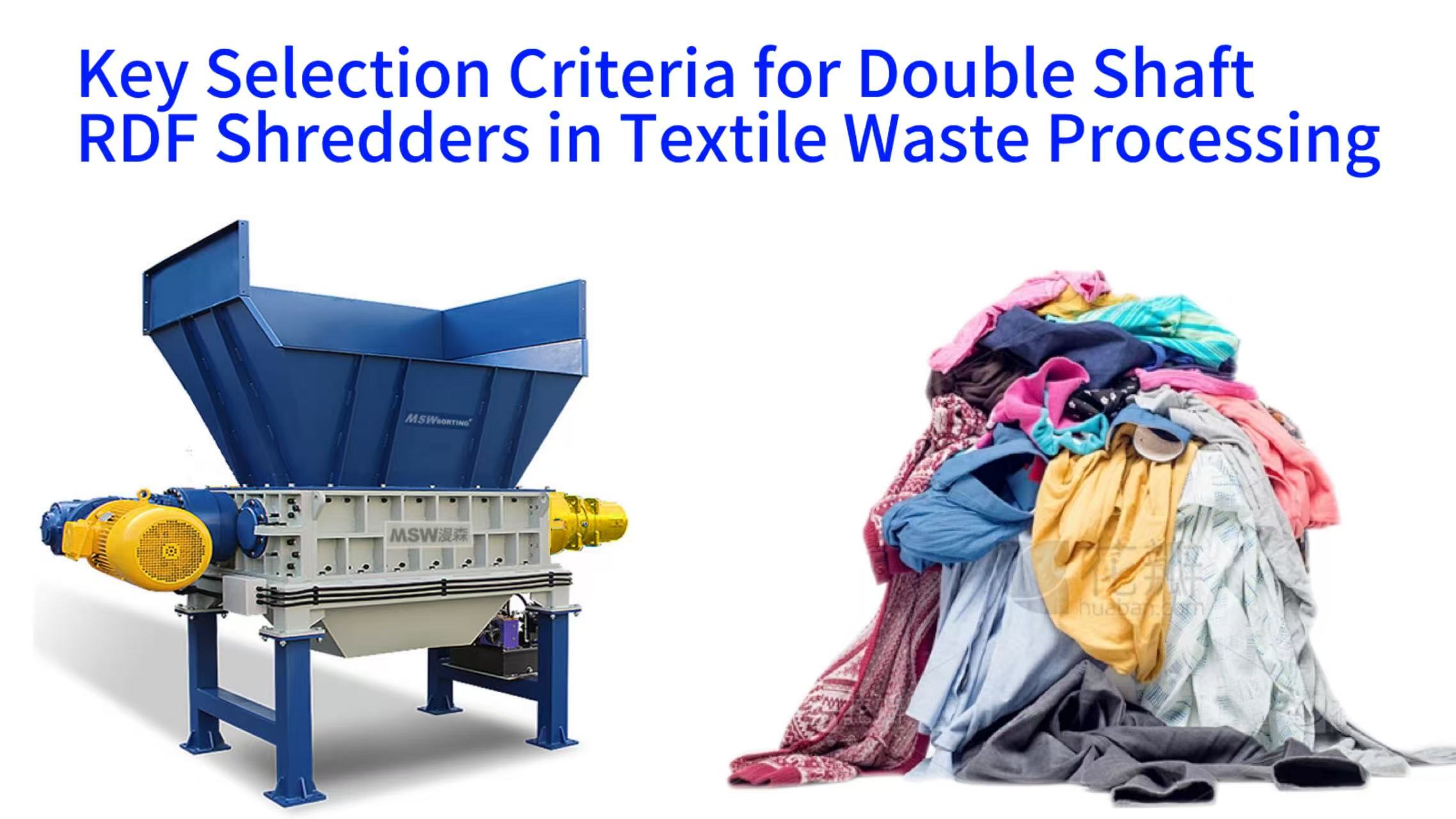
Textile waste presents unique challenges in RDF production that demand specialized shredding equipment designed specifically for fibrous and flexible materials. Double shaft shredders have emerged as the preferred solution for processing textile waste due to their robust construction, powerful torque delivery, and effective handling of tangled materials. This comprehensive guide examines the critical factors that determine successful textile waste processing, from material characteristics analysis through equipment selection and operational optimization. Understanding these selection criteria enables waste management facilities to achieve higher throughput, reduced maintenance costs, and improved RDF quality while minimizing downtime and operational disruptions in textile recycling operations.
Key Steps for Selecting Double Shaft RDF Shredders for Textile Waste
Analyze Textile Waste Characteristics
- Moisture content: 8% (dry post-industrial) to >25% (municipal collections)
- Bulk density: 50-100 kg/m³ (loose) to 300-500 kg/m³ (baled)
- Fiber length: Few millimeters to several meters
Match Core Shredder Parameters
- Shaft diameter: 200mm - 500mm
- Torque: 15,000 Nm (light textiles) to >100,000 Nm (dense materials)
- Speed: 15-40 RPM with high torque delivery
Evaluate Specialized Technologies
- Anti-wrapping designs & self-cleaning mechanisms
- Differential cutting for mixed textiles (25-35% efficiency gain)
- Noise control: 85-105 dB raw, reduced by 15-25 dB with enclosures
Assess Performance & Costs
- Volume reduction target: 3:1 to 8:1
- Maintenance cost reduction: 20-30% with preventive strategies
- Efficiency improvement: 15-25% with system optimization
Select Qualified Supplier
- Technical expertise in textile processing
- Proven after-sales support (MTTR & spare parts availability)
- Clear performance guarantees & contract terms
Characteristics of Textile Waste and Their Impact on Shredder Selection
Textile waste materials possess distinct physical properties that significantly influence shredder performance and equipment selection decisions. The fibrous nature, varying tensile strengths, and potential contamination levels of textile streams require careful consideration during the shredder specification process to ensure optimal processing efficiency and equipment longevity.
Special Requirements for Shredder Design Due to Fiber Length and Tangling Properties
Textile waste typically contains fibers ranging from a few millimeters in shredded fabrics to several meters in continuous rolls or carpet materials, creating substantial challenges for conventional shredding equipment. The tendency of these long fibers to wrap around rotating components necessitates specialized cutter designs that can sever rather than accumulate fibrous materials. Double shaft shredders address this challenge through intermeshing cutter discs that create scissor-like cutting actions, effectively reducing fiber length while minimizing wrapping incidents that can cause equipment jams and operational downtime in textile processing facilities.
The rotational speed and cutter geometry must be carefully balanced to handle the specific fiber characteristics of the textile waste stream. Slower rotational speeds combined with high torque delivery prove particularly effective for dense textile materials, allowing the cutters to grip and tear materials rather than pushing them away. Advanced shredder designs incorporate staggered cutter arrangements and specialized hook profiles that actively pull materials into the cutting zone while preventing rewrapping around the shafts. These design features become increasingly important when processing mixed textile streams containing both natural and synthetic fibers with different elastic properties and cutting resistance characteristics.
Challenges of Textile Composition Diversity on Wear Materials and Cutting Technology
The composition variability in textile waste streams presents significant challenges for shredder wear components and cutting technologies. Natural fibers like cotton and wool exhibit different cutting characteristics compared to synthetic materials such as polyester and nylon, while blended fabrics combine multiple fiber types with varying mechanical properties. This diversity necessitates cutter materials that maintain sharp cutting edges across different textile types while resisting the abrasive effects of contaminants commonly found in textile waste, including dirt, sand, and embedded hard particles from zippers or fasteners.
Advanced shredder manufacturers address these challenges through specialized cutter materials and heat treatment processes that optimize both hardness and toughness characteristics. Tungsten carbide tipped cutters provide exceptional wear resistance for processing textile streams with high synthetic content or contamination levels, while through-hardened alloy steels offer better impact resistance for mixed material applications. The selection of appropriate cutter materials must consider not only the textile composition but also the potential presence of non-textile contaminants that could accelerate wear in standard cutting systems. Proper material selection can extend cutter life by 300-400% in demanding textile processing applications.
Assessment of Moisture Content and Contaminant Impact on Equipment Stability
Moisture content in textile waste significantly influences shredding performance and equipment operation, with levels typically ranging from 8% in dry post-industrial waste to over 25% in municipal textile collections. Higher moisture levels increase material flexibility and adhesion, potentially causing material buildup in the cutting chamber and reducing throughput efficiency. Shredder designs must accommodate these variations through optimized chamber geometries, enhanced material feeding systems, and corrosion-resistant components that prevent degradation from moisture exposure during extended operation.
Contaminants present in textile waste streams introduce additional challenges for shredder operation and maintenance. Metal components including zippers, buttons, and fasteners can cause immediate damage to cutting elements, while embedded sand and grit particles accelerate wear on all contact surfaces. Advanced shredder systems incorporate protective features such as automatic metal detection, hardened wear components, and easy-access maintenance points to address these contamination issues. The economic impact of contamination extends beyond component replacement costs to include production losses during unscheduled maintenance, making comprehensive contamination management essential for profitable textile waste processing operations.
Matching Principles for Bulk Density and Volume Reduction Targets
Textile waste exhibits highly variable bulk density characteristics, ranging from 50-100 kg/m³ for loose clothing to 300-500 kg/m³ for baled materials, creating significant implications for shredder sizing and configuration. The relationship between initial bulk density and targeted volume reduction ratios directly influences power requirements, cutter selection, and discharge system design. Double shaft shredders must provide sufficient torque at low rotational speeds to compress and shear these low-density materials effectively, requiring careful matching between drive system capabilities and the specific density characteristics of the processed textile stream.
Volume reduction targets for textile waste typically range from 3:1 to 8:1 depending on downstream processing requirements and transportation economics. Achieving higher reduction ratios necessitates more powerful drives and specialized cutter configurations that can effectively compress and shear the fibrous materials. The selection of appropriate screen sizes and discharge configurations must consider both the volume reduction targets and the desired particle size distribution for subsequent RDF production processes. Optimal system design balances these competing requirements to maximize throughput while maintaining particle size consistency and minimizing energy consumption per ton of processed material.
Core Parameters of Double Shaft RDF Shredders and Textile Processing Capacity Matching
Selecting appropriate double shaft shredders for textile applications requires careful evaluation of multiple technical parameters that collectively determine processing capacity, product quality, and operational reliability. Understanding the relationship between these parameters enables optimal equipment selection for specific textile waste streams and production requirements.
Analysis of Shaft Diameter, Torque, and Power Configuration Suitability for Textiles
Shaft diameter represents a critical design parameter that directly influences the torsional strength and cutting force capabilities of double shaft shredders processing textile materials. Larger diameter shafts, typically ranging from 200mm to 500mm in industrial shredders, provide greater resistance to deflection under the uneven loading conditions common in textile processing. This increased stiffness ensures consistent cutter alignment and cutting geometry maintenance throughout the shredding process, directly impacting both processing efficiency and product consistency in textile reduction operations.
Torque delivery capabilities must be carefully matched to the specific characteristics of the textile waste stream, with requirements typically ranging from 15,000 Nm for light post-industrial textiles to over 100,000 Nm for dense carpet materials or heavily contaminated streams. The relationship between torque and rotational speed creates the power profile that determines the shredder's ability to process challenging materials without stalling or excessive energy consumption. Modern shredder designs incorporate sophisticated drive systems that maintain high torque levels at low rotational speeds, typically between 15-40 RPM for textile applications, ensuring effective material engagement and cutting action while minimizing fiber wrapping tendencies.
Optimal Selection of Cutter Materials, Geometry, and Arrangement
Cutter selection for textile shredding applications requires careful consideration of material composition, heat treatment processes, and geometric features that collectively determine cutting efficiency and service life. The high abrasion characteristics of many textile materials, particularly those containing synthetic fibers or contamination, necessitate cutter materials with exceptional wear resistance while maintaining sufficient toughness to withstand impact loads from occasional non-textile contaminants. Advanced cutter designs incorporate specialized edge geometries that optimize both cutting and tearing actions, essential for effectively reducing the varied fiber structures found in textile waste streams.
Cutter arrangement on the shredder shafts significantly influences material processing characteristics and fiber handling capabilities. Staggered cutter patterns create overlapping cutting actions that effectively reduce long fibers while minimizing the potential for material wrapping around the shafts. The clearance between opposing cutters, typically maintained between 0.5mm and 2.0mm, must be precisely controlled to ensure clean cutting actions without excessive friction or energy consumption. Modern shredder designs often incorporate adjustable cutter mounting systems that enable clearance optimization for specific textile types and maintenance access for timely adjustments as cutters wear during extended operation.
Special Considerations for Screen Mesh Sizes and Textile Output Size Control
Screen selection for textile shredding applications requires careful consideration of both the desired output size specifications and the unique characteristics of processed fibrous materials. Unlike granular materials that pass easily through screen openings, textile fibers tend to mat and bridge across screen surfaces, potentially reducing throughput and increasing energy consumption. Screen designs for textile applications often incorporate specialized hole patterns, increased open area percentages, and surface treatments that minimize fiber adhesion and promote efficient material discharge from the cutting chamber.
The relationship between screen size and shredder throughput follows different patterns for textile materials compared to other waste streams, with optimal screen selection balancing output size requirements against processing efficiency. Smaller screen openings, typically ranging from 20mm to 50mm for RDF production, provide better size control but may reduce throughput rates due to increased material retention in the cutting chamber. Advanced shredder systems incorporate screen designs that maximize open area while maintaining structural integrity under the heavy loading conditions encountered in textile processing. The selection of appropriate screen configurations must consider both the initial textile characteristics and the targeted RDF specifications for subsequent processing or energy recovery applications.
Configuration Essentials for Feed System Design and Anti-Wrapping Devices
Feed system design represents a critical factor in successful textile shredding operations, directly influencing both processing efficiency and equipment protection. The low bulk density and flexible nature of textile materials create challenges for conventional feeding systems, often resulting in bridging, uneven feed rates, and potential overload conditions. Optimized hopper designs for textile applications incorporate steep wall angles, vibration-assisted discharge systems, and specialized material conditioning elements that promote consistent material flow into the cutting chamber while minimizing operator intervention requirements.
Anti-wrapping devices play an essential role in maintaining continuous operation when processing challenging textile materials with long fibers or high flexibility characteristics. These systems typically incorporate rotating elements with specialized geometries that prevent fiber accumulation on shaft ends and other vulnerable areas. Advanced designs may include hydraulic clearing systems that automatically reverse shaft rotation temporarily to dislodge wrapped materials, or mechanical devices that continuously clear potential accumulation points during normal operation. The integration of these anti-wrapping features significantly improves equipment availability and reduces maintenance requirements in textile processing applications where fiber entanglement represents a persistent operational challenge.
Key Technologies and Innovative Designs for Efficient Textile Processing
Modern double shaft shredders incorporate specialized technologies and design features specifically developed to address the unique challenges of textile waste processing. Understanding these innovations enables more informed equipment selection and optimization for specific textile recycling applications.
Working Principles of Anti-Wrapping Shaft Designs and Self-Cleaning Mechanisms
Anti-wrapping shaft designs represent a significant advancement in textile shredding technology, addressing one of the most persistent challenges in fibrous material processing. These specialized shaft configurations incorporate strategically placed flanges, grooves, or protruding elements that disrupt the formation of continuous fiber wraps around the shaft structures. The geometric relationship between these anti-wrapping features and the primary cutters creates zones where accumulated materials are systematically directed back into the cutting zone for size reduction rather than building up on non-cutting surfaces.
Self-cleaning mechanisms complement anti-wrapping designs by automatically removing any residual material accumulations before they can compromise equipment operation. These systems may utilize mechanical wipers, air blast systems, or controlled reversal sequences that dislodge materials from critical areas. Advanced implementations incorporate sensor systems that detect increasing resistance patterns indicative of material buildup, triggering cleaning cycles before operational efficiency becomes significantly impacted. The combination of proactive anti-wrapping designs and reactive self-cleaning systems dramatically reduces maintenance requirements and improves equipment availability in continuous textile processing operations.
Intelligent Overload Protection and Power Adaptive Control Systems
Intelligent overload protection systems have evolved significantly from simple mechanical torque limiters to sophisticated electronic monitoring and control platforms that optimize shredder performance while preventing damage from unexpected load conditions. Modern systems continuously monitor multiple parameters including motor current, shaft torque, hydraulic pressure, and vibration patterns to detect developing overload situations before they reach critical levels. This proactive approach enables controlled responses such as feed rate adjustment, momentary reversal, or controlled shutdown that prevent equipment damage while maintaining processing continuity whenever possible.
Power adaptive control systems represent a further refinement of overload protection technology, dynamically adjusting operational parameters to match the specific characteristics of the material being processed. These systems utilize historical performance data and real-time sensor inputs to optimize rotational speed, torque delivery, and feed rates for different textile types and conditions. Advanced implementations can automatically recognize material changes and adjust operating parameters accordingly, maintaining optimal efficiency across varying textile streams without requiring manual intervention. This adaptive capability proves particularly valuable in textile processing applications where material characteristics frequently change due to the heterogeneous nature of waste streams.
Advantages of Differential Cutting Technology for Mixed Textile Processing
Differential cutting technology addresses the challenge of processing mixed textile streams containing materials with substantially different physical properties and cutting characteristics. This approach utilizes controlled variations in cutter speed, engagement timing, or geometry to optimize cutting actions for different material types within the same processing stream. By tailoring the cutting mechanics to specific material properties, differential systems achieve more consistent particle size distributions and higher throughput rates compared to uniform cutting approaches when processing heterogeneous textile mixtures.
The implementation of differential cutting typically involves specialized drive systems that enable independent control of shaft speeds or precise timing of cutter engagement sequences. More advanced systems may incorporate segmented cutters with varying geometries arranged in patterns that create multiple cutting actions optimized for different material types. This technological approach proves particularly effective for textile streams containing both easily cut materials like cotton and challenging synthetics that require more aggressive cutting actions. The resulting improvement in processing efficiency can reach 25-35% compared to conventional uniform cutting systems when handling highly mixed textile waste streams.
Textile Applications of Vibration Suppression and Noise Control Technology
Vibration suppression in textile shredding equipment addresses both equipment longevity concerns and operational environment considerations. The uneven loading characteristics of textile materials, combined with the intermittent cutting actions inherent in shredding processes, generate vibration patterns that can accelerate component wear and create structural fatigue issues if not properly managed. Advanced shredder designs incorporate mass balancing techniques, vibration damping materials, and structural reinforcement strategies that minimize vibration transmission to supporting structures and surrounding equipment.
Noise control technology has become increasingly important in textile shredding applications due to regulatory requirements and workplace environment considerations. Textile processing typically generates noise levels between 85-105 dB, necessitating comprehensive noise control measures for operator protection and community compliance. Modern shredders incorporate multiple noise reduction strategies including acoustic enclosures, vibration isolation mounts, and specialized cutter geometries that minimize noise generation at the source. Advanced soundproofing enclosures can reduce noise emissions by 15-25 dB while maintaining accessibility for operation and maintenance activities, creating safer and more compliant working environments in textile processing facilities.
Equipment Performance Evaluation and Operational Cost Analysis Framework
Comprehensive performance assessment and economic analysis provide the foundation for informed double shaft shredder selection and operational optimization in textile processing applications. Establishing clear evaluation criteria enables objective comparison between equipment options and accurate projection of operational economics.
Processing Capacity Assessment: From Laboratory Testing to Industrial Scale-Up
Processing capacity evaluation for textile shredding applications requires specialized testing methodologies that account for the unique characteristics of fibrous materials. Laboratory-scale testing provides initial performance data but often requires significant correction factors when scaling to industrial equipment due to differences in material handling, feeding consistency, and cutting dynamics. Comprehensive testing protocols should include multiple textile types representing the expected waste stream composition, with careful documentation of throughput rates, energy consumption, and product characteristics under controlled conditions.
Industrial scale-up from laboratory data requires consideration of multiple factors beyond simple geometric scaling of equipment dimensions. The relationship between shredder size and processing efficiency follows different patterns for textile materials compared to more homogeneous waste streams, necessitating experience-based correction factors and careful analysis of previous successful installations. Pilot-scale testing using equipment with 25-50% of full-scale capacity often provides the most reliable scaling data, allowing observation of material flow patterns, fiber handling characteristics, and potential operational challenges that may not be apparent in smaller-scale testing. This intermediate testing phase significantly reduces commissioning risks and ensures more accurate capacity predictions for full-scale textile processing operations.
Energy Efficiency Indicators and Unit Cost Calculation Methods
Energy efficiency assessment for textile shredding operations requires specialized metrics that account for the unique material characteristics and processing challenges. Simple power consumption measurements provide limited value without context regarding throughput rates, material composition, and product specifications. More meaningful indicators include specific energy consumption expressed as kWh per ton of processed material, power factor during operation, and load distribution patterns across the processing cycle. These refined metrics enable more accurate comparisons between equipment options and help identify optimization opportunities in existing operations.
Unit cost calculation for textile shredding must consider both direct energy costs and the substantial influence of equipment utilization rates on economic performance. Comprehensive cost models incorporate factors including energy consumption, maintenance expenses, labor requirements, and capital equipment depreciation to determine the true cost per ton of processed material. The relationship between throughput rate and unit cost typically follows a U-shaped curve, with optimal economic performance achieved at intermediate utilization levels that balance equipment capacity against operational expenses. Understanding this relationship enables more accurate economic forecasting and helps identify the most cost-effective operating parameters for specific textile processing applications.
Wear Parts Life Prediction and Maintenance Cost Estimation Models
Wear parts life prediction in textile shredding applications requires consideration of multiple factors beyond simple operating hours or throughput tonnage. The specific composition of processed textiles significantly influences wear rates, with synthetic fibers and contaminated materials typically accelerating cutter wear compared to clean natural fibers. Advanced prediction models incorporate material composition data, contamination levels, and operational parameters to generate more accurate life expectancy projections for cutting elements, screen components, and other wear-prone elements.
Maintenance cost estimation must extend beyond simple parts replacement expenses to include the substantial production losses during maintenance downtime. Comprehensive models account for both direct maintenance costs including parts, labor, and consumables, and indirect costs associated with production interruptions. The economic impact of maintenance activities varies significantly based on equipment design, with features such as quick-change cutter systems and external adjustment capabilities reducing downtime by 40-60% compared to conventional designs. These design advantages translate directly to lower overall maintenance costs despite potentially higher initial component expenses, highlighting the importance of considering total cost of ownership rather than simply acquisition price when selecting textile shredding equipment.
Quantitative Evaluation Standards for Equipment Utilization and Comprehensive Efficiency
Equipment utilization metrics for textile shredding operations must account for both scheduled production time and the operational efficiency during active processing periods. Simple availability percentages provide limited insight without context regarding throughput rates, product quality, and resource consumption during operation. More comprehensive evaluation frameworks incorporate multiple performance indicators including overall equipment effectiveness (OEE) that combines availability, performance, and quality metrics into a single comprehensive measurement of operational efficiency.
Comprehensive efficiency evaluation extends beyond equipment performance to include the entire textile processing system from material receiving through product discharge. This holistic assessment considers factors including material handling efficiency, labor productivity, energy utilization, and product yield rates to provide a complete picture of operational performance. Advanced operations often establish baseline performance metrics during initial commissioning, then implement continuous monitoring systems that track performance trends and identify improvement opportunities. This data-driven approach enables targeted optimization efforts that typically achieve 15-25% efficiency improvements within the first year of operation through systematic identification and resolution of performance limitations in textile shredding processes.
Operational Maintenance Requirements and Long-Term Operational Stability Assurance
Long-term reliable operation of double shaft shredders in textile processing applications depends on comprehensive maintenance strategies specifically designed for the challenges of fibrous material reduction. Proper maintenance planning significantly extends equipment life while minimizing unplanned downtime and operational disruptions.
Daily Inspection Essentials and Preventive Maintenance Plan Development
Daily inspection protocols for textile shredding equipment must address the specific wear patterns and potential failure modes associated with fibrous material processing. Critical inspection points include cutter condition assessment, drive system component evaluation, and monitoring of unusual vibration or noise patterns that might indicate developing issues. Inspection frequency should reflect operational intensity, with high-volume facilities potentially requiring multiple inspections per shift to identify issues before they cause significant downtime or equipment damage.
Preventive maintenance plan development for textile shredders requires careful analysis of historical performance data, manufacturer recommendations, and the specific characteristics of processed materials. Effective maintenance intervals balance the economic impact of maintenance downtime against the risk of unexpected failures, typically following Weibull distribution patterns rather than simple time-based schedules. Advanced maintenance strategies incorporate condition monitoring data to optimize intervention timing, performing maintenance activities when performance indicators suggest approaching failure rather than according to fixed calendar schedules. This approach typically reduces maintenance costs by 20-30% while improving equipment availability through better timing of necessary interventions.
Best Practices for Cutter Adjustment, Replacement, and Refurbishment
Cutter adjustment procedures significantly influence both shredding efficiency and component life in textile processing applications. Proper clearance between opposing cutters, typically maintained between 0.5mm and 2.0mm depending on material characteristics, ensures effective cutting actions while minimizing unnecessary wear. Adjustment procedures must account for thermal expansion during operation and wear patterns that develop over time, requiring periodic verification and correction to maintain optimal performance. Advanced shredder designs incorporate external adjustment mechanisms that enable precise clearance control without disassembling the cutting chamber, significantly reducing adjustment time and improving maintenance accessibility.
Cutter replacement and refurbishment decisions require careful economic analysis balancing replacement part costs against the performance impact of worn components. Replacement timing should consider both the immediate cutting efficiency and the potential for accelerated wear on mating components as cutter geometries change through use. Refurbishment through specialized welding and machining processes can restore cutter performance at 40-60% of replacement cost in many cases, though the economic viability depends on the base material condition and the availability of qualified refurbishment services. Establishing clear replacement criteria based on measurable performance indicators rather than simple operating hours enables more cost-effective cutter management in textile shredding operations.
Special Maintenance of Bearing and Transmission Systems Under Textile Load Conditions
Bearing maintenance in textile shredding applications requires special consideration of the uneven loading patterns and potential contamination issues associated with fibrous materials. Standard lubrication intervals often prove inadequate for the demanding conditions of textile processing, necessitating more frequent lubrication with specialized greases formulated for high-load, low-speed applications. Bearing selection must account for both the radial loads from cutting forces and the axial loads that develop from material feeding variations, with spherical roller bearings typically providing the best performance in these challenging applications.
Transmission system maintenance extends beyond simple lubrication to include regular alignment verification, coupling inspection, and monitoring of unusual vibration patterns. The high torque requirements of textile shredding place exceptional demands on gearboxes and drive components, necessitating comprehensive oil analysis programs that detect developing issues before they cause catastrophic failures. Advanced monitoring systems track temperature patterns, vibration signatures, and performance trends to identify maintenance needs before they impact operational reliability. This proactive approach to transmission system maintenance typically extends component life by 30-50% compared to reactive maintenance strategies in textile shredding applications.
Common Failure Diagnosis and Rapid Recovery Operation Response Strategies
Common failure modes in textile shredding operations often relate to material handling challenges rather than mechanical component failures. Fiber wrapping incidents represent the most frequent operational disruption, typically requiring controlled reversal procedures or manual clearing to restore normal operation. Developing comprehensive response procedures for these incidents significantly reduces downtime by providing operators with clear, proven methods for addressing wrapping issues without causing additional damage to equipment components.
Rapid recovery strategies for more serious failures focus on minimizing production impacts through prepared response plans and strategic spare parts inventory. Critical spare components including cutters, hydraulic components, and drive elements should be identified based on failure probability and impact analysis, with appropriate inventory levels maintained to support quick restoration of operation. Advanced operations develop failure mode and effects analysis (FMEA) documents that identify potential failure scenarios and pre-establish response procedures, significantly reducing decision time during actual failure events. This systematic approach to failure management typically reduces recovery time by 40-60% compared to ad-hoc response methods in textile processing facilities.
Supplier Evaluation and Comprehensive Decision-Making Guide for Equipment Selection
Selecting the optimal double shaft shredder supplier for textile processing applications requires systematic evaluation of multiple factors beyond simple equipment specifications. Comprehensive assessment ensures alignment between supplier capabilities, equipment performance, and long-term operational requirements.
Technical Solution Assessment Essentials and Supplier Qualification Review Checklist
Technical solution assessment begins with detailed analysis of the proposed equipment's suitability for the specific textile waste stream characteristics and processing requirements. Evaluation should include cutter design analysis, drive system capabilities, material handling features, and control system sophistication relative to the application demands. Supplier qualifications must extend beyond basic manufacturing capabilities to include specific experience with textile processing applications, demonstrated through case studies, reference projects, and technical documentation of previous successful installations handling similar materials.
Comprehensive supplier qualification checklists should address multiple dimensions including engineering capabilities, manufacturing quality systems, project management experience, and financial stability. Technical assessment factors include design verification methods, quality control procedures during manufacturing, testing protocols before shipment, and performance guarantee structures. Non-technical considerations encompass financial stability indicators, organizational structure stability, and long-term business strategy alignment. This multidimensional evaluation approach significantly reduces project risks by ensuring selected suppliers possess both the technical capabilities and business foundation to support long-term equipment operation and support requirements.
Effective Methods for Reference Project Investigation and User Feedback Collection
Reference project investigation provides invaluable insights into actual equipment performance and supplier support capabilities beyond marketed specifications. Effective investigation methodologies include site visits to operating installations, detailed interviews with operational personnel, and review of historical performance data including availability records, maintenance costs, and production metrics. The selection of reference projects should target facilities processing similar textile materials under comparable operating conditions to ensure relevant performance comparisons and identify potential application-specific challenges.
User feedback collection requires structured approaches that elicit specific, actionable information rather than general impressions. Effective feedback methodologies include standardized questionnaires covering equipment reliability, maintenance requirements, operational efficiency, and supplier support responsiveness. Additional valuable insights often emerge through informal discussions with operations and maintenance personnel who possess hands-on experience with equipment performance under actual operating conditions. Correlating feedback from multiple reference sites helps identify consistent performance patterns and isolate site-specific factors, providing a more accurate prediction of expected performance in new installations processing textile materials.
Evaluation Standards for After-Sales Service Response and Technical Support Capabilities
After-sales service evaluation must extend beyond simple response time commitments to assess the comprehensive support infrastructure available throughout the equipment lifecycle. Critical assessment factors include spare parts availability, technical documentation quality, training program comprehensiveness, and remote support capabilities. The geographical distribution of service resources relative to the operating location significantly influences support effectiveness, with localized service presence typically providing faster response and better understanding of regional operational challenges.
Technical support capability assessment should evaluate both immediate problem-solving abilities and long-term support commitment. Evidence of continuous product improvement based on field experience demonstrates valuable learning processes within the supplier organization, while established knowledge management systems ensure support consistency across different team members. Support capability metrics should include mean time to repair (MTTR) data from existing customers, first-contact resolution rates, and customer satisfaction measurements specifically related to technical support interactions. These quantitative measures provide more objective assessment bases than general service descriptions when comparing potential suppliers for textile shredding equipment.
Key Contract Points and Performance Guarantee Negotiation Strategies
Contract negotiation for textile shredding equipment requires careful attention to performance guarantee structures that accurately reflect operational requirements rather than idealized testing conditions. Performance guarantees should specify testing methodologies, material characteristics, and acceptance criteria that represent realistic operating scenarios. Key contractual elements include detailed equipment specifications, performance warranty terms, spare parts supply commitments, and support response requirements that collectively ensure alignment between expectations and delivered capabilities.
Negotiation strategies should focus on achieving balanced risk allocation between equipment suppliers and operators while maintaining incentives for performance excellence. Performance guarantee structures typically include liquidated damages provisions for failure to meet specified performance levels, though these should be balanced with bonus opportunities for exceeding performance targets. Payment term negotiations should align with project milestones and performance verification activities, retaining appropriate leverage until successful commissioning demonstrates equipment capabilities under actual operating conditions. These balanced approaches typically yield more cooperative supplier relationships while still protecting operator interests throughout the equipment lifecycle in textile processing applications.