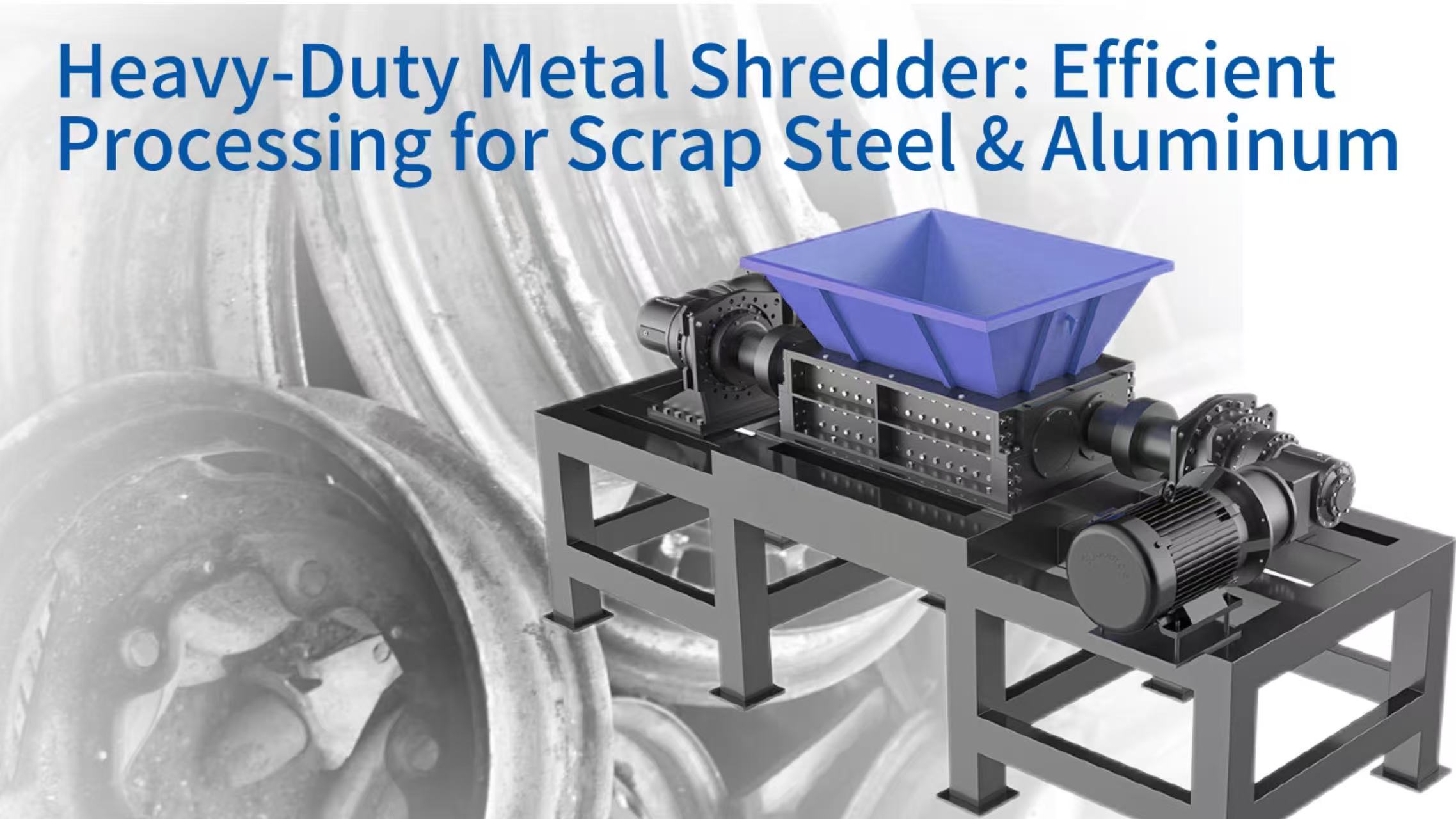
The contemporary landscape of global industry generates vast quantities of metallic waste, ranging from decommissioned automobiles and demolished infrastructure to industrial production offcuts. For companies engaged in metal recycling, the transition from manual, labor-intensive methods to automated, high-capacity processing is no longer a matter of choice but a prerequisite for survival and growth. A heavy-duty metal shredder represents the technological pinnacle of this transition. It is a sophisticated industrial system designed to reduce bulky, complex scrap metal into uniform, dense fragments suitable for downstream separation and eventual remelting. Unlike simple crushing equipment, these machines employ a combination of shearing, tearing, and fracturing forces to break down materials with high tensile strength, such as structural steel beams and thick aluminum plates. The implementation of such technology directly addresses the core challenges of modern recycling: the need for higher throughput, lower operational costs per ton, enhanced purity of output materials, and strict adherence to environmental regulations. By transforming irregular and contaminated scrap into a clean, high-value commodity, the heavy-duty metal shredder has become the cornerstone of profitable and sustainable metal recycling operations worldwide.
The Evolution of Metal Recycling and the Necessity for Advanced Processing
Key Benefits of Metal Recycling & Shredding
The metal recycling sector has undergone a profound transformation, evolving from a fringe activity to a critical component of the global industrial supply chain. This shift is driven by the immense environmental and economic advantages of using recycled ferrous and non-ferrous metals. Statistical data underscores this reality: recycling one ton of steel conserves approximately 1.4 tons of iron ore, 0.8 tons of coal, and 0.3 tons of limestone, while simultaneously avoiding the emission of 1.5 tons of carbon dioxide. For aluminum, the energy savings are even more dramatic, with recycling consuming up to 95 percent less energy than primary production from bauxite ore. However, the raw materials entering recycling facilities are far from uniform. They consist of end-of-life vehicles with mixed materials, construction and demolition debris containing rebar and structural sections, industrial shearing waste, and obsolete household appliances. This inherent heterogeneity and the challenging physical forms of the scrap place immense demands on processing equipment. The industry has moved past the era where simple size reduction sufficed; today, the goal is to produce a consistent, high-purity feedstock that meets the stringent specifications of modern steel mills and aluminum smelters, making efficient, heavy-duty processing an absolute necessity.
Diverse Origins and Physical Characteristics of Scrap Metals
The diversity in the origins of scrap metal creates a wide spectrum of material characteristics that directly influence the shredding process. End-of-life vehicles, for example, contribute a mixture of high-strength low-alloy steel panels, ductile wiring harnesses, and cast-iron engine blocks, each requiring a different application of force for effective fragmentation. Construction debris introduces long, thick sections like I-beams and reinforcing bars, which possess high yield strength and resistance to bending. Industrial scrap from machining operations often presents as tangled turnings and bushy steel or aluminum swarf, materials notorious for their ability to wrap around rotating equipment and cause jams. Furthermore, white goods and electronic waste bring in composites, where steel is crimped with copper wiring and insulation. Understanding these variations is critical. Steel, with its high modulus of elasticity, demands significant shear force to overcome its structural integrity. Aluminum, conversely, while softer, exhibits high ductility and a tendency to smear or adhere to metal surfaces under friction, a behavior that necessitates specialized anti-stick coatings and precise blade geometry in the shredder shaft design to prevent material buildup and maintain cutting efficiency.
Operational Limitations of Conventional Metal Reduction Methods
Traditional methodologies for reducing scrap metal size are increasingly inadequate in the face of modern throughput and quality demands. Oxy-fuel cutting, a common technique, is inherently slow and labor-dependent. This process not only generates significant fumes and noise pollution but also introduces oxidation at the cut surfaces, leading to a loss of valuable metal, with recovery rates often peaking around 85 percent. Hydraulic alligator shears represent an improvement for specific applications, such as cutting lengthy profiles into manageable lengths. However, they struggle with the complexity of mixed scrap, often failing to process bulky items like engine blocks or thick-walled machinery parts without extensive manual preparation. This pre-processing requirement drives up labor costs significantly, with estimates suggesting a 30 percent or higher increase in total handling expenses. Impact-based equipment, such as small hammer mills, suffers from rapid wear when exposed to the high abrasive forces of ferrous scrap. The frequent replacement of hammers and liners results in prohibitive maintenance downtime and costs. More critically, these conventional methods fail to adequately liberate attached non-ferrous metals like copper from motors or aluminum from composite junctions, resulting in a lower-grade product and a direct loss of potential revenue.
Regulatory Pressures and the Push for Cleaner Recycling
Governmental regulations and international standards are now primary drivers shaping the capabilities required of metal processing equipment. Directives focused on circular economy principles, such as those established by the European Union, and national standards like China's National Standard for Recyclable Steel Raw Materials, set strict benchmarks for scrap quality. These regulations mandate specific limits on the size, density, and the allowable percentage of deleterious elements like copper, tin, and organic contaminants. Scrap that fails to meet these criteria is often devalued or rejected entirely by steel mills. Simultaneously, environmental protection agencies enforce rigorous limits on emissions from recycling facilities. Dust, noise, and vibration from open-air processing operations are no longer tolerated. The downstream metallurgical industry itself contributes to these demands; to minimize energy consumption and maximize furnace efficiency, steel producers require a feedstock that is clean, dense, and uniform. Residual paints, rubbers, or plastics on scrap, when introduced into a melt, can generate hazardous compounds like dioxins, necessitating costly flue gas treatment. Consequently, modern heavy-duty shredders must be engineered as sealed systems, capable of integrating with advanced dust suppression and extraction technologies to ensure compliance and facilitate the production of green, marketable scrap.
Systemic Re-engineering of the Scrap Processing Workflow
The integration of a heavy-duty metal shredder fundamentally reconfigures the entire material handling workflow within a recycling facility. The traditional, multi-step process involving manual sorting, flame cutting, and intermediate stockpiling is replaced by a streamlined, continuous operation. Bulky scrap, from whole car bodies to structural steel, is loaded directly into a large feed hopper, eliminating the need for pre-cutting. A hydraulically powered ram then forces this material into the cutting chamber. Within seconds, the powerful shearing action of the rotating shafts reduces the toughest materials into small, flowable fragments. This single-step size reduction is typically followed immediately by an integrated separation train. As the fragmented material exits the shredder, it passes over powerful overband magnets to extract ferrous metals. The remaining non-ferrous stream then moves to technologies like eddy current separators, which repel aluminum, copper, and other non-ferrous metals away from waste residue. This consolidation of processes—from raw scrap to clean, separated fractions in a single pass—dramatically reduces the need for manual labor, with some facilities reporting a 60 percent reduction in personnel. Furthermore, the energy consumed per ton processed can decrease by 25 percent, all while producing a high-density, premium-priced finished product that commands a significant advantage in the competitive scrap market.
Defining the Heavy-Duty Metal Shredder and Its Operational Principles
A heavy-duty metal shredder is best understood as a high-torque, low-speed industrial machine engineered explicitly for the controlled fragmentation of ferrous and non-ferrous metallic waste. Its operational philosophy diverges fundamentally from conventional crushing equipment. While crushers rely on compression or impact to fracture brittle materials, the metal shredder utilizes the principles of shear and tension to cut and tear ductile metals. The core mechanism involves a set of rotating cutter disks, mounted on one or more parallel shafts, which intermesh with stationary anvils or combs fixed to the shredder housing. As the rotors turn, the scrap metal is gripped between the rotating and stationary cutters. The immense force generated at the blade tips exceeds the tensile and shear strength of the material, resulting in a clean cut or a controlled tear. This process is carefully managed to produce output particles of a predetermined size range. Modern units are complex electro-hydraulic systems, incorporating advanced monitoring, automatic lubrication, and overload protection to ensure reliable, round-the-clock operation in the punishing environment of a scrap processing yard.
The Mechanism of Shear Fracture and Material Tearing
The physical breakdown of metal within the shredder is a result of combined shear and tensile stresses. The primary action occurs in the gap between the interlocking rotating blades on the shafts and the fixed blades mounted in the machine's frame. When a piece of scrap enters this zone, it is subjected to a powerful cutting force, analogous to the action of a pair of industrial shears. This is effective for thinner materials like sheet metal or light profiles. However, for thicker, more robust sections such as solid bar stock or heavy wall pipe, a pure shear cut is not always immediately possible. In these instances, the specialized hook-shaped design of the blades plays a critical role. These hooks engage the material and, as the shaft rotates, apply an increasing tensile load. The metal is literally pulled apart or torn once the applied force surpasses its ultimate tensile strength. This tearing mechanism is essential for processing high-strength materials without requiring the massive, instantaneous power that a pure impact or compression system would demand. This controlled application of force minimizes the creation of excessive fines—tiny metal particles that represent a direct loss of recoverable material—and reduces the peak shock loads transmitted to the machine's drivetrain, thereby extending the operational life of critical components. The final particle size is governed by the adjustable gap between the rotating and fixed cutters, typically set between 50 and 200 millimeters to align with the specific charging requirements of different furnace types.
High-Torque, Low-Speed Power Transmission Explained
Generating the enormous forces required to deform and fracture steel and aluminum necessitates a specialized approach to power transmission. Heavy-duty metal shredders universally employ a high-torque, low-speed drive architecture. An electric motor, or sometimes a hydraulic power unit, provides the prime motive force. This high-speed, low-torque output is then fed into a heavy-duty planetary gearbox. This gearbox is the heart of the drive system, meticulously engineered to convert the motor's speed into a massive increase in rotational force. While the motor might spin at 1,500 revolutions per minute, the output shafts driving the cutters rotate at a mere 30 to 60 revolutions per minute. In this process, the torque is amplified exponentially, often reaching values of several hundred thousand Newton-meters. This colossal turning force allows the cutters to bite into and progressively break down solid metal, even encountering materials like solid steel billets without stalling. The low rotational speed is a deliberate and critical feature. It significantly reduces friction between the cutters and the metal, preventing the excessive heat generation that could lead to material softening and blade adhesion, a particular concern with aluminum. It also inherently minimizes the generation of dust and noise compared to high-speed impactors, creating a safer and cleaner working environment. Advanced systems may utilize dual motors, each powering one shaft with electronic synchronization, ensuring precise torque sharing for optimal gripping and tearing of complex shapes.
Forced Feeding with Hydraulic Ram Technology
The irregular and often unwieldy nature of scrap metal means it cannot reliably flow into the cutting chamber by gravity alone. Light materials like shredded cars or trimmings can bridge across the hopper opening, while long pieces can become entangled, preventing a consistent feed. To overcome this, heavy-duty metal shredders are equipped with a hydraulic pusher ram. This is a powerful, hydraulically actuated plate located within the feed hopper. Guided by the machine's programmable logic controller, the ram exerts a force of tens to hundreds of tons to continuously force the scrap down and into the spinning cutters. The ram's speed and stroke are not constant; they are dynamically adjusted based on real-time feedback from the main drive motors. If the motor load is low, indicating the shredder can handle more material, the ram advances more quickly. Conversely, if the load spikes towards a preset limit, the ram slows or momentarily retracts to prevent an overload. This intelligent feed control is vital for maximizing throughput without risking a stall. For challenging feeds like tangled long steel or aluminum extrusions, the ram's powerful compressive action serves a dual purpose. It first compacts and densifies the loose material within the hopper before pushing it into the rotors, significantly increasing the efficiency of each cutting cycle. This system enables the shredder to process materials that would be physically impossible or extremely dangerous to feed manually, turning chaotic waste piles into a controlled and continuous stream of feedstock.
Intelligent Overload Protection and Automatic Reversal
Despite the best efforts at sorting, the scrap stream can occasionally contain unshreddable items. These "tramp materials," such as high-manganese steel excavator bucket teeth, solid alloy steel rolls, or large concrete blocks, pose a significant risk of damaging the shredder. To mitigate this, modern machines are equipped with sophisticated, multi-layered overload protection systems. Sensors continuously monitor critical parameters including main shaft rotational speed, motor current draw, and hydraulic system pressure. The moment a sensor detects an anomaly indicative of a jam or overload, the control system reacts within milliseconds. The primary response is often an automatic reversal sequence. The control system commands the hydraulic drive or the electric motors to momentarily reverse the direction of the shafts. This brief reversal helps to back the offending material out of the tight shear zone, allowing it to reposition itself within the chamber. The machine then automatically attempts a forward rotation again. This cycle may be repeated several times in an attempt to clear the obstruction autonomously. If the system detects that the jam persists after a set number of reversal attempts, it will initiate a controlled, safe shutdown and alert an operator via the human-machine interface. This intelligent response prevents the catastrophic structural damage that could result from a solid stall. Beyond this electronic safeguard, robust mechanical backups are in place, including pressure relief valves on the hydraulic system, mechanically designed safety pins on some components, and comprehensive electrical thermal overload protection, ensuring total system integrity under extreme conditions.
Automation and Digital Condition Monitoring
The modern heavy-duty metal shredder is a digitally connected asset, fully integrated with the principles of Industry 4.0. At its core is a programmable logic controller, the machine's central brain, which communicates with operators through a touch-screen human-machine interface. This system provides a comprehensive, real-time window into the machine's operational health. It continuously displays dozens of data points, including bearing temperatures, vibration levels on key components, lubrication oil flow rates, and electrical current draw from the main motors. Operators can use this interface to adjust processing parameters, such as the target output size, the frequency of the hydraulic ram, and the speed of downstream conveyors. Different material types have specific optimal settings, and the controller allows these to be saved as "recipes" for instant recall. This level of automation minimizes the skill required for day-to-day operation and maximizes consistency. Furthermore, these systems are increasingly equipped with remote monitoring capabilities. Facility managers or even equipment manufacturers can access the machine's data via the internet, allowing them to track production rates, energy consumption, and cumulative operating hours from anywhere in the world. More advanced implementations incorporate vibration spectrum analysis. By analyzing the frequency patterns of vibrations, the system can predict the onset of bearing or gearbox failure long before a catastrophic breakdown occurs. This enables a shift from reactive maintenance—fixing what breaks—to predictive maintenance, where parts are serviced or replaced based on their actual condition, slashing unplanned downtime and maximizing the shredder's annual operating hours.
Classification of Metal Shredders and Their Specific Application Domains
| Shredder Type | Throughput Range | Primary Material | Key Application |
|---|---|---|---|
| Twin-Shaft Shear | 50-500+ tons/hour | Mixed Ferrous Scrap | Primary Volume Reduction |
| Single-Shaft Fine | 10-50 tons/hour | Non-Ferrous Metals | Precision Particle Sizing |
| Four-Shaft | 30-200 tons/hour | Complex Composites | Material Liberation |
| Hammer Mill | 100-1000+ tons/hour | End-of-Life Vehicles | High-Density Scrap Production |
| Mobile | 10-50 tons/hour | Demolition Scrap | On-Site Processing |
The selection of a metal shredder is not a one-size-fits-all decision. The optimal machine configuration depends entirely on the specific characteristics of the input material, the desired specifications of the output product, the required processing capacity, and the available capital. The market offers several distinct types of shredders, each with a unique mechanical design and a correspondingly unique set of advantages for particular applications. Broadly, these can be categorized into shear-type shredders (like twin-shaft and four-shaft models) and impact-type shredders (like hammer mills). Understanding the nuances of each allows a recycling enterprise to tailor its processing line for maximum efficiency. A facility processing mixed, bulky waste from demolition will have vastly different needs from one handling clean production offcuts from an aluminum extrusion plant. Matching the machine's capabilities to the specific demands of the application is the most critical step in ensuring a profitable and long-lived investment.
Twin-Shaft Shear Shredders for Primary Volume Reduction
The twin-shaft shear shredder stands as the workhorse of the metal recycling industry, prized for its versatility and robustness. Its design features two parallel shafts, each fitted with interlocking cutter discs, that rotate towards each other. This contra-rotating action draws material into the "nip" between the shafts, where it is subjected to immense shearing and tearing forces. This configuration is exceptionally well-suited for the primary reduction of a wide array of materials, including mixed ferrous scrap, entire automobile bodies, light-gauge structural steel, and discarded household appliances. The output from a twin-shaft primary shredder typically consists of irregular, fist-sized pieces, generally ranging from 100 to 300 millimeters. This material is not a final product but an intermediate form, perfectly prepared for subsequent processing steps such as magnetic separation, manual sorting, or feeding into a secondary, finer shredder. In a large-scale scrap processing facility, these robust machines are the first point of contact for raw material. They are often rated to handle hundreds of tons per hour, operating in tandem with grapple excavators for feeding and conveyor belts for discharge. Their low-speed operation provides a distinct advantage, as they are tolerant of contaminants like small amounts of concrete or soil, and their wear rates are significantly lower than those of high-speed impactors, making them a cost-effective solution for the initial, most punishing stage of size reduction.
Single-Shaft Fine Shredders for Non-Ferrous Metal Refining
When the objective shifts from primary size reduction to producing a precisely dimensioned, clean product, the single-shaft fine shredder becomes the preferred technology. This machine employs a single rotor fitted with cutting tools that rotate against a stationary bed knife. A key feature is the hydraulically driven press plate, which pushes material against the rotor. Beneath the rotor lies a replaceable screen or sieve. Material must be reduced to a size that allows it to pass through the apertures of this screen before it can exit the cutting chamber. This mechanism provides exceptional control over the final particle size, which can be as fine as 10 to 20 millimeters, simply by changing the screen. This capability makes the single-shaft shredder ideal for processing high-value non-ferrous metals. For aluminum processors, it is the machine of choice for fragmenting clean profiles, extrusions, and sheet. The controlled cutting action effectively liberates any attached materials, such as the plastic thermal breaks in window frames, producing a clean aluminum granulate. This material is then ideal for feeding to an eddy current separator for final purification before being sold directly to aluminum smelters as a high-grade, low-loss feedstock. The ability to dial in a specific output size and the high level of product purity achievable make the single-shaft shredder an indispensable tool for operations focused on maximizing the value of non-ferrous scrap.
Four-Shaft Shredders for Contaminated and Complex Materials
For the most challenging materials—those that are not only tough but also contain multiple, intimately bonded components—the four-shaft shredder offers a superior solution. As the name implies, this machine incorporates two sets of twin shafts, one positioned above the other. Material is first fed into the upper pair of shafts, where it undergoes an initial tearing and primary reduction. The resulting fragments then fall by gravity directly into the lower pair of shafts, which are typically configured with a smaller cutter size to perform a secondary, finer shredding action. This two-stage process within a single machine provides a higher degree of material liberation and a more consistent output size. It is exceptionally effective at processing complex composites, such as copper and aluminum radiators, whole electric motors, transformers, and cable scrap. The slow, deliberate tearing action of the four-shaft design separates copper windings from steel laminations without smearing the copper into thin foils or creating excessive fines, which can be lost in downstream processes. When processing electric motors, for instance, the machine progressively dismantles the unit, liberating the copper wire from the stator core. This results in a stream of clean copper fragments and steel pieces that can be easily separated magnetically, significantly enhancing the recovery rate of high-value non-ferrous metals. While the initial investment in a four-shaft shredder is higher, its ability to unlock the value contained within complex waste streams often provides a rapid and compelling return on investment.
Hammer Mill Shredders for High-Density Scrap Production
The hammer mill shredder, often simply called a scrap shredder, represents the pinnacle of high-volume processing for ferrous scrap, particularly from end-of-life vehicles and light industrial waste. Its operating principle is fundamentally different from shear-based machines. It relies on a high-speed rotor assembly fitted with numerous swinging hammers. As the rotor spins, these hammers fling the incoming material against rugged breaker plates and grates lining the machine's interior. This process of repeated, high-velocity impact tears the material apart, fragmenting it into small, dense pieces. These machines are massive, often powered by motors exceeding 1,000 kilowatts and utilizing heavy flywheels to store kinetic energy, enabling them to absorb the immense shock loads of processing a whole car body in a matter of seconds. The output is a fist-sized, densified shredder fragment with a bulk density between 0.8 and 1.2 tons per cubic meter, significantly higher than sheared scrap. This high density translates directly into lower transportation costs and better melting characteristics in a steel mill furnace. Following the shredder, an extensive downstream system is employed, using magnets, eddy current separators, and air classifiers to sort the ferrous metal from the non-ferrous metals and the non-metallic residue, producing a very pure steel product. A single large-scale hammer mill line can process several hundred thousand tons of scrap per year, making it the core technology for large, centralized recycling facilities that supply the global steel industry.
Mobile Metal Shredders for On-Site Processing Flexibility
For operations that require flexibility or operate in transient locations, the mobile metal shredder provides a compelling alternative to stationary installations. In this configuration, the shredder unit, along with its power source (often a large diesel engine) and integrated feed and discharge conveyors, is mounted on a tracked or wheeled chassis. This self-contained unit can be driven or towed directly to the source of the scrap. This capability is particularly valuable in scenarios such as building demolition sites, ship-breaking yards, or remote industrial clean-outs. Instead of incurring the significant cost and logistical challenge of transporting bulky, empty structural steel or light scrap back to a fixed processing center, a mobile shredder can process the material on the spot. The volume of the scrap is immediately reduced by up to 70 percent, transforming it into a dense, transportable commodity and slashing the number of truckloads required for removal. For disaster recovery efforts or large-scale plant decommissioning projects, this on-site processing capability can be the difference between a project staying on schedule or facing crippling delays. While the instantaneous throughput of a mobile unit may be lower than a comparable fixed plant, its strategic value lies in its ability to move to where the scrap is, optimizing logistics, reducing transportation costs, and opening up new business opportunities for recyclers serving the demolition and decommissioning sectors.
Core Functions of a Heavy-Duty Metal Shredder in a Recycling Context
Core Functional Value of Metal Shredders
The heavy-duty metal shredder is not merely a size-reduction device; it is a multifunctional system that delivers a suite of interconnected benefits that define the economic viability and environmental performance of modern metal recycling operations. Its core functions extend far beyond the physical act of breaking down metal, touching every aspect of the recycling value chain from raw material handling to final product quality and marketability. These functions are interdependent and cumulative, creating a multiplier effect on the overall efficiency and profitability of the recycling facility. Understanding and optimizing these core functions is essential for operators seeking to maximize the return on their capital investment in this critical equipment.
Maximizing Material Density and Minimizing Transport Costs
One of the most immediate and tangible benefits of shredding is the dramatic increase in material density and corresponding reduction in volume. Loose, bulky scrap metal—such as empty steel drums, flattened car bodies, or structural steel beams—has a very low bulk density, typically ranging from 0.1 to 0.3 tons per cubic meter. After processing through a heavy-duty shredder, this material is transformed into dense, compacted fragments with a bulk density of 0.8 to 1.2 tons per cubic meter or higher. This represents a volume reduction ratio of 8:1 to 10:1, a transformative change in the economics of transportation. For a recycling facility that ships processed scrap to steel mills or smelters, this means that each truckload can carry 3 to 4 times more metal content than unprocessed scrap. The direct savings in transportation costs are substantial, often representing a 70 percent reduction in cost per ton of metal shipped. Beyond trucks, this density advantage extends to rail and sea transport, where cubic capacity is a critical constraint. High-density shredded scrap also improves the efficiency of material handling within the recycling facility itself, reducing the number of loads required to move material between processing stages and minimizing the footprint required for stockpiling.
Liberation of Valuable Non-Ferrous Metals from Composite Waste
Many forms of scrap metal exist as composite assemblies where ferrous and non-ferrous metals are physically bonded together—think of copper wiring in steel electrical enclosures, aluminum radiators with steel end tanks, or electric motors with copper windings and steel laminations. The ability of a heavy-duty shredder to liberate these valuable non-ferrous metals from their ferrous hosts is a core economic function. Conventional size-reduction methods often fail to break these bonds effectively, resulting in non-ferrous metals being lost in the ferrous stream or requiring labor-intensive manual separation. The controlled shear and tear action of a modern shredder physically separates these components, creating a mixed stream where copper, aluminum, brass, and other high-value metals can be efficiently recovered using downstream separation technologies like eddy current separators, air classifiers, and magnetic separators. This liberation function directly translates into higher recovery rates—often exceeding 98 percent for non-ferrous metals in well-designed systems—and a corresponding increase in revenue from the sale of these premium commodities. For many recycling facilities, the revenue from recovered non-ferrous metals can account for 30 to 40 percent of total income, making effective liberation a critical competitive advantage.
Standardization of Feedstock for Metallurgical Processes
Modern steel mills and aluminum smelters operate with extremely tight process controls and require feedstock that meets precise physical and chemical specifications. The shredder plays a vital role in standardizing the scrap metal feedstock to meet these demanding requirements. By producing a consistent particle size—typically between 50mm and 200mm—and removing or reducing contaminants like paint, plastic, and insulation, the shredder transforms heterogeneous waste into a uniform, predictable input for metallurgical processes. This standardization delivers multiple benefits to the smelter: it allows for more precise control of furnace charging rates, reduces melting times, minimizes slag formation (a waste product that contains lost metal), and improves the overall energy efficiency of the melting process. Steel mills are willing to pay a premium—often 5 to 15 percent above the market price—for clean, shredded, standardized scrap that meets their exacting specifications. This "quality premium" is a direct result of the shredder's ability to produce a consistent, high-quality product, and it represents a significant source of additional revenue for recycling facilities that can consistently meet these standards.
Reduction of Manual Labor Requirements and Operational Risks
The integration of a heavy-duty shredder into the recycling workflow fundamentally reduces the facility's reliance on manual labor, which is both costly and inherently risky. Traditional processing methods require teams of workers to manually cut, sort, and handle heavy, sharp, and often unstable pieces of scrap metal—tasks that carry a high risk of severe injury. A modern shredding system automates these dangerous and labor-intensive steps. Bulk scrap is fed into the shredder by mechanical grapples or conveyors, processed automatically, and the output is sorted by mechanical separation systems. This automation typically reduces labor requirements by 60 percent or more, translating into substantial savings in wages, benefits, and workers' compensation insurance. Equally important, it eliminates the most hazardous manual tasks, significantly improving the overall safety record of the facility and reducing downtime associated with workplace injuries. The shift from manual to automated processing also improves consistency and reduces human error, leading to higher product quality and more predictable production rates.
Compliance with Environmental and Quality Regulations
In an era of increasingly stringent environmental and product quality regulations, the shredder is a critical tool for ensuring compliance. Modern shredders are designed as sealed systems with integrated dust collection and suppression systems that capture particulate matter before it can escape into the atmosphere, ensuring compliance with air quality standards set by agencies like the EPA (Environmental Protection Agency) in the United States or the EU's Industrial Emissions Directive. The shredding process also reduces the surface area of the scrap exposed to the environment, minimizing the leaching of heavy metals or other contaminants into soil and water. From a product quality perspective, the shredder's ability to reduce and remove non-metallic contaminants—such as plastic, rubber, and wood—ensures that the final scrap product meets the strict limits on deleterious elements set by national and international standards for recyclable metals. Non-compliant scrap faces price penalties or outright rejection by smelters, making the shredder's role in producing regulatory-compliant material essential for market access and economic viability.
Conclusion: The Indispensable Role of Heavy-Duty Shredders in Modern Recycling
The heavy-duty metal shredder has evolved from a simple size-reduction machine into the technological heart of the modern metal recycling industry. Its development and widespread adoption have been driven by the confluence of economic necessity, environmental regulation, and the increasing demand for high-quality recycled metal feedstock from the metallurgical industry. The machine's ability to process vast volumes of heterogeneous scrap metal into a consistent, dense, and high-purity product addresses the core challenges facing recyclers: rising labor costs, stringent environmental standards, increasing transportation expenses, and the need to produce a product that meets the exacting specifications of modern steel mills and aluminum smelters.
The value of the shredder extends far beyond its capital cost; it is a strategic asset that redefines the entire operational model of a recycling facility. By automating dangerous and labor-intensive processes, it improves safety and reduces operational costs. By increasing material density and standardizing particle size, it unlocks price premiums and reduces transportation expenses. By liberating valuable non-ferrous metals from composite waste, it maximizes revenue from every ton of scrap processed. And by enabling compliance with environmental regulations, it ensures the long-term license to operate in an increasingly regulated global marketplace.
As the global push for a circular economy intensifies and the demand for sustainable raw materials grows, the role of the heavy-duty metal shredder will only become more central. Future innovations will likely focus on even greater levels of automation, predictive maintenance, and energy efficiency, as well as enhanced capabilities to process emerging forms of complex scrap, such as electric vehicle batteries and advanced composite materials. For recycling enterprises, investing in the right shredding technology—matched to their specific material mix, production volume, and market requirements—is not just a business decision; it is a strategic imperative that will determine their competitiveness and sustainability in the decades to come. In essence, the heavy-duty metal shredder is not just processing scrap—it is processing the future of sustainable industrial production.