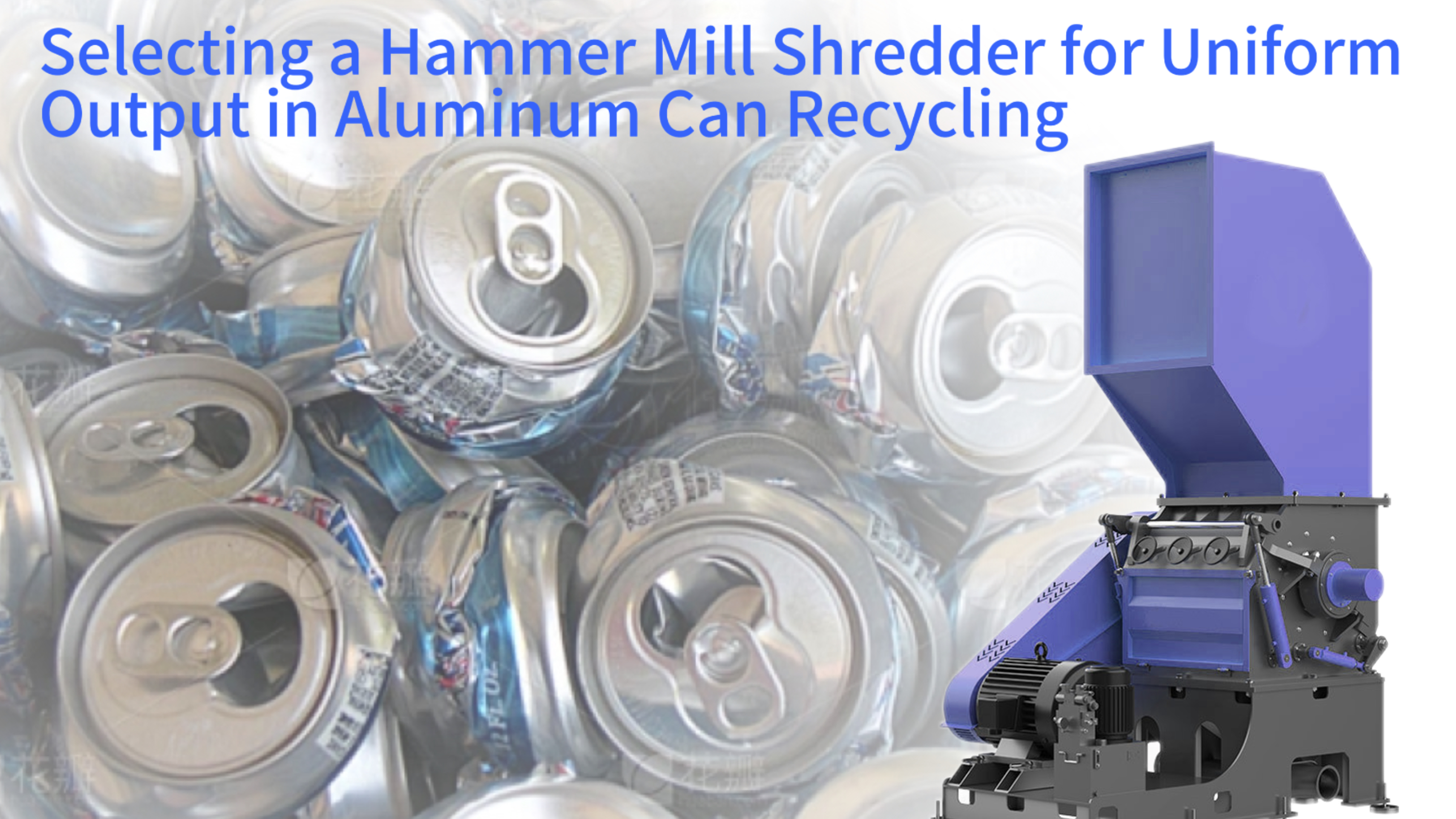
Aluminum can recycling represents a crucial component of global sustainability efforts, with over 60 billion cans recycled annually in the United States alone. The efficiency of this recycling process depends significantly on the preparatory shredding stage, where consistent particle size distribution determines downstream processing success. Hammer mill shredders have emerged as the preferred technology for this application due to their robust construction and adaptable operational parameters. These industrial machines transform whole aluminum cans into uniform flakes that optimize subsequent separation and melting processes. The selection process requires careful consideration of multiple engineering factors that collectively influence output quality and operational economics.
Modern recycling facilities process aluminum cans at rates exceeding 5 tons per hour, creating substantial demand for reliable shredding equipment. Uniform output particles typically range between 1-3 centimeters in their largest dimension, facilitating efficient eddy current separation and minimizing material loss. Industry studies demonstrate that proper shredder selection can improve metal recovery rates by 15-20% compared to suboptimal equipment configurations. The financial implications of these improvements become substantial when considering the continuous operation of recycling facilities processing thousands of tons of material monthly. This comprehensive analysis addresses the technical specifications and operational methodologies that ensure consistent performance in aluminum can shredding applications.
Aluminum Can Recycling Process Flow
Fundamental Operational Principles of Hammer Mill Technology
Hammer mill shredders employ a straightforward yet highly effective mechanical approach to size reduction. The core mechanism consists of multiple hammers mounted on a rotating shaft within a sealed chamber, creating repeated impact forces that fracture aluminum cans into smaller fragments. These free-swinging hammers typically operate at peripheral speeds between 60-90 meters per second, generating sufficient kinetic energy to deform and rupture aluminum structures. The resulting fragments continue circulating within the chamber until their dimensions reduce sufficiently to pass through the surrounding screen apertures. This screening process ensures final particle sizes remain within predetermined specifications, typically producing fragments measuring 10-30 millimeters for aluminum can recycling.
The efficiency of this size reduction process depends significantly on the dynamic interaction between hammers, material, and screen surfaces. Industrial hammer mills process aluminum cans at rates ranging from 500 kilograms to 5 tons per hour, with power consumption varying between 15-25 kilowatts per ton of processed material. The thin-walled nature of aluminum containers, typically measuring 0.08-0.12 millimeters in thickness, creates unique processing challenges compared to denser metallic scrap. Modern hammer mill designs incorporate specialized hammer geometries that maximize impact efficiency while minimizing energy consumption. These technological refinements have established hammer mills as the industry standard for aluminum can processing applications worldwide.
Hammer Mill Operational Principle
Material Input
Aluminum cans enter the processing chamber through a controlled feed system
Impact Crushing
Rotating hammers (60-90 m/s) strike cans, fracturing them into smaller particles
Screen Classification
Particles pass through screens (10-30mm) when sufficiently small
Uniform Output
Consistent particle size distribution (1-3cm) for downstream processing
Impact Fragmentation and Screening Mechanism
Hammer mill shredders operate through high-velocity rotational forces applied by weighted hammers that collide with aluminum cans to initiate material disintegration. These impact events transfer kinetic energy into the cans, creating stress concentrations that exceed the metal's yield strength and propagate fractures along crystalline boundaries. The resulting fragments undergo repeated impacts until their dimensions reduce sufficiently to approach the screen assembly positioned at the processing chamber's base. This screening component features precision-engineered apertures that function as dimensional filters, permitting only particles measuring below specified thresholds to continue through the system. The mechanical interaction between hammers and screen creates a classification process where oversize particles recirculate for further reduction while correctly sized materials advance to collection points. This dual-phase operation ensures particle size distribution remains within predetermined parameters, typically achieving 85-90% conformity to target dimensions in aluminum can recycling applications. The process efficiency derives from maintaining optimal hammer tip speeds between 60-90 meters per second, which generates adequate impact energy while minimizing excessive heat generation that could alter material properties. Continuous monitoring of screen integrity prevents gradual performance degradation, as worn screens exhibit enlarged openings that permit oversized particles to contaminate the output stream. Modern systems incorporate automated adjustment mechanisms that compensate for screen wear by modifying hammer clearances, thereby sustaining consistent output quality throughout operational cycles.
Rotor Dynamics and Uniformity Relationships
The rotational characteristics of hammer mill assemblies directly influence particle size distribution and processing efficiency. Rotor assemblies in aluminum can shredding applications typically operate at 1,500-3,000 revolutions per minute, creating centrifugal forces that maintain continuous material circulation within the processing chamber. The strategic arrangement of hammers along the rotor shaft determines impact frequency and energy distribution across different chamber zones. Industrial hammer mills employ either staggered or aligned hammer configurations, with staggered arrangements generally providing more uniform size reduction for lightweight materials like aluminum cans. The number of hammers installed varies with rotor diameter, with larger units accommodating 20-40 individual hammers to ensure comprehensive material coverage.
Rotor mass and rotational inertia play crucial roles in maintaining consistent performance under variable loading conditions. Heavier rotors sustain operational stability when processing irregular material feeds, while lighter designs respond more quickly to control system adjustments. The relationship between rotor diameter and chamber width establishes the material retention time, typically ranging from 5-15 seconds for aluminum can processing. This retention period allows for multiple impact events that progressively reduce particle dimensions while minimizing the generation of fine particulate matter. Advanced hammer mill designs incorporate rotor assemblies with dynamically adjustable elements that optimize impact angles based on real-time processing conditions. These technological innovations maintain output uniformity despite variations in feed material characteristics and volume.
Rotor Speed vs Particle Size Distribution
Critical Technical Specifications for Aluminum Can Processing
The selection of appropriate hammer mill specifications requires careful analysis of operational requirements and material characteristics. Processing capacity represents the primary consideration, with industrial units ranging from compact 50-horsepower models to heavy-duty systems exceeding 500 horsepower. Aluminum can recycling operations typically utilize equipment in the 100-300 horsepower range, capable of processing 2-8 tons per hour depending on material density and initial compaction. The power transmission system must deliver consistent torque across variable loading conditions, with modern designs incorporating heavy-duty gearboxes that maintain efficiency throughout extended operational periods. These mechanical components work in concert with precisely balanced rotors to minimize vibration and associated maintenance requirements.
Screen configuration represents another crucial technical consideration, with aperture size and pattern directly determining output particle dimensions. Aluminum can recycling typically employs screens with 10-30 millimeter openings, creating fragments optimized for subsequent separation processes. Screen thickness and material composition influence service life, with hardened steel alloys providing extended durability in high-volume applications. The percentage of open area within the screen assembly affects material throughput rates, with higher porosity screens permitting increased production capacity. Modern hammer mills incorporate quick-change screen systems that facilitate rapid configuration adjustments to accommodate varying product specifications. These technical features collectively determine the operational flexibility and economic performance of aluminum can shredding installations.
Hammer Mill Technical Specifications for Aluminum Can Recycling
| Specification | Range | Typical Value | Impact |
|---|---|---|---|
| Horsepower | 50-500 HP | 100-300 HP | Processing capacity and speed |
| Rotor Speed | 1,500-3,000 RPM | 2,000-2,500 RPM | Particle size and energy consumption |
| Hammer Tip Speed | 60-90 m/s | 70-80 m/s | Fragmentation efficiency |
| Screen Aperture | 10-30 mm | 15-25 mm | Final particle size |
| Processing Capacity | 0.5-5 tons/hour | 2-3 tons/hour | Throughput and operational efficiency |
| Energy Consumption | 15-25 kWh/ton | 18-22 kWh/ton | Operational costs |
Processing Capacity and Power Requirements
The relationship between processing capacity and power consumption follows predictable patterns in aluminum can shredding operations. Industry data indicates energy requirements of 15-25 kilowatt-hours per ton of processed material, with variations depending on initial can compaction and desired output size. Motors ranging from 75-400 kilowatts provide the necessary power for most industrial applications, with larger facilities often employing multiple smaller units rather than single high-capacity machines. This distributed approach enhances operational flexibility and provides redundancy during maintenance periods. The specific energy consumption tends to decrease as processing volume increases, creating economic incentives for centralized processing facilities serving multiple collection points.
Voltage requirements represent another important consideration, with smaller hammer mills operating on 480-volt systems while larger industrial units may require 1,000-4,160-volt power supplies. These electrical specifications influence installation costs and operational expenses, particularly in regions with tiered energy pricing structures. The starting characteristics of hammer mill motors create substantial current demands during acceleration phases, necessitating appropriate electrical infrastructure and protective devices. Modern designs incorporate soft-start mechanisms that reduce initial current surges by up to 70%, minimizing stress on electrical components and associated maintenance costs. These power management features have become standard in recycling facilities seeking to optimize operational economics while maintaining processing reliability.
Processing Capacity vs Power Consumption
Rotor Specifications and Operational Parameters
Rotor diameter and width establish the fundamental processing capacity of hammer mill systems, with industrial units featuring rotors measuring 600-1,500 millimeters in diameter. The rotational speed typically ranges between 1,500-3,000 revolutions per minute, creating peripheral hammer tip velocities of 60-90 meters per second. These parameters determine the impact energy available for material fragmentation, with higher velocities generally producing finer particles but increasing wear component deterioration. The number and arrangement of hammers influence material circulation patterns within the processing chamber, with sophisticated designs employing computer-modeled configurations that optimize impact efficiency. The clearance between hammer tips and screen surfaces typically measures 5-15 millimeters, creating sufficient space for material circulation while maintaining effective size reduction action.
Rotor construction materials significantly influence maintenance requirements and operational longevity. Forged steel rotors provide superior durability in high-volume applications, while cast designs offer economic advantages for less demanding operations. The method of hammer attachment affects maintenance procedures, with wedge-lock systems permitting rapid replacement during scheduled downtime. Advanced hammer mill designs incorporate shredder shafts manufactured from alloy steels with enhanced fatigue resistance, extending service intervals and reducing lifetime operating costs. These engineering considerations collectively determine the reliability and economic performance of aluminum can shredding operations, influencing both capital investment decisions and ongoing operational planning.
Operational Factors Influencing Output Uniformity
Multiple operational variables interact to determine the consistency of shredded aluminum output. Feed rate stability represents perhaps the most significant factor, with irregular material introduction creating fluctuations in chamber loading that directly affect particle size distribution. Automated feeding systems maintain consistent volume flow rates, typically within ±5% of target values, ensuring uniform processing conditions. The initial compaction of aluminum cans influences their behavior during shredding, with densely baled material requiring different impact energies compared to loose containers. Modern recycling facilities employ pre-processing equipment that standardizes material density before shredding, eliminating this variable from the size reduction equation.
Ambient environmental conditions surprisingly influence shredding performance, particularly in facilities lacking climate control. Temperature variations affect material brittleness and lubrication viscosity, while humidity levels can create surface moisture that alters fragmentation characteristics. These factors necessitate minor operational adjustments throughout seasonal transitions, with sophisticated control systems automatically compensating for environmental fluctuations. The wear state of processing components represents another crucial variable, with hammer and screen deterioration gradually altering size reduction dynamics. Implementation of comprehensive monitoring systems tracks these changes and prompts maintenance interventions before output quality degrades beyond acceptable limits. These operational considerations separate high-performance recycling facilities from basic processing operations.
Factors Influencing Output Uniformity
Feed Control and Material Handling Systems
Consistent output quality begins with controlled material introduction into the hammer mill processing chamber. Industrial aluminum can recycling operations typically employ vibrating feeders or belt conveyor systems that maintain steady flow rates, typically within ±5% of target values, ensuring uniform processing conditions. The orientation of cans as they enter the shredding chamber influences the efficiency of initial impact events, with randomized entry requiring more energy than aligned presentation. Some advanced systems incorporate preliminary alignment devices that position cans optimally before they encounter the rotating hammers.
Material handling systems must accommodate the unique characteristics of aluminum containers, which combine low density with relatively large volume. Pneumatic conveyance systems often transport shredded material from hammer mill discharges to subsequent processing stages, with air velocities typically maintained between 15-25 meters per second. These systems incorporate grizzly feeders that remove oversized contaminants before material enters the shredding chamber, protecting equipment from damage while improving output quality. The design of these pre-processing systems significantly influences overall operational efficiency, with sophisticated installations achieving material recovery rates exceeding 95% while maintaining consistent output specifications. These integrated approaches represent the current standard in modern aluminum can recycling facilities.
Wear Management and Component Longevity
The abrasive nature of aluminum oxide surface coatings and occasional contaminant materials creates inevitable wear on hammer mill components. Industrial operations typically experience hammer replacement intervals of 200-600 operating hours, depending on material purity and operational intensity. Strategic hammer rotation extends service life by distributing wear across multiple impact surfaces, with automated systems performing these adjustments during brief operational pauses. Screen longevity generally exceeds hammer durability, with replacement typically required after 800-1,200 operational hours in aluminum can processing applications. The economic impact of component wear includes both direct replacement costs and associated downtime, making wear management a crucial aspect of operational planning.
Modern hammer mill designs incorporate numerous features that extend component life and simplify maintenance procedures. Quick-change hammer systems reduce replacement downtime from hours to minutes, while reversible components double service intervals by presenting fresh impact surfaces when needed. The wear-resistant liners protect chamber walls from abrasive damage, with hardened steel alloys providing service life exceeding 5,000 operational hours in typical applications. Advanced monitoring systems track component wear through vibration analysis and power consumption patterns, enabling predictive maintenance that prevents unscheduled downtime. These technological developments have substantially improved the operational economics of aluminum can shredding while maintaining consistent output quality throughout extended service periods.
Component Wear Lifespan Comparison
Maintenance Protocols for Consistent Performance
Systematic maintenance procedures ensure hammer mills maintain specified output quality throughout their operational lifespan. Daily inspection routines focus on visible wear indicators and operational anomalies, with checklists covering hammer integrity, screen condition, and bearing performance. Weekly maintenance activities include comprehensive cleaning of internal surfaces and verification of all safety systems, while monthly procedures address lubrication replacement and alignment verification. These structured approaches prevent minor issues from developing into major failures, with maintenance records providing valuable data for predicting future service requirements. The implementation of computerized maintenance management systems has reduced unexpected downtime by 40-60% in facilities processing aluminum cans.
Preventive maintenance strategies have evolved significantly with advances in monitoring technology. Vibration analysis systems detect bearing degradation and rotational imbalances long before these issues affect output quality, enabling planned interventions during scheduled downtime. Thermal imaging identifies overheating components that might indicate impending failures, while ultrasonic testing reveals internal cracks in critical elements. These techniques collectively form a comprehensive predictive maintenance approach that maximizes equipment availability while minimizing repair costs. The economic benefits extend beyond direct maintenance savings to include consistent product quality and reliable production scheduling, creating substantial competitive advantages in the recycling marketplace.
Recommended Maintenance Schedule
| Maintenance Task | Frequency | Duration | Purpose |
|---|---|---|---|
| Visual inspection of hammers and screens | Daily | 15-30 minutes | Detect immediate wear or damage |
| Lubrication check and top-up | Daily | 10-20 minutes | Prevent friction-related failures |
| Hammer rotation or replacement | 200-600 hours | 1-2 hours | Maintain uniform impact efficiency |
| Screen replacement | 800-1,200 hours | 2-4 hours | Ensure particle size control |
| Rotor balancing | 6 months | 4-8 hours | Reduce vibration and bearing wear |
| Comprehensive system inspection | Annual | 8-16 hours | Prevent major component failures |
Vibration Analysis and Dynamic Balancing
Rotational vibration provides early indication of developing mechanical issues in hammer mill operation. Industrial standards specify acceptable vibration levels below 5 millimeters per second for most aluminum can shredding applications, with values exceeding this threshold indicating need for investigation. Modern monitoring systems employ accelerometers mounted at strategic locations that continuously track vibration patterns and alert operators to abnormal trends. The frequency spectrum of vibration signals identifies specific component issues, with bearing defects producing characteristic high-frequency signatures while imbalance creates dominant once-per-revolution patterns. This diagnostic capability enables targeted maintenance interventions that address root causes rather than symptoms.
Dynamic balancing procedures correct rotational imbalances that develop during normal operation, typically requiring specialized equipment and trained technicians. Field balancing techniques permit corrections without complete disassembly, reducing downtime from days to hours in most cases. The balancing process involves measuring vibration levels at various rotational speeds and adding or removing mass at specific locations to counteract inherent imbalances. Properly balanced rotors operate more smoothly, reducing stress on bearings and other components while improving output consistency. The implementation of regular balancing schedules typically extends bearing life by 30-50% and reduces overall maintenance costs by 15-25% in aluminum can recycling operations.
Performance Verification and Quality Assurance
Regular performance verification ensures hammer mill output continues meeting specified quality standards throughout operational periods. Standardized testing protocols involve sampling shredded material at predetermined intervals and analyzing particle size distribution using automated screening equipment. These quality control measures typically require that 80-90% of output particles fall within designated size ranges, with tolerance variations depending on specific customer requirements. The test results provide quantitative data for process optimization, enabling adjustments to operating parameters that maintain output consistency despite changing material characteristics. Modern recycling facilities perform these verification procedures multiple times per shift, creating comprehensive quality records that demonstrate compliance with customer specifications.
Statistical process control methodologies have transformed quality assurance in aluminum can shredding operations. Control charts track key performance indicators over time, highlighting trends that might indicate developing issues before they affect product quality. The implementation of these systematic approaches has reduced output variability by 40-60% in advanced recycling facilities, creating more consistent feedstock for subsequent processing stages. The lubrication systems require regular verification to ensure proper viscosity and contamination levels, with oil analysis laboratories providing detailed reports on lubricant condition and remaining useful life. These comprehensive maintenance and quality assurance practices collectively ensure hammer mills deliver consistent performance throughout their operational lifespan.
Particle Size Distribution Quality Control
Economic Considerations and Investment Analysis
The financial evaluation of hammer mill investments requires comprehensive analysis of both capital and operational expenditures. Equipment costs range from $50,000 for basic models to over $500,000 for high-capacity industrial systems, with variations depending on specific features and automation levels. Installation expenses typically add 20-30% to these base prices, covering foundation preparation, electrical connections, and material handling integration. The operational economics include power consumption at $0.08-0.15 per kilowatt-hour, maintenance costs averaging $5-10 per operating hour, and labor requirements of 0.5-1.0 full-time equivalents per shift. These combined expenses determine the fundamental cost structure of aluminum can shredding operations.
The revenue side of the economic equation derives primarily from the value of shredded aluminum, which typically commands prices 10-20% higher than whole baled cans due to reduced transportation costs and improved melting characteristics. Additional financial benefits include reduced landfill fees for processing contaminants and potential revenue from byproduct materials separated during shredding. The net economic advantage typically produces payback periods of 18-36 months for hammer mill investments in aluminum can recycling applications. These financial returns have made shredding equipment increasingly common in recycling facilities of all sizes, from regional processing centers to large-scale municipal recycling operations. The economic viability continues improving as aluminum prices stabilize at historically high levels and recycling rates increase worldwide.
Cost Analysis: Hammer Mill Investment
Lifecycle Cost Analysis and Operational Economics
The total cost of hammer mill ownership extends far beyond initial purchase price, encompassing numerous operational and maintenance expenses throughout equipment lifespan. Comprehensive lifecycle analysis typically covers 7-10 year periods, accounting for depreciation, energy consumption, maintenance labor, replacement parts, and potential productivity losses during downtime. Industry data indicates that operational expenses typically exceed initial equipment costs within the first 2-3 years of operation, making long-term efficiency more significant than purchase price in overall economic performance. These analyses inform decisions regarding equipment selection, with higher-quality components often proving more economical despite greater initial investment.
Operational economics vary significantly based on processing volume, with high-capacity facilities achieving lower per-ton costs through economies of scale. Facilities processing under 1,000 tons annually typically experience costs of $80-120 per ton, while operations handling over 10,000 tons annually can reduce costs to $40-60 per ton. These differentials have driven industry consolidation toward regional processing centers that serve multiple collection points. The implementation of automated monitoring and control systems has further improved operational economics by reducing labor requirements and optimizing energy consumption. These technological advancements have made aluminum can shredding increasingly accessible to smaller operators while improving profitability for established recycling businesses.
Lifecycle Cost Breakdown (7-Year Period)
Return on Investment Calculation Methodology
The financial evaluation of hammer mill investments employs standardized calculation methods that account for both tangible and intangible benefits. The basic return on investment formula compares net annual savings to initial investment, with aluminum can shredding typically achieving 25-40% returns in well-managed operations. More sophisticated analyses incorporate net present value calculations that discount future cash flows to reflect time value of money, with most shredding projects showing positive NPV within 3-5 year horizons. The internal rate of return typically ranges between 15-30% for hammer mill installations, exceeding hurdle rates for most recycling industry investments. These attractive financial metrics have driven significant capital investment in shredding technology throughout the aluminum recycling sector.
Risk assessment forms an important component of investment analysis, with sensitivity testing examining how variations in key assumptions affect projected returns. Aluminum price volatility represents the most significant uncertainty, with 10% fluctuations potentially altering returns by 4-6 percentage points. Maintenance cost variability and energy price changes present additional risks that sophisticated analysis models quantify through scenario planning. The implementation of high-toughness material shredding solutions typically reduces these risks through improved reliability and predictable maintenance requirements. These comprehensive financial analyses provide recycling operators with the confidence to make substantial capital investments in shredding technology, secure in the knowledge that economic returns will justify the expenditures.